News
How Fellows Are Building Disaster Resilience in Lahaina
/ Fellows in Action
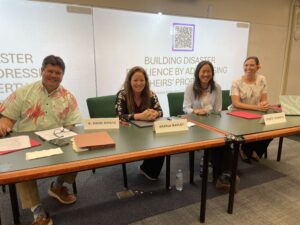
Equal Justice Works recently spoke with 2023 Fellows Devon Haia and Sharla Manley to discuss their work with the Native Hawaiian Legal Corporation (NHLC).
After the devastating 2023 Maui wildfires, many Indigenous Hawaiian families faced not only the loss of homes and land, but also legal challenges that could determine whether they would be able to rebuild and return.
Through the Disaster Resilience Program, Devon and Sharla are working to support community-led recovery efforts, from restoring traditional water management to helping prevent the displacement of families.
We spoke to them about their work, and this is what they had to say:
“Disasters typically exacerbate problems that already exist for disparately impacted communities, and the same is true for Native Hawaiians on Maui,” said Devon. “Following the August 2023 wildfires, many community members are now forced to face issues related to heirs’ property, Native Hawaiian Burial Sites, and priority access to water.”
“As much a man-made disaster as it was a natural one”
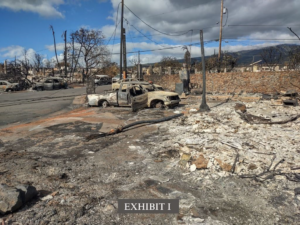
Devon and Sharla described the Lahaina wildfire as “as much a man-made disaster as it was a natural one.”
“To briefly condense 150-years of water mismanagement in West Maui, water issues mostly stem from the invasion of Western sugar companies coming in to exploit Hawaii’s resources for profit,” said Devon.
Sugar companies diverted mountain streams to water their crops. As the sugar industry in the area declined, these diversions began to service hotels, swimming pools, and golf courses. Invasive grasses grew from the remnants of the sugar plantations, and these burned hotter and faster than native plants would have burned.
Lands being held for development are often neglected and pose a greater fire risk than the native plants that grew before the sugar boom.
“The lands in this area had not been actively managed,” said Sharla. “As time went on, many, many people who suffered from this tragedy also sued the landowners because if you own the land, and the fuel that fed the fire is on your land, then you own the fire.”
Lessons from Indigenous land and water management practices
In the aftermath of the fires, the Lahaina community was left asking how to re-establish the lush landscape that existed in the area before the sugar plantation boom. Devon pointed out that a more Indigenous-centered water and land management approach would help to prevent catastrophes like the 2023 wildfires from recurring.
“Indigenous knowledge is a foundational component of disaster resilience, offering time-tested, sustainable strategies for mitigation, preparedness, and response to environmental hazards,” said Devon. “Upholding Indigenous rights ensures Indigenous peoples can utilize ancestral knowledge to manage risks, rather than exposing our communities at large to unsustainable practices.”
Watch the conversation on YouTube
Fellowship impact
For Devon, the impact begins with advancing water management efforts that prioritize Native Hawaiian practices in Maui. Devon has testified at Water Commission hearings, met with public water officials, and written a comment on a draft proposal to drill more wells near an unstable, dried out aquifer. Meeting with community members has been key to strategize how to get water back into streams and restore how it was before the rise of sugar and tourism.
“Decisions concerning water management can sometimes take decades in Hawaii, so it is a project that offers modest short-term progress, but holds significant long-term benefits, for the community, and has been especially meaningful to me.”
For Sharla, preventing displacement of Native Hawaiian families through foreclosure defenses, opening probate and creating family land trusts to address heirs’ property issues, and working with a community land trust have both been the most impactful. Through it all, she has helped families get the assistance they need to return home.
“Land grabs were happening almost instantaneously, and the community realized that they really needed to take matters into their own hands,” said Sharla. “So, the Lahaina Community Land Trust was formed. It’s incredibly rewarding to know that there are families that are coming back to Lahaina, and they are … trying to build back better. When you see that, it really does give you hope.”
Why legal assistance is critical to equitable disaster recovery
Legal assistance is essential to ensuring that those who do not have resources to deal with legal challenges raised by disasters are not left behind. Attorneys can help survivors identify their legal rights and tackle roadblocks to recovery.
“In the wake of a disaster, there are several issues that arise that survivors may not even recognize as legal issues to begin with,” said Sharla. “The first part of the role for a lawyer assisting in a disaster recovery context is to be able to help survivors identify what issues are actually legal issues? Because you may not realize it.”
For Native Hawaiians, the help provided by NHLC is pivotal to ensure that Native communities are heard and treated equitably during recovery.
“Without such assistance, Native Hawaiians may face significant barriers to recovering from disasters in a manner that respects the unique legal status and cultural values,” said Devon.
Learn more about disaster resiliency, lawyers’ role in recovery, and resources for resilience here. Learn more about Devon and Sharla’s work here. Read about a case that Devon at the Native Hawaiian Legal Corporation are working on here.