


Equal Justice Works conducted a survey on how Americans perceive the justice system.

Read the survey results

Opportunities

Financial Empowerment Project

The persistent racial wealth gap in the United States continues to hinder economic mobility and financial security for Black households and other communities of color. Structural barriers have resulted in Black households possessing, on average, only one-fifth of the assets held by White households. This disparity is compounded by limited access to intergenerational wealth transfer mechanisms, such as wills, trusts, and life insurance – tools essential to building and preserving wealth across generations. 

Equal Justice Works’ Financial Empowerment Project, in partnership with Cities for Financial Empowerment Fund (CFE Fund), embeds attorney Fellows within Financial Empowerment Centers to help close this gap. Fellows provide free legal services focusing on estate planning, title clearing, and other asset-preservation legal needs – empowering clients to protect and transfer generational wealth. 
Fellowship Overview & Benefits

  • Attorney Fellows earn a salary over the course of their two-year Fellowship term 
  • Receive trainings, technical assistance, and ongoing mentorship
  • Participate in the annual Equal Justice Works Leadership Development Training in Washington, DC
  • Build legal capacity at host legal services organizations
  • Conduct community-based outreach and education to raise awareness about legacy planning
  • Provide preventative and remedial civil legal services that support wealth preservation and transfer
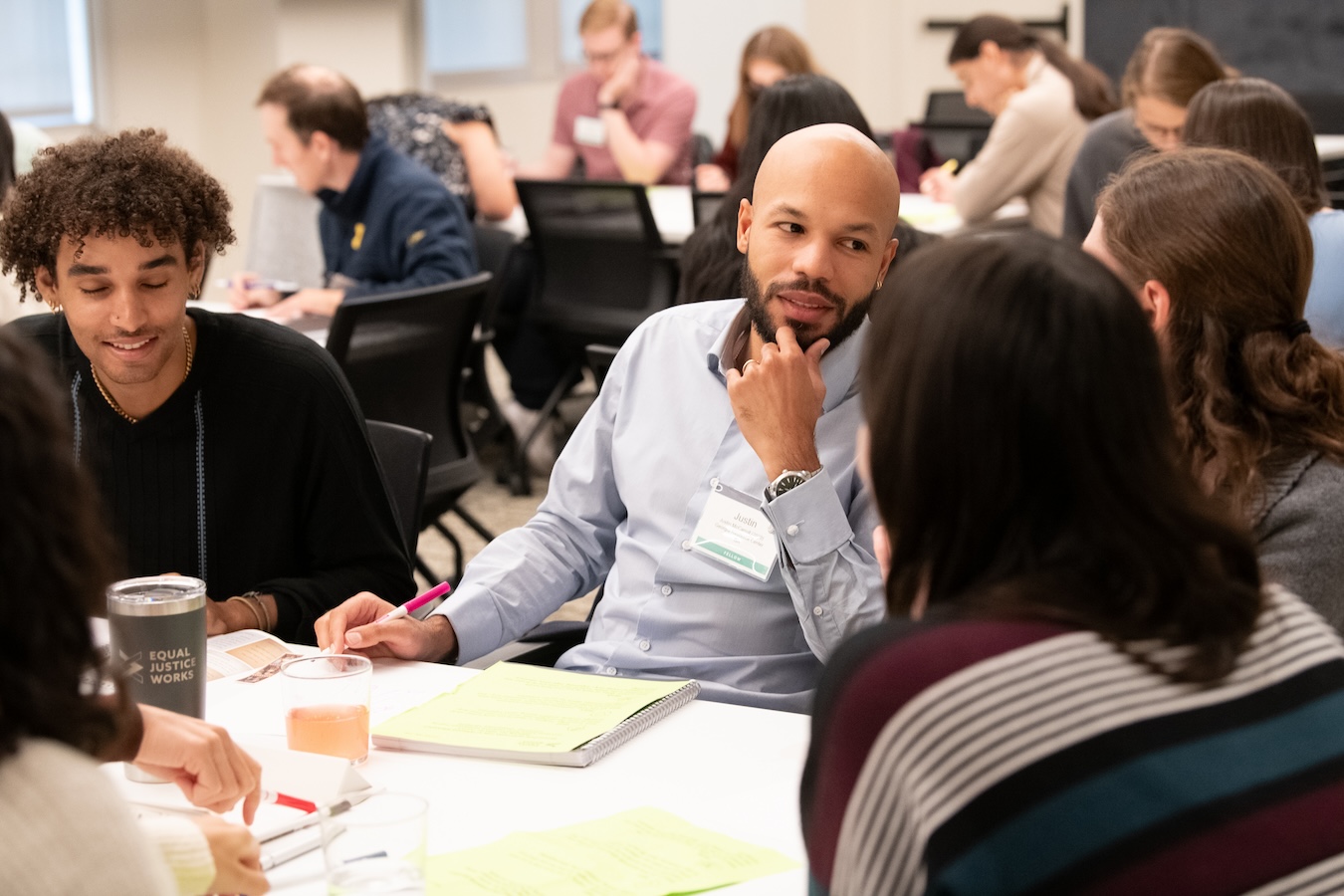
Fellows sit in a break out discussion at Leadership Development Training.

Applications Now Open!

Apply today

Apply by September 17, 2026

Program Impact


  • ~70% of Black homeowners over age 50 do not have a will or trust, compared to 35% of White homeowners, indicating a substantial gap in legacy planning.
  • > 90% of participating clients in a recent CFE Fund multi-city pilot did not have a will, power of attorney, or health care proxy—key tools for protecting and transferring wealth.
  • 1/5 Due to structural barriers, Black households possess only one-fifth of the assets held by White households on average.

Have questions? Email us at
[email protected]

How it works

1 Why join the Financial Empowerment Project?

Generational wealth is a cornerstone of economic stability, yet systemic inequities have left many families vulnerable to losing assets. By joining the Financial Empowerment Project, you’ll help dismantle these barriers and create pathways for financial security and justice. See current openings below:

Financial Empowerment Project Openings

Stakeholders network during the Steering Committee Welcome Reception at the Scales of Justice

2 Who should apply?

Attorney Fellows

We are seeking diverse and dynamic attorneys who: 

  • Hold a Juris Doctor from an accredited law school and are licensed (or awaiting bar results) in the relevant jurisdiction.
  • Demonstrate a commitment to social justice and increasing access to legal services.
  • Possess strong communication, interpersonal, and organizational skills.
  • Thrive in collaborative, multidisciplinary environments. 
Fellows speak in a small group at Leadership Development Training. Next to them, a sign reads: issue area breakout: economic empowerment
Still Have Questions or Interested in Funding this Work?

Email us at [email protected]

The Financial Empowerment Project is funded by the Cities for Financial Empowerment Fund (CFE Fund). The CFE Fund’s mission is to leverage municipal engagement to improve the financial stability of low and moderate income households by embedding financial empowerment strategies into local government infrastructure.

Interested in hosting a Financial Empowerment Project Fellow?

Learn More

Get Help Managing Your Student Debt

For many law school graduates, student debt is the single largest barrier to pursuing a career in public interest law. View our Student Debt Resources to learn more about managing your debt load.

Explore Resources