The Way Forward: Investing in Legal Representation for Tenants at Risk of Losing Their Home

By Laura Wright, 2019 Equal Justice Works Fellow hosted by Virginia Poverty Law Center
When the pandemic hit, Julia* was living in a mobile home in rural Central Virginia, where she provided part-time care for her elderly mother and infant grandchild. Julia suddenly found herself without work and struggled to make ends meet. A few days after failing to make rent, her landlord showed up at her home and threw a sloppily written eviction notice at her. Her landlord then shut off her water and padlocked the water meter. Without access to water, Julia was unable to take basic health precautions to avoid getting herself, her elderly mother, and infant grandchild sick. Her landlord showed up every day for the next three days to harass her and demand rent payment. At one point, he threatened to set fire to her truck, which, as a delivery driver, is her sole means of income. She was so scared that he would show up unannounced that she spent an entire sleepless night in the truck.
Unfortunately, Julia’s story is not unique. During the pandemic, hundreds if not thousands of tenants across Virginia have experienced similar attempts by landlords to threaten, harass, and intimidate tenants to move out despite, and often in a blatant disregard for, COVID-19 protections in place. Tenants who do not know about the protections or do not have the organizing or legal support to give them confidence to assert their rights are still being evicted in the middle of pandemic, even if they qualify for eviction protections.
When I spoke to Julia the following day, she was run ragged with nerves. I was able to inform her of her rights, walk her through the steps to file a “Tenant’s Petition for Relief from Unlawful Exclusion” once the courts opened back up, and instruct her on what to do should if the landlord show up again. Sure enough, the landlord did return to her home over the weekend to harass her and demand payment. This time, she felt confident to stand up for herself and demanded that he leave. She then called the police, and with me on the phone to help explain the situation, the landlord reluctantly reconnected her water.
Julia’s experience highlights the difference an attorney can make in a tenant’s livelihood and how the need for guaranteed legal representation in eviction cases has only become more urgent with the COVID-19 pandemic. The quickly shifting landscape of tenant protections, many of which are temporary and all of which require specific action on the part of the tenant, are confusing to navigate and even more difficult to enforce without counsel. The inconsistent enforcement of COVID-19 eviction protections has demonstrated that a right is only as good as your ability to enforce it.
The inconsistent enforcement of COVID-19 eviction protections has demonstrated that a right is only as good as your ability to enforce it.
Without the assistance of an attorney, Julia would not have known about the eviction protections and legal recourse available to her and would have continued to face harassment from her landlord. Because an attorney intervened and helped Julia to assert her rights, Julia’s situation resolved without ever appearing in court. It will take time for Julia to get back on her feet, but for now, she has secured a safe place to live, free of that landlord’s threats.
We have yet to see the full economic fall-out from the COVID-19 pandemic. If past disasters are any indication, families will continue to struggle financially and experience disruptive displacement for years to come. The way forward requires policies directed at keeping people housed, as well as deep investment in legal representation for tenants at risk of eviction and for homeowners on the brink of losing their home.
The way forward requires policies directed at keeping people housed, as well as deep investment in legal representation for tenants at risk of eviction and for homeowners on the brink of losing their home.
*Name changed to protect privacy of the client
Visit here to read more stories about the work of our Fellows and how they are keeping thousands of Richmond residents safely in their homes during the pandemic.
The Housing Justice Program is funded by The JPB Foundation and Equal Justice Works.
By Lauren Wright, Equal Justice Works brand manager
COVID-19 has created an economic catastrophe for under-resourced communities in America, greatly exacerbating existing needs and spawning countless new civil legal issues.
For those affected, access to legal services can make all the difference. Throughout this remarkably difficult time, Equal Justice Works Fellows across the country have stepped up to respond to the needs of underserved communities.
Housing
One of the most obvious and immediate economic effects has been the record-high rates of unemployment, with job losses concentrated in low-paid industries and disproportionately affecting Black, Latinx, and immigrant workers. Unable to pay rent, many families have faced evictions, legal or not, in spite of federal and state eviction moratoria. Throughout the pandemic, members of the Equal Justice Works Housing Justice Program have worked tirelessly to ensure tenants can remain safely in their homes in the Greater Richmond Region of Virginia.

Collaborating across host organizations, Fellow Laura Wright and Community Organizer Omari Al-Qadaffi have been working with tenant advocates to make some COVID-era housing protections permanent. One such bill, which was set to expire on July 1, 2021, extends the Pay or Quit notice period—during which tenants must either pay rent or vacate the property—from five to fourteen days. For a family struggling to pay rent, these extra nine days can make the difference between staving off a costly eviction and losing their home. Laura and Omari organized a large group of tenants and advocates to speak directly to committee members in support of the bill; the bill passed with a “sunset clause” that sets an expiration date of July 1, 2022. Next year, Laura says, they will return in hopes of removing the clause altogether.
Laura also successfully advocated for the expansion of a bill, which initially only allowed tenants who are employees of the federal government and have experienced a loss of income due to a government shutdown to get a 60-day continuance of their eviction case, to also cover all tenants who have lost income due to COVID. As various state and federal moratoriums have expired, this bill, signed into law April 22, 2020, has been one of the only consistent tenant protections during the entire lockdown period, and thanks to the efforts the other Housing Justice Program Fellows, hundreds of tenants have avoided eviction during the pandemic. It is a perfect example of how policy advocacy, tenant organizing, and direct representation have worked together to keep as many tenants in their home as possible.

The need for tenant education has only become more urgent amid a rapidly shifting landscape of temporary protections, spurring Housing Justice Program participants to generate a variety of informational resources. For Virginia Poverty Law Center, Laura and Daryl created a new webpage for tenants seeking COVID-specific information, while Fellow Daryl F. Hayott has dispensed advice via the organization’s Eviction Legal Helpline. Fellow Palmer Heenan has remained a prolific housing justice resource in his own right, appearing on cable news, in podcasts (alongside Omari), and in courtrooms to offer expertise wherever possible.
Prisoners’ Rights
Stuck in overcrowded facilities, inmates in jails, prisons, and detention facilities nationwide are another population at high risk due to the pandemic.

“We have seen the virus spread like wildfire in facilities that have dorm-style housing and no way to socially distance,” said Fellow Sara Wolovick, whose project focuses on protecting incarcerated individuals in Utah from constitutional violations and medical neglect. Sara has remained dedicated to fighting for greater COVID-19 safety measures and more transparency regarding mass outbreaks and inmate deaths in custody. As the death toll has risen in Utah correctional facilities, Sara has been repeatedly cited by The Salt Lake Tribune as a trusted source on the matter. In addition to advocating for better safety measures, medical care, and transparency for incarcerated people, Sara also organized a vigil for families and friends of incarcerated people and has been working to publicize firsthand accounts from incarcerated people.

In December, Fellows Joseph Longley and Clara Spera, hosted by the ACLU National Prison Project and the ACLU Reproductive Freedom Project, respectively, supported a lawsuit that ordered Orange County jails to reduce their population by 50% to diminish outbreak risks. Clara’s Fellowship is focused on protecting and expanding access to reproductive care—early on in the pandemic, it became clear that COVID-19 was posing particular challenges to pregnant women and mothers. Clara focused on some of the most at-risk among that group, women behind bars, in light of the heightened COVID-19 risks associated with pregnancy, motherhood, and imprisonment. One of the named plaintiffs in the Orange County lawsuit was a nursing mother who was denied the ability to provide her child with breastmilk during the early days of the pandemic.

Joseph’s Fellowship is dedicated to securing access to necessary care for people in jails and prisons addicted to opioids. Amid dramatic infection spikes in facilities nationwide, Joseph argued that increased access to medication for addiction treatment (MAT) was necessary “to conserve hospital resources and save lives.” Overlapping symptoms mean that an individual with COVID-19 symptoms could be misidentified as experiencing opioid withdrawals, not quarantine as they would if properly diagnosed, then become a vector of transmission to other incarcerated individuals. In February 2021, Joseph was involved in another ACLU lawsuit that succeeded in securing lifesaving methadone treatment for a 53-year-old woman serving a thirty-day sentence. This was the first time that the jail had provided methadone, a basic lifesaving medication, to a non-pregnant detainee since 2016.

(Above: In a video shown at the 2020 Scales of Justice, Joseph explains the dire need for MAT—medication for addiction treatment—in jails and prisons amid COVID-19.)
Education

Abrupt school closures last spring plunged students and teachers alike into uncharted territories of virtual learning, and a year later, many are still struggling with issues like isolation, inadequate support, and lack of resources. At the most foundational level, many students, such as those from low-income or rural families, simply don’t have access to reliable, high-speed internet.
Fellow alum Tori Porell noted the uneven playing field for students with disabilities adjusting to virtual learning, even in well-resourced communities. “We have heard talk of students being able to receive speech therapy, occupational therapy, or mental health services through telehealth, but I haven’t seen any district roll that out yet,” Tori noted in April 2020, during her Fellowship. She received two grants specifically for her Kindergarten Readiness Project at East Bay Children’s Law Offices to provide culturally and developmentally appropriate distance learning to all clients entering kindergarten in Fall 2020.

Kel O’Hara, another Fellow who works with students—specifically LGBTQ+ survivors of gender-based violence and harassment—shared concern about the safety and mental health of college students forced to leave the support and community of campus environments during this “collectively traumatic time.” Kel developed an online resource for Title IX administrators about best practices during COVID-19, including considerations for remote campus hearings, which has been accessed over 1,200 times.
Equal Justice Works is proud to support Fellows across the country addressing the broad range of civil legal issues created by the COVID-19 pandemic. To learn more about the work of our Equal Justice Works Fellows, visit here.

By Morgan Colonna, 2021 Equal Justice Works Fellow hosted by Central Virginia Legal Aid Society.
Historically, housing policies in the United States have contributed to social inequality and residential segregation in our country. This is certainly true in Richmond, Virginia, which has a long history of racial segregation in housing.
When the Fair Housing Act made racially restrictive covenants in real estate illegal, Richmond found other ways to break up and isolate the city’s black community. Construction of I-95—the nation’s longest north-south interstate highway—through the heart of the Black community, and the concentrated construction of five public housing communities within one mile of each other in the East End of Richmond, are two examples of ways in which Richmond’s urban renewal policy led to clustering low-income persons, who were mostly Black, in the center of Richmond.
Today, low-income families in Richmond’s East End still face substandard housing, higher rates of poverty, and fewer resources for health promotion than other neighborhoods in the city.
Studies show there is an inextricable link between housing and health. Additionally, studies show, disparities exist in health across socioeconomic groups as low-income families are more likely to experience unhealthy and unsafe housing conditions and are also the least likely to be able to address them. Researchers have specifically identified housing stability, quality, safety, affordability, and the physical and social characteristics of neighborhoods as factors that directly impact a person’s health.
A person who lacks safe, stable housing is also less likely to have a usual source of medical care and more likely to postpone needed treatment or go without prescribed medications. Housing issues have been linked to increased mortality, trauma, depression, anxiety, physical health morbidity, increased hospitalizations, food insecurity, risk of teen pregnancy, drug and alcohol use, suicide, and health care expenditures, as well as disruptions to employment, social networks, education, and receipt of social service benefits.
Medical-legal partnerships (MLPs) provide one approach to addressing some of the most complex needs affecting health, including housing issues, by adding lawyers to a person’s health care team to address social issues rooted in legal problems. At VCU Health in Richmond, Virginia, I am a part of the health care team within my designated clinics, serving low-income patients within the hospital and in a community health clinic in Richmond’s East End. Doctors, nurses, and social workers screen their patients for potential legal issues and refer the patient to me in the same way they would refer a patient to any subspecialty. From there, I step in to help patients resolve legal issues which have a direct impact on their health.
Within the housing realm, improving substandard conditions, preventing eviction, and protecting against utility shut-offs helps to ensure a patient stays housed in a healthy physical environment. Ensuring a patient has a stable, decent, affordable home also helps avoid costly emergency room visits related to homelessness, and consistent utilities help patients follow medical treatment plans.
Ensuring a patient has a stable, decent, affordable home also helps avoid costly emergency room visits related to homelessness, and consistent utilities help patients follow medical treatment plans.
I recently referred a patient who depends upon daily insulin and breathing treatments. Her landlord disconnected her utilities and was threatening to evict her due to non-payment of rent. Once I received her case, I was able to work with the state’s rent relief program to obtain rental assistance for the patient and prevent the eviction. I also worked with city officials and the landlord to reconnect the utilities within the same day. In addition to preventing an eviction, we restored this patient’s access to necessary medical treatments and medications within her home.
This is just one example of how the MLP works to identify and address social issues that directly impact health. Although this partnership does not erase Richmond’s history, the MLP is making strides in addressing some of the structural problems at the root of many health inequities that still exist because of Richmond’s history of segregation and housing discrimination.
Visit here to read more stories about the work of our Fellows and how they are keeping thousands of Richmond residents safely in their homes during the pandemic.
The Housing Justice Program is funded by The JPB Foundation and Equal Justice Works.
The Federal Emergency Management Agency (FEMA) has several individual assistance programs designed to support disaster survivors. As part of the Disaster Resilience Awareness Month training series, Equal Justice Works Fellow Hannah Dyal (she/her/hers) of Texas RioGrande Legal Aid and FEMA Emergency Management Specialist Teresa Lien hosted a disaster training centered on applying for FEMA benefits.
Hannah and Teresa discussed the benefits of being prepared for disasters, the connection between preparedness and resiliency, how to apply for FEMA benefits, and the most common types of FEMA assistance available after disasters. Hannah provided a brief overview of common reasons individuals are denied FEMA benefits and shared tips on appealing those denials. While the presentation was not focused on COVID-19, Hannah and Teresa did discuss some of the adjustments that have been made to the FEMA application process due to COVID-19 safety restrictions, and how to best handle those changes.
FEMA can be one of the best ways to get quick assistance for damaged property. If a disaster survivor is prepared with the documents that FEMA will need, the FEMA application may be a simple, straightforward process. However, if a survivor is missing a necessary document or misunderstands a critical question in the application or inspection process, that person may struggle to get the right proof together and likely will be denied FEMA assistance. During this Q&A session, Hannah and Teresa discussed what documents are critical to have at the ready to complete the application.

The stress of living through a disaster or undergoing an evacuation can make it difficult for survivors to complete even basic tasks. If the survivor has lost their home and belongings, or even if they are just living in a damaged home, those tasks may become even more challenging. In addition to the stress from the traumatic event and the damage to their home, disaster survivors often must work with several different agencies and groups following a disaster to get all their needs meet. The process is confusing and difficult at the best of times. Understanding the structure of disaster recovery prior to going through that process can make the recovery less stressful and more successful overall. Here are some helpful resources that Hannah and Teresa shared for individuals looking to apply for FEMA benefits in the aftermath of a disaster:
- Figuring out FEMA: http://welcometocup.org/file_columns/0000/2043/figuring_out_fema.pdf
- Individual Assistance Program and Policy Guide (IAPPG): gov/media-library/assets/documents/177489
- Learn About the Steps After Applying: fema.gov/assistance/individual/after-applying
- Steps to Start Your Recovery Process: fema.gov/sites/default/files/2020-07/fema_nfip_Starting-Your-Recovery_2020.pdf
- Best Way to Send Disaster Documents: gov/sites/default/files/documents/fema_best-way-send-disaster-documents_flyer.pdf
- Disaster Legal Services (DLS): www.disasterassistance.gov/get-assistance/forms-of-assistance/4464
For additional questions about this presentation, please contact [email protected] or call the Texas RioGrande Legal Aid Hotline at 1-888-988-9996.
If your organization is interested in teaming up with Equal Justice Works for Disaster Resilience Awareness Month, please reach out to us at [email protected].
Disaster Resilience Awareness Month is made possible thanks to the generous support of Equal Justice Works host organizations: Catholic Charities of the Archdiocese of Galveston-Houston, Community Legal Services of Mid-Florida, Disability Rights Texas, Lone Star Legal Aid, Texas RioGrande Legal Aid, Inc., and YMCA International Services.
The Equal Justice Works Disaster Resilience Program is funded by Carnegie Corporation of New York, the Center for Disaster Philanthropy, the Bigglesworth Family Foundation, and individual contributions.
For the final session of the 2021 Disaster Resilience Awareness Month trainings, Meghan Smolensky (she/her/hers), an Equal Justice Works Fellow in the Disaster Relief Unit at Lone Star Legal Aid, joined Rosalinda Martinez, associate state director of outreach and advocacy for AARP in Houston, Texas, for a discussion about disaster-related legal challenges as they relate to homeowners qualifying for different federal assistance and home repair programs. The session, titled “Being Prepared for the Unexpected,” is part of the Disaster Resilience Awareness Month training series. Juan Santamaria, a Lone Star Legal Aid attorney, translated the presentation for Spanish-speaking viewers.
Disasters are increasingly getting more widespread and are having a larger effect on communities. Meghan is no stranger to the impact of disasters, having helped clients recover after Hurricane Harvey. The Disaster Relief Unit at Lone Star Legal Aid continually deals with disasters, the most recent being Winter Storm Uri. Each new disaster brings hardships for a successful recovery, yet the legal issues that many clients face do not change. Through Meghan’s experience, she has learned that legal property issues are at the forefront of disaster recovery.

During this training, Meghan and Rosalinda discussed how homeowners can prepare before a disaster and shared steps they should take to recover after a disaster strikes. Many people do not realize how intertwined disaster benefits and homeownership are—when a person’s property is damaged during a disaster, sometimes the only barrier between them qualifying for repair programs or federal assistance is a lack of homeownership documents. Rosalinda and Meghan talked about what legal documents you need to prove ownership of your home and if you don’t have access to these documents, what you can do to get some type of legal documentation to show that you have an ownership interest. They shared how people can draft simple documents that will have a huge impact in protecting their property and allow their property to be kept in their family.
Here are some resources Rosalinda and Meghan shared for homeowners looking to apply for federal assistance and home repair programs following a disaster:
- How to Avoid Home Repair and Charity Scams: https://aarp-states.brightspotcdn.com/74/25/b54ec046467180ea0a6c0b3b8170/natural-disaster-fraud-dos-and-donts-006.pdf
- Texas Winter Storm 2021 Resources: https://lonestarlegal.blog/texas-winter-storm-2021-resources/
- Disaster Recovery: Avoid Home Repair Fraud: https://texaslawhelp.org/article/disaster-recovery-avoid-home-repair-fraud
If your organization is interested in teaming up with Equal Justice Works for Disaster Resilience Awareness Month, please reach out to us at [email protected].
Disaster Resilience Awareness Month is made possible thanks to the generous support of Equal Justice Works host organizations: Catholic Charities of the Archdiocese of Galveston-Houston, Community Legal Services of Mid-Florida, Disability Rights Texas, Lone Star Legal Aid, Texas RioGrande Legal Aid, Inc., and YMCA International Services.
The Equal Justice Works Disaster Resilience Program is funded by Carnegie Corporation of New York, the Center for Disaster Philanthropy, the Bigglesworth Family Foundation, and individual contributions.
On March 17, Stephanie Duke (she/her/hers) at Disability Rights Texas joined Noah Patton, housing policy analyst at the National Low-Income Housing Coalition (NLIHC), for a conversation on housing assistance options following disaster and what disaster survivors should know. This session, titled “What You Need to Know About Applying for Disaster Housing Assistance,” is part of the Disaster Resilience Awareness Month training series and was prerecorded and shared on Disability Rights Texas’s Facebook page.

At the session, Stephanie and Noah went over the options potentially available under Federal Emergency Management Agency’s (FEMA) individual housing program in short-term assistance for both renters and homeowners, and long-term recovery options under the Housing and Urban Development (HUD) Community Development Block Grant-Disaster Recovery (CDBG-DR) for homeowners. Tenants who receive assistance from public housing have rights in continuing to access safe affordable housing. If a residence is damaged due to the disaster—the housing provider must either relocate or provide financial assistance to relocate individuals/families, in accordance with the requirements of the Uniform Relocation Act.
Noah also talked through the work of NLIHC Disaster Housing Coalition and how the organization provides resources and information on disaster housing to ensure every displaced disaster survivor has a safe, accessible, and affordable place to live while they get back on their feet. The speakers discussed why it is critical for individuals to have a disaster and emergency plan and what the plan should entail. You should know what types of disasters could affect your area, what you will do if you choose to evacuate or shelter in place, what your rights are as a renter/homeowner, and knowing where to find resources if you find yourself displaced following a disaster.
Stephanie and Noah called out that disasters will not stop at a doorway threshold, city block, or specific zip code—disasters do not care if you are a renter or homeowner, or live in an apartment, penthouse, tiny home or estate, so it’s important to make sure you have a plan in place to protect yourself and your family. For more information on the disaster housing assistance, visit the NLIHC website here.
If your organization is interested in teaming up with Equal Justice Works for Disaster Resilience Awareness Month, please reach out to us at [email protected].
Disaster Resilience Awareness Month is made possible thanks to the generous support of Equal Justice Works host organizations: Catholic Charities of the Archdiocese of Galveston-Houston, Community Legal Services of Mid-Florida, Disability Rights Texas, Lone Star Legal Aid, Texas RioGrande Legal Aid, Inc., and YMCA International Services.
The Equal Justice Works Disaster Resilience Program is funded by Carnegie Corporation of New York, the Center for Disaster Philanthropy, the Bigglesworth Family Foundation, and individual contributions.
Adequately preparing for a disaster drastically improves an individual’s ability to recover after a disaster. In the third installment of the Disaster Resilience Awareness Month training series, Equal Justice Works Fellow alum and Texas Rio Grande Legal Aid disaster benefits team manager, Brittanny Perrigue Gomez (she/her/hers), and Equal Justice Works Fellow Brianna Williams (she/her/hers), discussed Small Business Administration (SBA) loans and how they are connected to the disaster recovery process. The training titled, “A Disaster Survivor’s Guide to SBA Loans,” was hosted by Community Legal Services of Mid-Florida on March 9.
We know what you’re thinking: “Why should I spend a portion of my afternoon learning about SBA loans? I don’t own a small business. How is this even related to disasters?” These questions are common misconceptions that were explored during the session. Over the course of the discussion, attendees learned how SBA loans can support both individual disaster survivors and small businesses, how to apply for SBA loans, the cross-functionality with FEMA, and how to know if you should appeal an adverse loan decision. The Fellows covered the systemic barriers that unfairly prevent applicants from obtaining a post-disaster loan, with the goal of attendees walking away from the presentation feeling informed, prepared, and confident in seeking forms of relief to protect their family and community in the event of a disaster.

As the frequency and severity of disasters continues to rise, it is important for residents, community leaders, and support providers to be aware of every potential disaster recovery resource. For more information about SBA loans, visit here.
If your organization is interested in teaming up with Equal Justice Works for Disaster Resilience Awareness Month, please reach out to us at [email protected].
Disaster Resilience Awareness Month is made possible thanks to the generous support of Equal Justice Works host organizations: Catholic Charities of the Archdiocese of Galveston-Houston, Community Legal Services of Mid-Florida, Disability Rights Texas, Lone Star Legal Aid, Texas RioGrande Legal Aid, Inc., and YMCA International Services.
The Equal Justice Works Disaster Resilience Program is funded by Carnegie Corporation of New York, the Center for Disaster Philanthropy, the Bigglesworth Family Foundation, and individual contributions.
By Laura Roach, program manager at Equal Justice Works
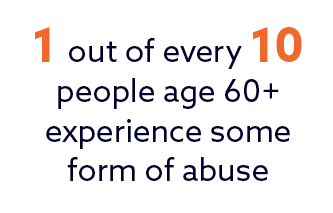 Elder abuse is a pervasive and underreported problem in the United States. Studies show that 1 out of every 10 people age 60 and older experience some form of abuse, including physical, sexual, and psychological abuse and financial exploitation.
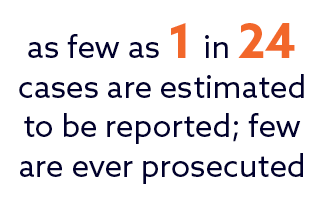 Older adults are especially susceptible to victimization because of social isolation, mental and physical health challenges, limited transportation options, and poverty—factors that are compounded in rural geographies and by the COVID-19 pandemic. Too often, older Americans do not seek help because they fear blame or other negative outcomes, or because they are unaware of their rights and potential legal remedies. It has been estimated that as few as 1 in 24 cases of elder abuse are reported with few of those ever being prosecuted.
Public interest lawyers can play a key role in addressing the many complex civil legal issues that arise from crimes against older adults. By using their knowledge and understanding of elder abuse, public interest lawyers can ensure that victims have access to the legal services and resources they need to restore their dignity, security, and financial safety.
With the population in the United States aging, and older people projected to outnumber children by 2034, there is a critical need for more lawyers who are trained to provide effective representation to older adults who being abused or exploited.
Public interest lawyers can play a key role in addressing the many complex civil legal issues that arise from crimes against older adults.
In July 2020, Equal Justice Works launched the Elder Justice Program in an effort to raise awareness of the prevalence of elder abuse and address the gap in civil legal services for older crime victims. The Elder Justice Program builds on the organization’s successful history of mobilizing lawyers to address crime victims’ rights, and is modeled on the organization’s Elder Justice AmeriCorps Program (Elder jAC), which ran from 2016 to 2018.
 Elder jAC deployed a network of Fellows and 125 law students across 18 states, where they delivered direct legal services to more than 2,000 victims of elder abuse. Fellows in the program also increased the recognition of and responsiveness to elder abuse among social workers, medical professionals, and law enforcement through training and outreach.
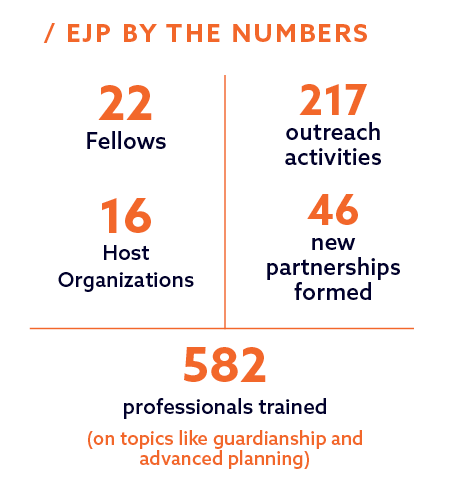
Like Elder jAC, the Elder Justice Program mobilizes a network of 22 Fellows who are hosted at 16 legal services organizations across the country. Fellows work on wide-ranging civil legal issues, while also helping to educate professionals and their communities at large about the signs of elder abuse and the civil legal remedies available through the Fellowship program.
For example, Fellow Elvis Candelario at New York Legal Assistance Group supports coordinated community efforts to address elder abuse by participating in a local multidisciplinary team on elder abuse with social workers, law enforcement, and medical personnel, and by providing information about legal interventions. To date, Fellows in the program have trained 582 professionals on topics like guardianship and advanced planning, conducted 217 outreach activities in their communities, and formed 46 new partnerships.
Despite pandemic restrictions, Fellows in the Elder Justice Program Fellows have been undeterred in finding ways to connect with this high-risk and sometimes isolated population. Fellow Heather McKinney at Legal Aid of NorthWest Texas appeared on Good Morning Texas to discuss COVID-19 scams targeting older adults. Another Fellow, Ben Taylor at Legal Aid Society of Louisville, developed an informational flyer with tips on avoiding emergent COVID-19 vaccine scams and distributed it to community partners, including the Louisville Metro Department of Health. In addition to educational information, the flyer included Ben’s contact information so that older adults who think they may be victims of a scam can reach out to him directly for help.
Despite pandemic restrictions, Fellows in the Elder Justice Program Fellows have been undeterred in finding ways to connect with this high-risk and sometimes isolated population.
Financial exploitation is the most common type of elder abuse addressed by Elder Justice Program Fellows—nearly 30% of the elder abuse victims the Fellows assisted during their first six months of the program were victims of financial exploitation. These cases are particularly challenging as many of them are perpetrated by family members. In one example, Fellow Vanessa Arrieta at Legal Aid Society of Palm Beach County, Inc. helped a client recover stolen money after her son exploited his Power of Attorney to make withdrawals from her bank account without her authorization.
Part of the Elder Justice Program also involves Equal Justice Works teaming up with Justice in Aging to provide specialized training and resources to the Fellows. This helps the Fellows better serve their clients and meet their unique legal needs. Additionally, because of the cohort structure of the program, Fellows are able to collaborate closely and leverage their peer network to improve their legal practice. For example, while working on a complex financial exploitation case, Andrea Marcin at Maryland Volunteer Lawyers Service solicited advice from other Fellows to help secure a fair settlement for her client.
Building on the success of the Elder jAC program, the Elder Justice Program Fellows are increasing recognition of elder abuse, enhancing their communities’ capacities to address it, and working together to improve the national response to elder abuse, neglect, and exploitation.
Visit here to learn more about the work of the Elder Justice Program.
This program is supported by an award from the U.S. Department of Justice, Office of Justice Programs, Office for Victims of Crime, Award Number 2019-V3-GX-K033. The opinions, findings, conclusions or recommendations expressed are those of the author(s) and do not necessarily represent the official position or policies of the U.S. Department of Justice or Equal Justice Works.
In the fourth installment of the Disaster Resilience Awareness Month training series, Equal Justice Works Fellow Stephanie Duke (she/her/hers) at Disability Rights Texas teamed up with Linda Williams, community outreach and training manager at Consumer Action, to address ID theft, how to protect yourself as a disaster survivor, potential protections as a beneficiary of an insurance policy, and shared consumer resources. The training titled, “After a Disaster: ID Theft, Scams, and Insurance,” was prerecorded and shared on Disability Rights Texas’ Facebook page on March 10.

At the session, Stephanie and Linda discussed how in the aftermath of a disaster, individuals are at a higher risk of being taken advantage of by con artists and scammers and how important it is to know what scammers are looking for, how they can steal it, and how to safeguard yourself not only today but in the future. Identity theft hinges on someone having access to your personal identifying information (PII)—your name, social security number, credit card account number, birth date, and even medical information. The session emphasized broad topics to consider like how to build your awareness and protect yourself from identity theft. Consumer Action created this helpful resource that provides information on best practices for protecting yourself from scammers.
If your organization is interested in teaming up with Equal Justice Works for Disaster Resilience Awareness Month, please reach out to us at [email protected].
Disaster Resilience Awareness Month is made possible thanks to the generous support of Equal Justice Works host organizations: Catholic Charities of the Archdiocese of Galveston-Houston, Community Legal Services of Mid-Florida, Disability Rights Texas, Lone Star Legal Aid, Texas RioGrande Legal Aid, Inc., and YMCA International Services.
The Equal Justice Works Disaster Resilience Program is funded by Carnegie Corporation of New York, the Center for Disaster Philanthropy, the Bigglesworth Family Foundation, and individual contributions.

In November 2020, Equal Justice Works Fellow alum Rachel Zummo and Fellow Stephanie Duke testified before the Texas Advisory Committee to the United States Commission on Civil Rights about discriminatory civil rights policies and practices evidenced in the response and recovery efforts for Hurricane Harvey.
Through a series of online public panels held late last year, the Texas Advisory Committee collected data, documents, and testimonial evidence from experts; as well as examined responses by the Federal Emergency Management Agency (FEMA), the Department of Housing and Urban Development (HUD), and state and local actors. The information gathered at these panels is being used to provide recommendations to the Texas Advisory Committee for an advisory memorandum that it is putting together for the U.S. Commission on Civil Rights to use in a statutory enforcement report that will be published in May of 2021.
At the hearing, Rachel took the opportunity to call attention to the complexity of navigating FEMA’s procedures, the agency’s lack of transparency, and the role that wealth inequality plays in FEMA’s response to disaster survivors. Rachel emphasized the need to fund more disaster legal aid lawyers who can help low-income communities access legal services, navigate FEMA’s complex paperwork and processes, and appeal FEMA’s decisions when needed.
Rachel also spoke about the barriers low-income disaster survivors face as renters or when homeowners fail to have a clear title to a residence, and the generalized stereotypes which influence FEMA’s damage inspections. Damage inspections, which presume deferred maintenance issues are the cause of unsafe conditions rather than assessing the disaster-related damage, unlawfully denies a low-income applicant the opportunity for disaster assistance. She also highlighted the failure and lack of accountability of a federal-state partnership under FEMA’s Public Assistance program, which is intended to provide immediate home repairs. In many cases, residences are not fit to live in and occupants are left with more repairs in the long term.
During her testimony, Stephanie addressed the inequitable opportunities individuals with disabilities face in accessing and benefiting from FEMA’s Individual Housing Program. Her testimony focused on the agency’s failure to provide a transparent reasonable accommodation process and its discriminatory habitability standard, which denies individuals with disabilities the benefits of housing assistance and places some at a substantial risk of homelessness and unnecessary institutionalization.
Stephanie called attention to FEMA’s habitability standard, which assumes and generalizes that all applicants can live safely and securely in the same type of environment after a disaster without risk or injury. Some individuals with disabilities who have underlying, non-obvious health conditions, require an alternative analysis of the habitability of that residence. After a hurricane or flooding event, applicants with such impairments as asthma, cancer, lupus, sickle cell or other auto-immune deficiencies cannot remain in mold infested homes without the threat of injury. Without the ability to accommodate or modify FEMA’s habitability standard for eligibility in the housing program, FEMA’s “Safe to Occupy” reason for denial is arbitrary, and discriminately weeds out individuals with disabilities from benefiting from housing assistance.
In her remarks, Stephanie also emphasized the unlawful barriers individuals with disabilities face because they are denied meaningful access to FEMA’s programs and services due to the agency’s lack of a public, transparent reasonable accommodation process. “In the aftermath of a tragedy, disaster survivors with disabilities have no way of knowing how to request or what type of accommodations to request in certain situations,” she said.
Other panelists included National Low Income Housing Coalition Vice President of Public Policy Sarah Saadian, Karen Paup of Texas Housers, Chrishelle Palay of the Houston Organizing Movement for Equity (HOME) Coalition, and Sapna Chittur Aiyer of Lone Star Legal Aid.
Rachel Zummo is a 2018 Fellow in the Disaster Recovery Legal Corps who was hosted by Texas RioGrande Legal Aid, Inc. Stephanie Duke is a 2018 Fellow who participated in the Disaster Recovery Legal Corps, and is now a 2020 Fellow in the Disaster Resilience Program hosted by Disability Rights Texas.
To read more about the Fellows in our Disaster Resilience Program who are helping communities prepare for and respond to the unique challenges arising from all kinds of disasters, visit here.