A Recap of the 2023 Disaster Resilience Symposium: Building Community Resilience through Advocacy and Systemic Change
By Stetson University College of Law students Ariele Dashow and Megan Nickel-Martin
Last month, Equal Justice Works partnered with the American Bar Association’s Standing Committee on Disaster Response and Preparedness, the American Bar Association Young Lawyers Division Disaster Legal Services, and Stetson University College of Law to host a Disaster Resilience Symposium, as part of Disaster Resilience Awareness Month.
Held at Stetson University’s campus in Gulfport, Florida on March 15-16, 2023, the two-day event convened over 100 legal, academic, and community voices instrumental in disaster law to share their experiences, expertise, and delivery strategies for advocating on behalf of people affected by disasters, which continue to grow in frequency and severity. The Symposium also served as a valuable networking opportunity, giving attendees a chance to expand their connections and relationships in the disaster resilience movement.

The 2023 Disaster Resilience Symposium consisted of 10 unique sessions led by professionals from all corners of the disaster law profession and focused on an overarching theme: the interconnectedness of agency, legal aid, and other disaster-response actors. From disability accessibility in the face of disaster to the climate implications of an octopus found in a flooded parking garage, each of the Symposium’s speakers detailed how their greatest successes and abilities to move forward came from the relationships they built with other disaster-response actors. “All disasters start local and end local,” noted Michelle M. Luckett, Florida Voluntary Organizations Active in Disasters Board of Directors Vice Chair and CEO of Be Ready Alliance Coordinating for Emergencies, at a panel session on disaster response and recovery at the local level.
All disasters start local and end local.
Michelle M. Luckett /
Florida VOAD and CEO of Be Ready Alliance.
Themes of interconnectedness, networking, and community ran like a thread linking each session. At one session, panelists spoke about how legal aid attorneys in Florida were able to connect with each other and share resources in the aftermath of Hurricane Ian in 2022, using strategies gained from lessons learned in prior disasters. These partnerships have allowed them to not only improve their ability to respond to disasters and serve the needs of their clients but also promote and build a community for lawyers within the state and across the country. Gathering resources and making connections during blue-sky times like at the Symposium has also been extremely valuable as it makes rapid mobilization following a disaster easier and more accessible.
The sessions also highlighted the importance of informing municipalities about the role of legal advocates in disaster response efforts. Legal aid often focuses on helping the client in front of you, but the importance of meeting emergency managers, other local leaders, and community organizations cannot be overstated. When we are known, we are able to serve more clients. The panelists that participated in the Disaster Response at the Local Level panel were asked “How do governmental and nongovernmental resources work together?” The resounding answer from the panelists: know your community and your cultural centers. By fostering connections with the communities we serve, we can strengthen our ability to function within the ecosystem of those communities, and in turn serve more clients.
On the second day of the Symposium, attendees participated in a disaster and poverty simulation where they were given assigned roles, including identities and a backstory. These backstories were primarily based on people from low-income and/or under resourced communities who are trying to get by in their daily lives when a hurricane strikes. During the simulation, individuals were further identified by colored dots that indicated how receptive disaster response services and workers were to the participants based on their character’s race, gender, disability (or lack thereof), and ethnicity. This interactive exercise allowed professionals to experience a disaster from their potential clients’ point of view and understand where disaster response falls short for the clients they serve.
This simulation was followed by a debriefing discussion, where participants spoke about their characters’ experiences and how they related back to real life scenarios. New ideas for outreach were sparked by what participants had experienced in the simulation. One participant shared the following: “Poverty charges interest,” which incited a conversation about how individuals in these situations do not have the luxury to plan long-term. Living at or below the poverty line forces individuals to only think of the short-term effects of their decisions, which is not ideal when trying to plan ahead for disasters. As the discussion wrapped up participants spoke about how they could be more proactive with outreach and education in their own communities.
To say the two days spent together were amazing and informative would be an understatement. The 2023 Disaster Resilience Symposium provided a space for professionals to get together, share ideas, and connect. Where better to start building partners and resources for disaster preparedness than at the first Disaster Resilience Symposium?
To access recordings of the sessions held at the 2023 Disaster Resilience Symposium, visit here.
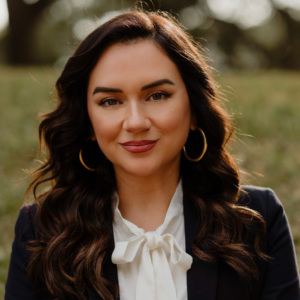
Zoraima Pelaez, a 2022 Equal Justice Works Fellow sponsored by Robyn Lipton and Bruce Kuhlik, recently spoke with us about using impact litigation, advocacy, and coalition building to protect the right to abortion.
What inspired you to pursue a career focused on protecting the right to abortion and ensuring meaningful access?
As someone who has had an abortion, I am deeply committed to dismantling abortion stigma and fighting for everyone’s right to decide whether, when, and how to parent. Before attending law school, I was a community organizer and abortion storyteller in Texas. My time as a community organizer deepened my knowledge of the harmful impact of abortion restrictions and the creative strategies for combating these attacks. It also introduced me to a community of bold and compassionate reproductive rights and justice advocates who have kept me grounded in hope, despite how hard the work can be. We always say that the courts won’t save us; we will save us. This spirit and the resilience of our community is what inspired me to join this movement and is what will keep me in it in the challenging years to come.
Abortion is currently unavailable in 14 states, and courts have temporarily blocked enforcement of bans in eight others. How are these state abortion bans impacting your work and what are some of the consequences you are seeing as a result of these restrictions?
When the Supreme Court issued its opinion in Dobbs v. Jackson Women’s Health Organization, overturning Roe v. Wade, abortion access was decimated across large swaths of the country. Laws banning abortion are now in effect in more than a dozen states, denying more than 20 million people of reproductive age access to essential health care. While it’s true that the promise of Roe was never realized for many marginalized and under-resourced communities, the impact of its reversal has been devastating—especially for those who were already struggling to navigate the complex web of abortion restrictions that existed prior to Dobbs. As abortion bans went into effect across the country, the ACLU Reproductive Freedom Project filed a dozen lawsuits keeping clinic doors in several states open to patients in need of care, including in Ohio, Arizona, Michigan, Indiana, and Utah. While reproductive rights litigation and advocacy are still evolving to respond to the post-Dobbs environment, we continue to hold the line, as well as advance innovative legal and advocacy strategies in federal and state courts to both protect and expand access to care.
With abortion restrictions mounting across the country, there have been conversations about digital privacy and security for those seeking abortion access. Is digital privacy protection one of the uphill battles that await abortion rights advocates?
Digital privacy and security have become increasingly important in a post-Roe legal landscape. Many states seek to criminalize not only the provision of abortion care within their borders, but also to criminalize people who travel to obtain abortion in states where it is legal, as well as those who assist them—and the rise of the surveillance state has undoubtedly made access to the private information of abortion seekers, providers, and helpers possible. The ACLU, and other leading reproductive rights organizations, are addressing abortion criminalization and related issues by establishing the Abortion Defense Network (ADN) to assist providers, patients, and helpers access legal advice and representation. One of the components of the ADN is the Abortion Criminal Defense Initiative, housed at the ACLU, which works alongside a network of experienced criminal defense attorneys who are prepared to defend those facing prosecution related to abortion care. For more information on these initiatives visit: https://abortiondefensenetwork.org/ and https://www.aclu.org/news/topic/abortion-criminal-defense-initiative-reproductive-rights.
What are some other anticipated challenges that await abortion rights advocates in the courts in 2023?
We are currently awaiting a decision in a case out of Texas that could remove FDA approval for mifepristone—one of two medications used in the medication abortion regimen that currently accounts for over 50% of abortions in this country. The outcome of this case could effectively impose a nationwide ban on mifepristone, even in states where abortion is still legal. Unfortunately, this is far from the only threat on the horizon. We have seen bills proposing criminal penalties for assisting people who are seeking care out of state, fetal personhood measures, restrictions on contraception care, and more. The ACLU and our partners monitor these measures closely and will continue to fight threats to abortion and other essential reproductive healthcare in legislatures, at the ballot box, and in the courts.
During your Equal Justice Works Fellowship, you’ve been working to build and strengthen coalitions throughout the reproductive rights, health, and justice movements. Can you tell us more about these partnerships and these groups and advocates are working together to navigate barriers to abortion access?
I represent the ACLU in a multi-organization working group focused on identifying and addressing issues that youth face in accessing abortion care post-Dobbs. Specifically, I analyze issues that justice system-involved youth and immigrant youth may face in accessing abortion care—with a focus on youth in states where abortion has been banned. I also recently worked with local counsel, providers, and a reproductive justice organization in Guam to oppose the Attorney General (AG) of Guam’s Rule 60(b) motion. The motion seeks to lift an injunction on a decades-old abortion ban that was permanently enjoined after the ACLU brought litigation in 1990. If granted, the AG’s motion would revive a law that prohibits nearly all abortions in Guam and criminalizes patients seeking abortion care. This would have particularly severe consequences for people in Guam who would face a Hobson’s choice of either carrying a pregnancy to term and giving birth against their will; making a costly, 4,000 mile trip to obtain abortion outside of Guam and potentially risking criminalization upon their return home; or facing severe criminal charges for self-managing their abortion in their own community. It has been a privilege to work with the people in Guam to ensure this extreme abortion ban remains blocked.
Lastly, what has been the most exciting part of being an Equal Justice Works Fellow and what are you hoping to achieve in the first year of your Fellowship?
The most rewarding thing about being an Equal Justice Works Fellow is getting to work alongside providers, advocates, and communities that—despite being burdened with decades of abortion restrictions, and now bans—have refused to give up. In the first year of my Equal Fellowship, I plan to develop new legal strategies that can be leveraged not only to preserve access to other forms of reproductive health care, but also to create the foundation for a new, broader right to reproductive freedom that can one day encompass stronger protection for abortion access. I also plan to continue collaborating with coalition and local partners to reduce barriers to accessing and providing abortion across state borders, and challenging new threats to reproductive freedom that arise out of the 2023 legislative sessions.
To learn more about Zoraima’s Equal Justice Works Fellowship, visit her profile here.

By Carlos F. Ramos-Hernandez, a 2022 Fellow hosted by the Centro de Periodismo Investigativo. Carlos’ Fellowship project is supported by an Anonymous sponsor.
I never imagined that I would be an integral part of a case before the Supreme Court of the United States (SCOTUS) that is so important for the people of Puerto Rico and our fundamental right to access public information.
For the past year and a half, I have been honored to work at the award-winning nonprofit media organization the Centro de Periodismo Investigativo (CPI) as the first Puerto Rico-based Equal Justice Works Fellow. My Fellowship strives to strengthen and defend Puerto Rico’s fundamental right to access public information through strategic litigation, legal education, and policy advocacy and reporting.
I unequivocally accepted the challenge."
Carlos F. Ramos-Hernandez /
2022 Fellow
While spearheading these integral aspects of my project, a unique and extraordinary opportunity presented itself. SCOTUS granted certiorari in Financial Oversight and Management Board for Puerto Rico v. Centro de Periodismo Investigativo, Inc. Soon after, the attorneys representing the CPI from the Access to Information Clinic at the Inter-American University of Puerto Rico School of Law, asked me if I wanted to fully join the team on this case. I unequivocally accepted the challenge.
For more than five years, CPI journalists have been actively trying to access public documents and communications from the Financial Oversight Board about its operations. This federally-imposed Board was created to oversee Puerto Rico’s debt restructuring process and has been forcing steep austerity measures since 2016, even nullifying local laws involving pensions, health insurance, and workers’ benefits. The CPI’s legal position has consistently been that the Board, as an entity within the territorial government and paid by local taxpayer money, is subject to Puerto Rico’s Constitution and disclosure laws like every other agency. On the contrary, the Board argues that “sovereign immunity” and principles of federalism shield it from being held accountable by the people.
Most of the preparation for SCOTUS litigation occurs before the oral argument. For more than three months, I worked closely with CPI’s pro bono counsel from Williams & Connolly and veteran civil rights attorney Judith Berkan. Serving as the liaison between the two legal teams, I helped with the amicus brief coordination and coalition-building efforts and supported drafting of the factual background and substantive legal arguments for CPI’s brief in opposition. Having been a licensed attorney for five years now, I was able to request SCOTUS bar admission which allowed me to attend oral argument, wait in the lawyer’s lounge, and sit at the counsel table.
It was impressive, yet overwhelming, to witness up-close how theatrical and fast-paced [SCOTUS] oral arguments are."
Carlos F. Ramos-Hernandez /
2022 Fellow
SCOTUS heard the argument on January 11, 2023, the same day that commemorates the birth of Puerto Rican educator, intellectual, and pro-independence leader, Eugenio María de Hostos. I kept thinking back to his teachings on defending human dignity and fostering solidarity among the opressed as I walked through the halls of the grandiose marbled stone building that sedes the United States’ highest court. It was exciting to present the culmination of months’ work and see powerhouse attorney Sarah Harris masterfully argue the case for CPI. It was impressive, yet overwhelming, to witness up-close how theatrical and fast-paced oral arguments are. While some Justices seemed interested in the stakes of the case, others were trying to dispose of it without resolving the issues.
CPI has shown everyone that it will neither give up nor stop fighting for a more just and transparent Puerto Rico."
Carlos F. Ramos-Hernandez /
2022 Fellow
Aside from the thrill of the moment, I was also enraged by the fact that we had to be there. This undemocratic Board makes financial decisions that will adversely impact future generations and wants to keep operating in secrecy without any real accountability. There is no hiding the colonial nature of it all. Yet, as I reflect back on that day, I am proud that, no matter the forum, CPI has shown everyone that it will neither give up nor stop fighting for a more just and transparent Puerto Rico.
I am eager to continue developing these advocacy skills, so I can keep serving those who need it most in my island-nation."
Carlos F. Ramos-Hernandez /
2022 Fellow
As a young, Puerto Rican public interest lawyer, this experience showed me that I can confidently work at the highest level of appellate litigation in the United States, even against a powerful adversary. Moving forward, I am eager to continue developing these advocacy skills, so I can keep serving those who need it most in my island-nation.
I am humbled and grateful for belonging to this amazing team, especially for attorney Berkan’s mentorship throughout this journey. I also want to thank Equal Justice Works and my Anonymous sponsor for supporting this important work.
To learn more about Carlos’ Fellowship project and work he is doing to create a more just, equitable, and transparent Puerto Rico, visit his profile here.

By Sarah Bacot, a 2022 Equal Justice Works Fellow who serves in the Disaster Resilience Program. Sarah is hosted by Disability Rights Louisiana.
According to the United Nations, individuals with disabilities are two to four times more likely to die as the result of a natural disaster than those without disabilities. This is a jarring statistic, and one that highlights the ways that government organizations are unprepared to meet the needs of those with disabilities during and after disasters.
Last year, the U.S. Commission on Civil Rights issued a report assessing civil rights and protections during federal responses to Hurricanes Harvey and Maria. The report examined the ways that the current system leaves many marginalized communities underserved and at higher risk. Among other issues, disabled individuals reported that shelters lacked accessible bathrooms and showers. According to the Partnership for Inclusive Disaster Strategies, which issued its own report critiquing inequity in disaster response during Harvey and Maria (among other disasters), there were disabled survivors in Texas who could not access a shower in a shelter for weeks. Shelters also lacked accessible cots. Some individuals were denied when they attempted to seek shelter with service animals, being asked to provide certification documents for the animal, despite the fact that the Americans with Disabilities Act prohibits this practice.
Even where assistance might have been available, there was often no way for individuals with disabilities to access or request it."
Sarah Bacot /
2022 Disaster Resilience Program Fellow
Even where assistance might have been available, there was often no way for individuals with disabilities to access or request it. The Commission’s report noted that during listening sessions with community members, representatives were told that those with disabilities faced barriers in reaching sites where they could request assistance from FEMA because there was a lack of accessible transportation, and because roads and pathways had been damaged and rendered impossible to navigate for wheelchair users or others with mobility issues. One person indicated that in a Houston shelter holding thousands of people, they “walked around for three hours with a sign that said ‘DEAF’ on it looking for deaf people.” As The Partnership for Inclusive Disaster Strategies concluded “there was no other obvious way to connect deaf survivors with sign language interpreters and other communication accommodations.” When asked by the Commission about these barriers, FEMA “indicated that it was not aware of individuals that were not able to request aid because of a disability.”
During and after disasters, individuals with disabilities… are placed in institutional settings and often remain there…"
Sarah Bacot /
2022 Disaster Resilience Program Fellow
Disability advocacy groups have also raised the alarm that during and after disasters, individuals with disabilities who had previously lived in the community are placed in institutional settings and often remain there rather than returning to a community setting. The National Center on Independent Living flagged this “disturbing trend” in “forced and elective” institutionalization post-disaster. In one case, the individual chose to remain in a nursing home because “the person affected was tired of navigating resources for recovery and wanted to move to somewhere secure.” The National Council on Disability, which issued a report on ending the institutionalization of individuals with disabilities during and after disasters, identified several key issues contributing to heightened institutionalization, including the above-noted lack of access to services and a lack of training for those responsible for administering services. It also pointed out that the Department of Health and Human Services Centers for Medicare and Medicaid Services often issues waivers to rules regarding institutionalization during disasters, permitting states to institutionalize more individuals with disabilities.
Creating a seat at the table for community members and disability-led organizations seems like a clear starting point…
Sarah Bacot /
2022 Disaster Resilience Program Fellow
Tackling inequity in disaster preparedness and response will not be an easy task, but various disability advocacy organizations have provided policy recommendations to address some of the many issues that have been identified. These recommendations include expanding FEMA’s application accessibility; implementing stronger community outreach from FEMA post-disaster; and training government officials on their legal obligations towards those with disabilities and on how to interact with individuals with disabilities generally. The Partnership for Inclusive Disaster Strategies first suggests a reassessment of policy based on findings of inequity, and the formal development of partnerships with non-governmental, disability-led organizations. Others echo the call for the government to involve community members and disability-led organizations in planning and recovery. As government organizations at the federal and local level begin to assess their preparedness and recovery plans, creating a seat at the table for community members and disability-led organizations seems like a clear starting point on the journey to creating equity for disabled individuals in disaster resilience.
The Equal Justice Works Disaster Resilience Program is committed to ensuring that all disaster survivors have an equitable recovery and are resilient for the future. For more information about the program, please visit here.
The Disaster Resilience Program is currently funded American Red Cross, Carnegie Corporation of New York, the Center for Disaster Philanthropy and the California Wildfires Recovery, W.K. Kellogg Foundation, and the Danaher Foundation.
Equal Justice Works is now accepting applications for its 2023 Regional Public Interest Award. Each year, our National Advisory Committee presents eight law students throughout the country with a Regional Public Interest Award. Recipients are chosen for their innovation, impact, and commitment to public interest law, including their extraordinary service through clinics, volunteer work, internships, and more. All Regional Public Interest Award recipients receive a $250 cash prize and commemorative plaque.
To apply for a Regional Public Interest Award, please complete this application by April 10. As a part of your application, you’ll be asked to provide a personal statement describing your commitment to public interest law. Recipients of this year’s award will be notified on April 30.
If you have any questions about the Regional Public Interest Awards, or if you would like to nominate an extraordinary public interest law student for the award in your region, please email our team at [email protected].
Applications for the 2023 Regional Public Interest Awards are now closed.
Access to legal aid in in rural communities across the United States has been a long-standing challenge. Low-income and under-resourced residents in rural communities are often forced to travel great distances to find much-needed legal services. In fact, a staggering 92% of low-income Americans are not getting any or enough legal help for their civil legal problems.
 In response to this issue, Equal Justice Works first partnered with Legal Services Corporation (LSC) in 2016 to offer opportunities for law students to improve access to justice in rural communities through the Rural Summer Legal Corps (RSLC). The RSLC has provided opportunities for law students to respond to the shortage of legal aid in rural communities every summer since.
Last summer, Student Fellows in the RSLC spent eight to ten weeks providing direct legal services and engaging in community outreach and education. Selected from 330 applications, the 2022 class of RSLC Student Fellows included 40 Student Fellows who served at 37 LSC-funded civil legal organizations across the country. During their summer of service, Student Fellows collectively contributed 11,888 hours to help rural communities attain access to legal aid, with 4,510 hours spent on direct legal services! Their efforts helped a total of 3,999 individuals, and they assisted on 891 legal cases.
My host organization entrusted me with complex, interesting, and meaningful work."
Aaron Schaffer-Neitz /
2022 RSLC Student Fellow
“My host organization entrusted me with complex, interesting, and meaningful work,” said Aaron Schaffer-Neitz, a third-year law student at Stanford Law School and a 2022 RSLC Student Fellow. “At no point did I feel like I was given busy work. I’m hopeful that the work I performed this summer will meaningfully improve the lives of farmworkers.”
Student Fellows provided legal aid in a wide variety of issues, such as affordable housing and evictions, domestic violence, education, farmworkers’ rights, and family law matters in Native American communities and tribes. Of the 38 RSLC participants surveyed, 84% said that their experiences throughout the Student Fellowship increased their interest in working with similar client bases in the future.
By working with both legal aid and tribal attorneys, I was able to learn about the nuances of tribal law and jurisdictional complexities between different legal systems."
Kelsey Gunvalson /
2022 RSLC Student Fellow
“By working with both legal aid and tribal attorneys, I was able to learn about the nuances of tribal law and jurisdictional complexities between different legal systems,” said Kelsey Gunvalson, a second-year student at the University of Wisconsin Law School and 2022 RSLC Student Fellow.
Additionally, the 2022 RSLC class of Student Fellows participated in 177 outreach events and created 129 collaborations with community partnerships. Their efforts resulted in 3337 individuals receiving informational legal services, such as resource materials, Know Your Rights trainings, and fact sheets.
The best part of my experience was getting to represent my own client and win a case before I become a 2L."
Samantha Beauchamp /
2022 RSLC Student Fellow
“The best part of my experience was getting to represent my own client and win a case before I become a 2L,” said Samantha Beauchamp, second-year law student at Suffolk University Law School and 2022 RSLC Student Fellow. “While most interns their 1L summer are doing a lot of research and writing, I got to do that, and represent clients to grow my interpersonal communication.”
Despite the challenge of several Student Fellows working remotely due to the COVID-19 pandemic, the 2022 RSLC Student Fellows were still about to explore their passion for service and foster positive outcomes for the clients they served. Following their summer of service, 92% of Student Fellows felt that their legal knowledge had increased from their Fellowships, and 79% said participating in the RSLC had increased their passion for public interest law. 95% of Student Fellows walked away from their summer of service feeling that their experience in the RSLC prepared them for post-graduate legal work.
“I learned that if you have wonderful colleagues, you can feel supported doing public interest work that can otherwise be draining,” said Tara Blackwell, a second-year student at Washington and Lee University School of Law and 2022 RSLC Student Fellow. “I also got to interact directly with clients, and it showed me the impact the civil legal aid makes.”
For more information about the Rural Summer Legal Corps, such as program eligibility and requirements, please visit here. To become a 2023 RSLC Student Fellow, apply by 11:59 p.m. ET on February 14, 2023.
The Housing Justice Program is the only Equal Justice Works Fellowship program that employs both lawyers and organizers. Fellows are hosted at legal aid and grassroots organizations in areas where evictions and housing instability have reached epidemic proportions. While lawyers can provide legal advice and representation to tenants facing involuntary displacement, organizers are imperative connectors and resources to communities.

By DeAnna B. Smith, a 2022 Housing Justice Program Fellow conducting outreach in support of tenants in Virginia
I started with the Legal Aid Society of Eastern Virginia in June 2021 as a Rent Relief Navigator, assisting thousands of Hampton Roads tenants apply for Virginia’s Rent Relief Program. Now, as an Equal Justice Works Fellow in the Housing Justice Program, I am focusing on conducting direct outreach through community partnerships, building tenant education programs, and supporting tenant-led advocacy groups in low-income public and subsidized housing in Southeast Newport News, South Norfolk (Chesapeake), and Portsmouth Virginia. Working with local community leaders and two attorney Fellows, the project is to connect tenants with the legal assistance, knowledge, and resources they need to address systemic issues plaguing the local housing markets.
The communities of focus are predominantly Black and low-income with a high concentration of public and subsidized housing. The current policy of the local public housing authorities is to reduce the availability of subsidized housing in favor of Housing Choice Vouchers, which increases competition at the bottom tier of the market, or to pursue HUD alternatives for public housing properties such as changing rental assistance types and demolishing or selling properties to private owners. Tenants in these communities are most impacted by increased rents, unsafe housing conditions, high eviction rates, and displacement.
Outreach is crucial, not only to this project but in the larger picture of housing justice, because it means reaching tenants who are marginalized, and most times ignored. People face different barriers trying to access legal assistance and knowledge and outreach is one way to remove some of them.
It is action-oriented, community-focused, and requires an openness to learning."
DeAnna B. Smith /
2022 Housing Justice Program Fellow

My role as a Fellow is to go into the communities and set up at local food panties and churches, attend community meetings and local events that center access to community resources. It is action-oriented, community-focused, and requires an openness to learning. I’ve learned a lot sitting outside of the courtroom on the day of court taking applications for legal services, working on a needs assessment with a local tenant’s association, and listening to tenants and other community advocates talk about the common issues they hear or see. It’s a collaborative effort that relies so much on these relationships in order to make a solution possible. Providing resources to make tenants stronger and more confident and connecting them with legal assistance is only one half of the movement. It is what we do with it and how we use it to make real change that determines the success of the work. My goal is to support tenants on their journey in finding and using their power to fight for safe, sanitary, and affordable housing.
Visit here to read more stories about the work of our Housing Justice Program Fellows and how they are advocating for policies and practices that protect the rights of all tenants.
The Housing Justice Program includes Fellows hosted across Maryland, South Carolina, and Virginia. The Housing Justice Program is made possible thanks to the generosity of The JPB Foundation, JPMorgan Chase & Co., Abell Foundation, Maryland Legal Services Corporation, and Sisters of Charity Foundation of South Carolina.
My goal is to support tenants on their journey in finding and using their power to fight for safe, sanitary, and affordable housing."
DeAnna B. Smith /
2022 Housing Justice Program Fellow
Equal Justice Works invites eligible organizations to submit proposals to participate as Host Organizations in the 2023 Crime Victims Advocacy Program.
The Equal Justice Works’ Crime Victims Advocacy Program (CVAP) is mobilizing a cohort of 21 attorney Fellows to increase access to legal aid for survivors of crime, especially in underserved black, Indigenous and people of color (BIPOC) communities.
CVAP Fellows will work at legal services and community organizations across the country to provide civil legal services for victims of crime. Fellows will work collaboratively to provide legal advice, referrals, and full representation for crime survivors on various civil legal issues arising from their victimization. Fellows will also help enforce their clients’ rights in criminal proceedings, engage in outreach and education activities, and build community partnerships for holistic services.
The two-year Fellowship will begin in the summer of 2023.
Please see links to the full Request for Proposals and accompanying appendices below. Proposals must be submitted by Wednesday, March 8, 2023, 11:59 p.m. ET via email to [email protected].
If you are interested in submitting a proposal, please complete this brief Intent to Apply Survey and specify how many Fellows you are interested in applying for by Friday, February 10, 2023.
Resources
Before applying, please review the following materials:
- Equal Justice Works Crime Victims Advocacy Program RFP No. CVAP-20A01
- Frequently Asked Questions for Host Organizations
Templates & Forms
The following materials are required for submission:
- Applicant Information Form
- Budget Template
- Preaward Survey
- Risk Assessment Tool
- Policy Certification
- Certification for Data Privacy
- Equal Justice Works Standard Grant Provisions for Federal Award
- Subaward Conditions from Office for Victims of Crime
- Sample Fellow Position Description, Attorney Fellow
For any questions, email [email protected].
This program is supported by an award under 15POVC-22-GK-01116-NONF, awarded by the Office for Victims of Crime, Office of Justice Programs, U.S. Department of Justice. The opinions, findings, and conclusions or recommendations expressed in this document are those of the contributors and do not necessarily represent the official position or policies of the U.S. Department of Justice.
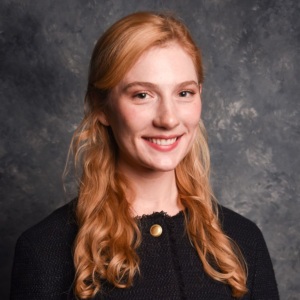
Kelsey Gunvalson, a 2L at the University of Wisconsin Law School and 2022 Student Fellow in our Rural Summer Legal Corps, shares her summer of service experience, and discusses how an Equal Justice Works Student Fellowship helped her to build legal skills outside the classroom. Kelsey is hosted by Legal Services of Northwest Minnesota Corporation.
This summer, I went back to my roots to serve the community I grew up in. Throughout my childhood, I saw how rural populations face a barrier in receiving proper legal representation. This affects not only individual lives but generates a systemic impact on the whole community. My Student Fellowship allowed me help address the justice gap through the Justice Bus; a mobile law office that enables lawyers to hold free legal clinics in rural and isolated communities. Because of the Justice Bus, I was able to help underserved people by connecting them with appropriate legal resources to yield actionable results. It was especially meaningful to see the relief on someone’s face after their voice was heard and knowing they have options.
My time as a Student Fellow has taught me so much, and mainly that a successful civil legal aid attorney listens to the client without inserting their personal bias. It is an imperative for attorneys to give credence to their client’s story and to understand their perspective before educating them about legal options. In understanding a client’s perspective, it is important to be sensitive to the different cultural values among the community. In the area I served, 22% of the total population are indigenous, which demonstrated an importance in providing education and outreach on tribal lands.
My time as a Student Fellow has taught me so much, and mainly that a successful civil legal aid attorney listens to the client without inserting their personal bias."
Kelsey Gunvalson /
2022 RSLC Student Fellow

The highlight of my Rural Summer Legal Corps experience was taking the Justice Bus to pow wows which celebrate local tribal communities. Participating in legal clinics on local reservations strengthened my appreciation for tribal culture while bridging a connection with tribal legal services. By working with both legal aid and tribal attorneys, I was able to learn about the nuances of tribal law and jurisdictional complexities between different legal systems.
I would recommend the Rural Summer Legal Corps to law students who are looking for a way to make a material impact on people’s lives and to feel good about the work they do.
If you are interested in embarking on a summer of service like Kelsey, apply to the Rural Summer Legal Corps by 11:59 p.m. ET on February 14, 2023. For more information about program eligibility and requirements, please visit here.
By working with both legal aid and tribal attorneys, I was able to learn about the nuances of tribal law and jurisdictional complexities between different legal systems."
Kelsey Gunvalson /
2022 RSLC Student Fellow
The Rural Summer Legal Corps (RSLC)—a partnership between Equal Justice Works and Legal Services Corporation (LSC)—supports 45 dedicated law students in serving rural communities each summer. Participants, called Student Fellows, have a one-of-a-kind opportunity to explore their public interest passions while gaining hands-on experience, all while earning a $7,000 stipend.
Interested in joining this incredible program? Here’s what you need to know about applying to be an RSLC Student Fellow this summer.
Who is eligible?
RSLC is open to current law students who have completed their first year of law school by the start of the program (summer 2023). For some placements, applicants must possess a valid driver’s license and/or access to adequate transportation or have proficiency in a second language.
How do I submit a strong RSLC application?
A standout application will showcase a law student’s passion for public service and access to justice issues. Additionally, a strong display of interest for the project focus area to which you apply also holds significant weight in the decision process. If you have a personal connection to rural communities, highlighting that connection is another way to make a positive impression.
What type of training do RSLC Student Fellows receive?
All RSLC Student Fellows attend an exciting three-day training before their service begins. This training is made up of a series of workshops and panels, networking opportunities, and the chance to connect with and ask questions of the LSC and Equal Justice Works staff. Fellows receive travel accommodations and lodging for the training in Washington, D.C., as well as travel arrangements from the training to each student’s host organization.
What type of work can I expect to complete during my Student Fellowship?
Student Fellows will take on a wide range of responsibilities regardless of the specific project focus area of their host site. These assignments can include direct client services, client intake consultations/interviewing with supervising attorneys, legal writing opportunities, and court appearances. Projects may also include non-legal assignments such as community outreach, education, and pro bono coordination. This summer, some projects are in-person, while others will be conducted remotely. You can find a list of host organizations and their position descriptions on the Equal Justice Works website here.
Can the RSLC lead to long-term opportunities following law school graduation?
Yes! Several Student Fellows have been hired by their previous host sites as full-time staff attorneys after graduation. For example, Ana Laurel, a 2018 Equal Justice Works Fellow in our Disaster Recovery Legal Corps, previously served in the Rural Summer Legal Corps, and Justin Small, a 2021 Rural Summer Legal Corps Fellow, is now an Equal Justice Works Fellow who designed his own project advocating for unhoused and justice-involved individuals in the Antelope Valley at Neighborhood Legal Services of Los Angeles County.
Are you ready to apply?
Applicants will be asked to provide a résumé, a personal statement describing their professional qualifications and interest in the program, and their top three host organization choices. For more information about program eligibility and requirements, visit our website or email us at [email protected].
Be sure to submit your application before the deadline on February 14, 2023, at 11:59 p.m. ET!