“What are you doing for others?”: Equal Justice Works Fellows Honor the Spirit of Martin Luther King Jr.
In honor of Dr. Martin Luther King Jr.’s legacy, we celebrate the work of our Fellows who are bringing us closer to Dr. King’s vision of equality and justice for all.
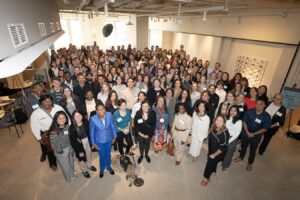
In 1963, Dr. Martin Luther King, Jr. wrote, “Life’s most persistent and urgent question is, ‘What are you doing for others?’” At Equal Justice Works, we facilitate opportunities for lawyers to transform their passion for equal justice into a lifelong commitment to public service. Our Fellows spend each day of their projects strengthening communities, bridging barriers, and creating sustainable solutions.
Over the past year, Fellows have shared stories with us about their work advocating for voting rights, LGBTQ+ rights, environmental justice, immigrant rights, racial justice and more in communities across the country.
Learn about these impactful projects from our Fellows, in their own words, below:
- Protecting Equal Access to Education: 2023 Fellows Makiah Lyons, Vanessa Aceves, Breanna Bollig, and Rachel Niegelberg share their work on education access, educational rights, and special education issues.
- Enforcing Tenant Protections Under the Fair Housing Act: 2022 Fellow Holly Webster shares her experience and lessons learned advocating for fair housing.
- Closing the Access to Justice Gap for Trans People in Rural Areas: 2018 Fellow alum Dusty Weber LaMay shares his work creating legal resources for trans people trying to attain name changes, gender changes for records, and more.
- Protecting Access to the Polls: 2022 Fellow Kevin Muench and 2023 Fellows, Grace Thomas and Conner Kozisek share their work protecting voting rights, including operating voter registration and absentee ballot programs, during an election year.
- Fostering Inclusion for Persons with Disabilities: 2023 Fellows Charla Boley and Courtney Bergan share their work advocating for people with disabilities as they navigate complex systems for social services.
- Building Connections to Meet the Needs of Human Trafficking Survivors: 2019 Fellow Victoria Marie Sexton and 2023 Fellow Shawntel Williams discuss their work providing survivor-led legal representation and identifying areas of support for victims of human and labor trafficking.
- Advocating for Survivors of Crime: 2023 Fellows Holly T. Bird, Eugenia Kim, and Claudia V. Torres Patino share their experiences and lessons learned through the Crime Victims Advocacy Program.
- Assisting People Fleeing Political Persecution: 2022 Fellow Sophia Genovese writes about her work as an immigrant attorney serving immigrant communities in New Mexico.
- Representing Immigrants Affected by Natural Disasters: 2022 Fellow Remi Gavlick shares assisting clients with U-visa and T-visa applications in Missouri for immigrants to have access to aid in the event of a disaster.
We are proud of all our Fellows for living up to Dr. King’s promise of equal justice for all by bringing lasting change to their communities. Learn more about their commitment to service here.
The Alumni Engagement Program at Equal Justice Works has continued to grow since its launch in April 2021 and achieved many successes throughout 2024. Read more about the recent successes of the program below.
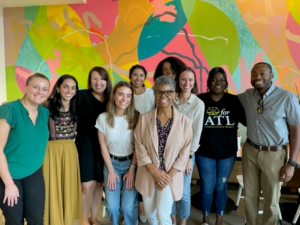
The Equal Justice Works Alumni Advisory Council (AAC) expanded to 21 members, with the addition of 11 new members in 2024. This expansion allowed the Council to form a mentorship committee and begin formulating an alumni-Fellow mentorship program. Throughout the year, the AAC hosted two Alumni-Fellow regional events and facilitated two professional development workshops. Additionally, Equal Justice Works staff hosted several networking socials for Fellows and alumni, including one at the 2024 Equal Justice Conference in Detroit Michigan and another mix and mingle in the DMV area.
At the 2024 Scales of Justice, Equal Justice Works presented its second Distinguished Alumni Award to 2000 Fellow alum Ahilan Arulanantham, who now serves as the Professor from Practice and Co-Director of the Center for Immigration Law and Policy (CILP) at the UCLA School of Law. This year, the nomination process for the Distinguished Alumni Award expanded to solicit nominations from Equal Justice Works Fellows and Fellow-Alums. The Equal Justice Works Distinguished Alumni Award recognizes an Equal Justice Works alum who has made outstanding contributions as a leader in public interest law; has distinguished their-self through creating lasting impact in the communities they serve; embodies the organizational values of passion, community, service, opportunity, and equal access to justice; and reflects the transformative power of an Equal Justice Works Fellowship
“I want you to know that I have found tremendous joy in this struggle,” Ahilan said in his remarks at the event. “My partners in it have become some of my closest friends. The fact that we have not won—not yet won—has made us re-think our strategies from time to time. But it has not weakened our resolve.”
I want you to know that I have found tremendous joy in this struggle. My partners in it have become some of my closest friends. The fact that we have not won—not yet won—has made us re-think our strategies from time to time. But it has not weakened our resolve.
Ahilan Arulanantham /
2024 Distinguished Alumni Award Honoree
Equal Justice Works also expanded upon alumni participation in the Leadership Development Training this year. At the 2024 event, alumni served as affinity group leaders and were invited to attend an Alumni-Fellow Welcome Reception hosted by the AAC.
“It has been inspiring to witness the alumni in our community band together to help create these great opportunities for current Fellows and alumni to connect,” said Lynbea Toombs, the director of alumni relations at Equal Justice Works. “We look forward to continuing to engage and recognize the accomplishments of our alumni through programming and volunteer opportunities next year!”
To learn more about alumni programs at Equal Justice Works, click here.
We look forward to continuing to engage and recognize the accomplishments of our alumni through programming and volunteer opportunities next year.
Lynbea Toombs /
Director of Alumni Relations
Equal Justice Works
On October 15, 2024, Equal Justice Works honored Ahilan Arulanantham, the Professor from Practice and Faculty Co-Director of the Center for Immigration Law and Policy (CILP) at the University of California at Los Angeles (UCLA) School of Law, with the Distinguished Alumni Award. Read his remarks from the event below.
I am deeply honored to receive this award from Equal Justice Works. What this organization has done to advance social justice by seeding generations of public interest lawyers has been remarkable. I benefited immensely from the training and opportunities the organization gave me—both directly, through its own programs at fellows’ conferences, and through the education I received from my host organization—the ACLU Immigrants’ Rights Project, where I had the chance to learn from some of the best litigators in the country.
Watch a recording of Ahilan’s remarks here:
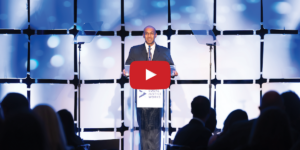
That time really launched my career as an immigrants’ rights lawyer. And I have loved every minute of it… though not, I must admit, because of the dramatic improvement that has happened in the field during my career. Quite the opposite in fact.
Like a slow-motion train wreck, over the last 25 years I have seen the Overton window gradually but consistently move in an anti-immigrant direction, and always farther away from evidence-based, rational decision making. Until today, where the story of Ms. Sassy the Cat—allegedly eaten by Haitian refugees, but subsequently discovered alive and well in the basement of her house in Springfield, Ohio—has gotten more attention than virtually all of the thousands of people who have come here just trying to make a better life for themselves and their families.
Now, to be fair, what Ms. Sassy did is pretty remarkable. According to the Wall Street Journal, which faithfully recounted her story, she is a Maine Coon. Do people here know what that is? It’s a HUGE cat. Like, basically a small mountain lion! How exactly did Ms. Sassy manage to hide in a basement for three days? Inquiring minds want to know! But seriously… it’s been too much.
As Carmen referenced, I have spent much of my career litigating cases to establish a right to appointed counsel for people facing deportation. Back when I started, naïve me thought this should be a relatively easy point on which decision makers could agree. Whatever you think the rules governing deportation should be, surely we can all agree they should be administered fairly. And you cannot have a fair deportation hearing with a prosecutor on one side arguing for deportation, but no one to defend the immigrant on the other. I learned that on my grade school playground—you have to have a level playing field.
You cannot have a fair deportation hearing with a prosecutor on one side arguing for deportation, but no one to defend the immigrant on the other. I learned that on my grade school playground—you have to have a level playing field.
Ahilan Arulanantham /
Recipient of the 2024 Distinguished Alumni Award
Professor from Practice and Faculty Co-Director of the Center for Immigration Law and Policy
We started working intensively toward that goal about 15 years ago, through a class action lawsuit called Franco Gonzales v Holder, which focused on the rights of people with serious mental disorders. Mr. Franco had a very serious cognitive impairment. The government had sought to deport him for a crime he committed, but refused to provide him with a lawyer. The immigration judge could tell he didn’t understand what was happening, so she closed his case until a lawyer could be found, but didn’t order his release.
So he spent the next four and a half years imprisoned by immigration authorities with no active proceedings against him.
Mr. Franco became the lead plaintiff in a large class action we filed. And we won. Franco established a right to free legal representation for people with serious mental disorders facing deportation. The 2013 injunction remains in place to this day. And Mr. Franco is a US citizen.
I savored that victory, but I always saw it as a first step. A giant one, bitterly fought, but still just a step.
Yet today, more than a decade later, the program established through the Franco injunction—the National Qualified Representative program—remains the only mechanism for appointment of counsel in the federal immigration system. For all other immigrants facing deportation, they can get legal representation if they can pay for it, if a pro bono organization has capacity to help them, or if a state or local entity funds counsel (as several now do), but otherwise they are on their own.
And most of them are. According to data from the Transactional Records Access Clearinghouse, in August 2024, 85% of all immigrants ordered removed did not have a lawyer. That number includes long-time lawful residents convicted of minor crimes, people fleeing persecution from countries with raging civil wars, and many people jailed in the immigration detention system—who have to fight their cases pro se from behind bars.
But worst of all, that number also includes children. Even now, after years working on this issue, the claim seems absurd even as I say it. Can you believe that we live in a country where federal immigration prosecutors appear in court against unrepresented children, and Immigration Judges order those children deported? But it’s true. It still happens—in thousands and thousands of cases. In a detailed study we conducted at the Center for Immigration Law and Policy at UCLA Law School, where I now work, we found that nearly one third of all immigration court cases initiated by the Biden Administration—more than 80,000 during a five month period we analyzed—were against children. 30,000 of those children were under the age of five. Many were part of family units, but many others were unaccompanied—they came here alone.
Most unrepresented unaccompanied children never even make it to court. In our data set, 86% of the removal orders issued against unaccompanied children were for failing to appear. Think about that for a minute: under the immigration laws, unrepresented children can be ordered deported because they did not bring themselves to court. I scarcely trust my 8-year-old daughter to walk across the street. How can we possibly impose life-altering legal consequences on children for failing to make it to court? But we do. Just in 2022 and 2023 alone, more than 13,000 unaccompanied children were ordered removed for failing to come to court.
Can you believe that we live in a country where federal immigration prosecutors appear in court against unrepresented children, and Immigration Judges order those children deported? But it’s true. It still happens—in thousands and thousands of cases.
Ahilan Arulanantham /
Recipient of the 2024 Distinguished Alumni Award
Professor from Practice and Faculty Co-Director of the Center for Immigration Law and Policy
After we won Franco, I worked with an extraordinary team of attorneys to try to change that. We spent five years litigating multiple cases—including a very large class action—seeking to establish a right to appointed counsel for children. (EJW made a substantial investment in that work—by my count at least three fellows spent large portions of their fellowships working on those cases).
Some of you may even remember the deposition testimony we got in one of them, when the Assistant Chief Immigration Judge for Vulnerable Populations told me in a deposition that he had taught immigration law to three- and four-year olds. “It takes time, and patience” he said, “but it can be done.”
To state the obvious, that is incorrect. His statements were mocked in videos that went viral, and even attacked in Senate Judiciary Committee hearings. We used it to raise awareness on this issue, create more pressure for government and pro bono funding for counsel. And probably, indirectly, our efforts did help to protect many children from deportation.
But what that Judge said effectively remains the position of our government to this day. All that litigation we did never resulted in a ruling on the merits. And the thousands of children who have come here since we filed the first cases on this in 2014 remain vulnerable to deportation—easy targets in any future federal mass deportation campaign, but also targets right now for smaller enforcement operations, and for employers looking to exploit vulnerable immigrant workers.
I chose to focus my remarks on this issue today for two reasons. First, I wanted everyone listening here to know that the other attorneys who have worked on this and related issues involving immigrant children have not given up. We have continued to push at all levels of government (federal and state, legislative, executive, and administrative) for a right to counsel, and ultimately for a world in which every proceeding involving an immigrant child is focused on the best interests of the child, which is how it works for children in virtually every other legal context, in this country and around the world.
Second—and this is particularly for any younger public interest attorneys in the room—I want you to know that I have found tremendous joy in this struggle. My partners in it have become some of my closest friends. The fact that we have not won—not yet won—has made us re-think our strategies from time to time. But it has not weakened our resolve.
I want you to know that I have found tremendous joy in this struggle. My partners in it have become some of my closest friends. The fact that we have not won—not yet won—has made us re-think our strategies from time to time. But it has not weakened our resolve.
Ahilan Arulanantham /
Recipient of the 2024 Distinguished Alumni Award
Professor from Practice and Faculty Co-Director of the Center for Immigration Law and Policy
Mahatma Gandhi spent decades peacefully advocating – and eventually winning – one of the greatest struggles for freedom in the history of the world. He once said “it’s the action, not the fruit of the action, that’s important. You have to do the right thing. It may not be in your power, may not be in your time, that there will be any fruit. But that does not mean you stop doing what is right. You may never know what results come from your action. But you know if you do nothing, there will be no result.”
So I exhort you all, in the spirit of Equal Justice Works: to continue to do the right thing. Ultimately, that is where our greatest strength will always lie. Thank you very much.
Click here for more information about the Scales of Justice. Click here to learn more about Ahilan.
Equal Justice Works recently spoke to 2022 Fellow Kevin Muench and 2023 Fellows, Grace Thomas and Conner Kozisek about their work protecting voting rights and voter access. Read more about their experiences in the dispatches below:
During my Fellowship, I worked with local advocates and jail administrators to operate voter registration and absentee ballot programs in Kentucky’s jails. I also investigated and published findings regarding the impact of prison gerrymandering on state and local elections.
As a Fellow, what did an average day working with your clients look like?
My daily work was dynamic and varied. Some days I was inside a jail, working with advocates and administrators to establish a registration drive. Other days, I was reviewing redistricting data alongside data scientists. Each day was a fun, new adventure.
What did you accomplish and learn throughout your project?
During this project, I’ve learned the strength of community advocacy and relationship building. Change rarely comes from the top down, and more frequently is the output of sustained, long-term advocacy from a grass roots community based on open, trusting relationships. To create the change we want to see, we must build relationships and commit to the long fight.
What are you most excited about continuing your project?
Looking forward, I strongly believe that we need to create better conditions in jails and prisons. A key piece of that is helping people in pre-trial detention–who have the legal right to vote–participate in the democratic process. Our criminal legal system normalizes the mass processing of incarcerated people, and we cannot allow those folks’ rights to be stripped during this.
What advice do you have for people looking to learn more about their local voting laws?
For those who want to learn more, my best piece of advice is to get involved! If you’re interested in an issue, find a community organization who focuses on that issue and volunteer with them. These advocates have deep, intimate understandings of how the law impacts people daily, and are some of the best experts to learn alongside. Here in Kentucky, I’d recommend All of Us or None Kentucky, Kentucky Equal Justice Center, Kentuckians for the Commonwealth, The League of Women Voters, and countless more.
Change rarely comes from the top down, and more frequently is the output of sustained, long-term advocacy from a grass roots community based on open, trusting relationships.
Kevin Muench /
2022 Equal Justice Works Fellow
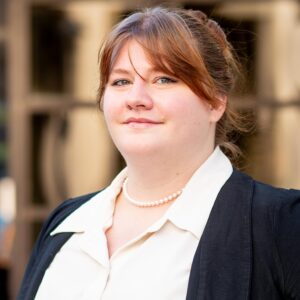
Although the U.S. Supreme Court articulated the right of eligible voters to cast a ballot from jail fifty years ago, few incarcerated voters participate in elections because of a lack of voter information and electoral resources, voter intimidation, and institutional barriers that exist by virtue of being inside a jail. At Lawyers’ Committee for Civil Rights Under Law, I advance jail-based voting initiatives for eligible incarcerated voters and the community advocates who support them, primarily in Arizona, Georgia, Maryland, Texas, and Virginia.
What does an average day working with your clients look like?
On an average day, in coordination with justice-impacted advocates and community organizers, I communicate with election and jail staff to explain their duties to incarcerated voters, advocate for community-led support of incarcerated voters, provide educational resources to voters, and push for expanded ballot access in jails. Near election deadlines, I accompany community organizers inside facilities to register voters, answer election questions directly, lead educational programming, advise volunteers, and provide access to mail-in ballot applications. I will also return a call to the occasional voter asking a rights restoration or jail-voting question that comes in through our Election Protection Hotline.
What have you accomplished and learned so far?
Because most election laws do not adequately consider the specific barriers eligible incarcerated voters have when voting, I have seen legal advocates and county officials creatively meet the need of voters while complying with election laws and without straining jail resources. When a county official brings up an issue or a jailer says no, I have learned to be a better advocate for incarcerated voters by problem-solving with officials or pursuing alternative avenues for partnerships. The best part of this work is witnessing government officials, community members, and directly impacted people all working together to support traditionally marginalized voters. With these folks, I have helped some community organizers start new jail-based voting programs inside jails and helped secure a jail-based polling location.
What are you most excited about continuing your project?
I am involved in 17 counties across five states now. In many of these counties, voter participation from the county jails in 2020 and 2022 was small, so I am excited to see how participation this November compares to previous years because of the agreements, programming, and resources we fought for. I am looking forward to using the momentum from this past year to create long-term policies in these counties, encourage more counties to implement similar programming, and support the legislative efforts of our partners in 2025.
What advice do you have for people looking to learn more about their local voting laws?
If you have an election-related question about how to vote in your state, you can reach out to the national, nonpartisan Election Protection coalition, which is made up of more than 300 local, state, and national partners, at 866-OUR-VOTE (866-687-8683). Our 886-OUR-VOTE hotline and voter assistance field program are staffed with trained legal volunteers to assist voters with a variety of questions and issues.
The best part of this work is witnessing government officials, community members, and directly impacted people all working together to support traditionally marginalized voters.
Grace Thomas /
2023 Equal Justice Works Fellow

At Chicago Lawyers’ Committee for Civil Rights, I expand voters’ access to polling places and ensure voters have meaningful access to in-person voting options. My work focuses on polling place closures and last-minute changes, language and disability access, polling place staffing concerns, jail voting, and other issues that disproportionately affect Chicago’s low-income communities of color.
What does an average day working with your clients look like?
Although each day is different, my days often include meetings with coalition and community partners, responding to requests and questions about different voting requirements or processes, presenting to partners about voting rights issues, helping to draft policy proposals based on partner goals, and working on other forms of advocacy.
What have you accomplished and learned so far?
During the 2024 Primary Election, I helped to train a team of field program volunteers who visited specific polling places that had recently been changed, had been identified by community partners as areas of concern, or had a history of problems. The volunteers also responded to problems related to polling place access as we learned about them during the day. Additionally, one of my main policy projects has involved researching and drafting language for an Illinois State Voting Rights Act, which provides broad state-level voter protections for polling places and voter access. Through this and other efforts, I have learned so much about working within coalitions with different and overlapping goals and thinking through ways we can help each other.
What are you most excited about continuing your project?
The 2024 General Election is just around the corner! I am excited to expand upon the groundwork created for the primary to assist voters and continuing to advocate for racial equity considerations being part of the process for polling place consolidations, closures, changes, or other issues.
What advice do you have for people looking to learn more about their local voting laws?
My host organization is part of the national Election Protection coalition, which includes the nonpartisan 866-OUR-VOTE (866-687-8683) hotline. Voters can call this hotline to talk to trained Election Protection volunteers about questions they have about voting or problems they encounter while trying to vote.
I am excited to expand upon the groundwork created for the primary to assist voters and continuing to advocate for racial equity considerations being part of the process for polling place consolidations, closures, changes, or other issues.
Conner Kozisek /
2023 Equal Justice Works Fellow
To learn more about the Fellows that have worked to protect voting rights and electoral participation, click here.
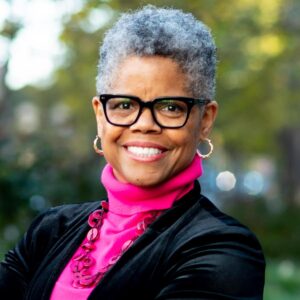
By Verna Williams, CEO, Equal Justice Works
Our nation is experiencing an access to justice crisis. According to the Legal Service Corporation, 92% of low-income people’s civil legal needs went unmet in 2022, leaving a massive gap in our justice system. What’s more, the number of lawyers focusing on underserved populations is very small. According to the American Bar Association, fewer than one percent of lawyers are paid legal aid attorneys. As law schools plan for the coming academic year, I urge them to consider how to address this untenable gap in our legal system.
Put simply, creating lasting change for communities and in our justice system requires more graduates to choose public interest law. The fact that so few law graduates pursue this route is not only problematic, but also puzzling. As a law school dean, I saw first-hand that many aspiring attorneys chose legal education because they wanted to serve the public. In my new position as CEO of Equal Justice Works, a nonprofit that connects law students, law school professionals, lawyers, and advocates with fellowships at legal services organizations and other opportunities in public interest law, we are tackling this problem head on.
Consider student loan debt. AccessLex reports that, on average, law students borrowed $157,300 last year. Students of color graduate with an average educational debt twice the amount of their white classmates. With entry-level public interest attorneys earning a median $63,200, compared to $200,000 for law firm associates, it’s hardly surprising that so many graduates would choose private practice.
What else explains the dearth of public interest attorneys? To answer that question, Equal Justice Works partnered with the Law School Survey of Student Engagement (LSSSE), an invaluable resource, to identify blind spots in supporting future public interest lawyers. Working with LSSSE, we crafted questions for the 2023 LSSSE Survey to help quantify just how accessible information about pursuing public interest law is for law students across surveyed law schools.
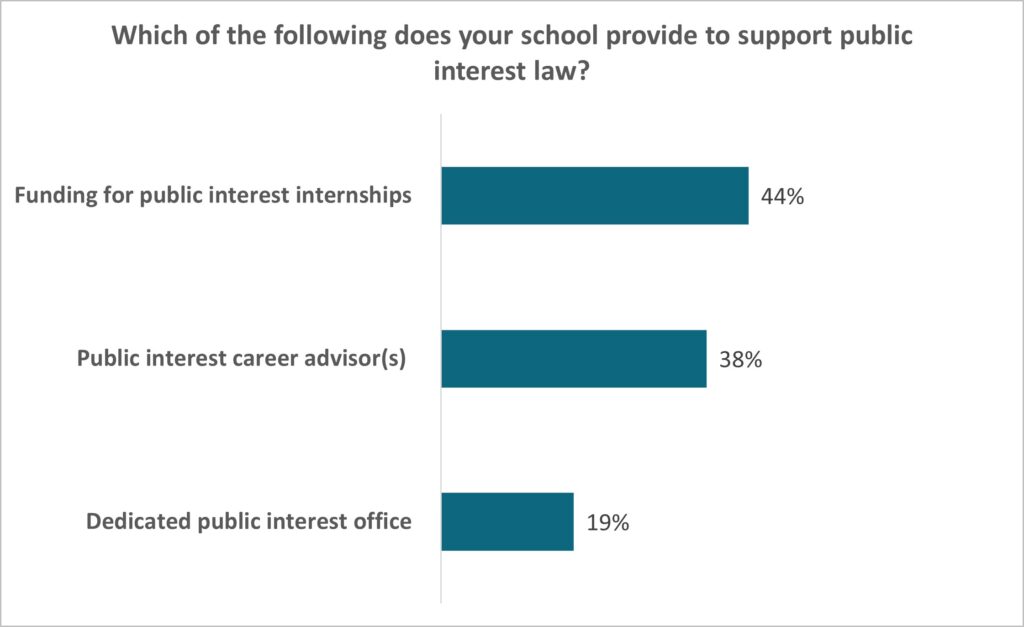
The results illustrate that many opportunities exist for legal education to build or strengthen support for new public interest lawyers. Among the findings:
- Only 44% of participating schools provide funding for public interest internships.
- An even smaller percentage of schools, 38%, employ public interest career advisors.
- Just 19% of law schools have a dedicated public interest office.
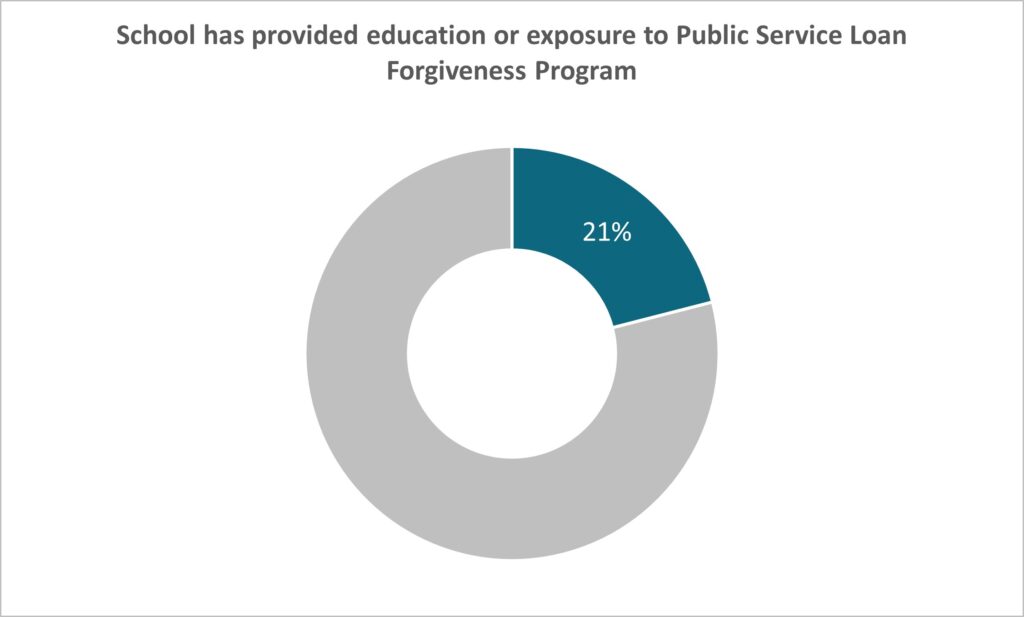
- When asked whether their school provided education and exposure to tools like Public Service Loan Forgiveness (PSLF), the answer was a disheartening 21% responded in the affirmative.
View the complete findings on our website.
The result is a knowledge gap about how to make the most of existing resources that can make pursuing public interest feel less like fantasy and more of a reality.
The LSSSE survey results strike a chord in me. Like today’s students, I chose law school because I wanted to make a difference. But before I began my public interest journey, I practiced in BigLaw to get my financial house in order—when I graduated, loan repayment assistance plans were brand new. I was able to get settled with my associate’s salary, paid off some debt, and never looked back.
My debt was considerably less than that of today’s student – but no less frightening. I wouldn’t trade my trajectory for anything, having had the privilege of practicing at the Department of Justice and the National Women’s Law Center. I built on those experiences as a faculty member at the University of Cincinnati College of Law (UC), in part, to create and support the next generation of feminist legal advocates. As a faculty member, I co-founded and co-directed the Nathaniel Jones Center for Race, Gender, and Social Justice, through which we created a clinic, advised students seeking public interest fellowships, and put on programs about how to “make a difference while making a buck.” Serving as dean of the law school allowed me to facilitate other efforts to make public interest opportunities available to students. I’m especially proud of the partnership we engaged in with Hamilton County Municipal Court to create the Help Center, which provided assistance to unrepresented litigants. Staffed by a UC attorney, the Help Center engaged students and volunteer lawyers who together have served tens of thousands of people.
Now, at the helm of Equal Justice Works, my colleagues and I continue the longstanding work of building a movement of public interest leaders who are transforming the communities we live in, come from, and partner with. But we can’t do it alone.
These survey results remind us we have a long way to go. But we are in this for the long haul. Partnerships with law schools are a key part of our strategy. We support member law schools, the majority of accredited institutions in the nation, in myriad ways —from educating law school professionals through webinars and other informational resources or introducing thousands of students to the field in the nation’s largest public interest career fair, to preparing them for such careers through summer fellowships and our Public Interest Primer. In addition to those resources, our law school engagement and advocacy team travels the country, visiting member schools to meet with students and share information about our programs and opportunities. Through these efforts and more, Equal Justice Works seeks to fill in the gaps about public interest law for students. Thanks to the LSSSE survey, we have important information to help amplify our efforts.
When millions of people in the United States cannot access legal assistance to avoid eviction, maintain custody of their children, or escape an abusive partner, we need an all-hands-on deck solution. Every part of the legal profession must focus on this crisis. Law schools must continue to institutionalize their commitment to pro bono work and public service. By continuing to work together, we can empower this next generation of advocates to be ready to direct their passion for impact where it’s most necessary.
*Reposted from The Law School Survey of Student Engagement.
In observance of National Preparedness Month, Equal Justice Works recently heard from 2023 Fellows Nickole Durbin-Felix and Kevin Sarlo about their work as Disaster Resilience Program Fellows helping communities in Florida recover from Hurricane Ian.
As hurricane season progresses, we encourage everyone to review resources on disaster preparedness, such as the American Red Cross page on hurricane safety, “Make a Plan” by Ready.gov, and the Environmental Protection Agency’s page on National Preparedness Month.
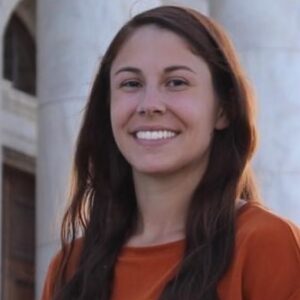
At LatinoJustice PRLDEF, we are working on providing educational outreach events to create a more resilient community and raise awareness of their rights after a disaster. Additionally, our organization works on transforming harmful systems, empowering our communities, fighting for racial justice, and building systemic impact litigation efforts that address disaster related issues, including access to clean, renewable energy.
What does an average day working with your clients look like?
I spend my time meeting and building relationships with local and national organizations to prepare our communities for future disasters. The goals of these meetings include creating new educational materials and planning outreach efforts.
What have you accomplished or learned so far?
We’ve had great success in our outreach and education events, attending many disaster expos in the counties we serve in Florida and really immersing ourselves in our community. We also built a successful social media campaign that developed into our L.E.A.R.N. webinar series, which reached a wide audience. In this series, we discussed preparedness, common issues that arise for households, and how to navigate those challenges.
What are you most excited about continuing your project?
In the future, we hope to work on continued engagement and collaborations with allies on resolving the energy crisis and building sustainability. With an increased focus on energy justice and energy democracy, we believe our communities will be better prepared to face the next natural disaster and help alleviate barriers to equitable relief after a disaster.
What would you like people to consider during Disaster Preparedness Month?
It is important to consider is making sure that our communities- especially those that speak languages other than English- know about resources before a disaster. Disasters can be overwhelming but knowing that help is available in their own language can provide some peace of mind.
With an increased focus on energy justice and energy democracy, we believe our communities will be better prepared to face the next natural disaster and help alleviate barriers to equitable relief after a disaster.
Nicole Durbin-Felix /
2023 Fellow in the Disaster Resilience Program
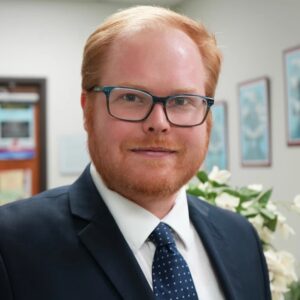
I assist clients with their continuing recovery from Hurricane Ian by resolving legal issues stemming from the storm and preventing these issues from reoccurring when the next disaster strikes.
What does an average day working with your clients look like?
An average day can be many things: working out of our office, doing community outreach at a partner organization’s location, or giving an educational presentation to community members.
What have you accomplished or learned so far?
Focusing on disaster recovery and resilience has brought me into contact with many different areas of law (such as construction and insurance law) and many different community partners (like local social services and long-term recovery groups). My legal knowledge is growing, and so, too, is the network of people I can refer clients to when the legal system does not meet their needs.
What are you most excited about continuing your project?
Hurricane Ian was not the first hurricane to hit Southwest Florida, and it won’t be the last, so the knowledge I earned from participating in this program needs to be compiled and distributed among our regional offices, community partners, and the larger community. Along with other members of Florida Rural Legal Services’ Disaster Team, I am assembling an “attack outline” for legal aid attorneys responding to natural disasters in Florida and an informational booklet translated into English, Spanish and Haitian Creole for the public.
What would you like people to consider during Disaster Preparedness Month?
One of my mentors told me, “If you’re handing out your business card during a storm, you’re too late.” If you want to support your community during grey skies, you have to make connections when skies are still blue.
One of my mentors told me, "If you're handing out your business card during a storm, you're too late." If you want to support your community during grey skies, you have to make connections when skies are still blue.
Kevin Sarlo /
2023 Fellow in the Disaster Resilience Program
Equal Justice Works recently spoke to 2023 Fellows Makiah Lyons, Vanessa Aceves, Breanna Bollig, and Rachel Niegelberg, who are all working on education access, educational rights, and special education issues. Read more about their work and how public interest law can serve our educational systems below:
Makiah Lyons

At the Intercultural Development Research Association (IDRA), I am developing a legal youth participatory action research project co-led by a group of youth researchers to investigate the school discipline experiences of Black girls in Georgia public schools. I also work to develop accessible legal advocacy resources for parents, students, and community members interested in challenging discriminatory discipline and identity-based bullying in schools.
What does an average day working with your clients look like?
A typical day in my fellowship involves drafting toolkits, developing webinars, and other resources for advocates and community members. Recently, I have spent much more time planning and coordinating with youth researchers on a legal youth participatory action research project. Legal participatory action research (LPAR) is a method of inquiry that can be used to understand the impact of laws, policies, and systems on people and communities and build the community knowledge and capacity necessary to challenge unjust systems. Youth participatory action research (YPAR) is a similar framework that situates youth as researchers. We are combining these two modes of inquiry to study the discipline experiences of girls of color, Black girls specifically in the Atlanta area., which has been both fun and exciting.
What have you accomplished or learned so far?
My project highlights how important it is to build capacity and democratize legal resources, tools, and advocacy skills. There is such a huge gap between the need for education advocacy and the capacity of education advocates and attorneys. I am really proud of the work I have done to develop resources that can help to bridge that gap, including the development of a resource providing guidance on school discipline representation and a library of resources about writing complaints to the Department of Education’s Office of Civil Rights.
What are you most excited about continuing your project?
I am looking forward to seeing our legal youth participatory action research project take off and finding ways to translate this research into better laws and policies that better serve Black girls and all students. I am excited to be publishing and presenting my resources, building greater capacity for advocacy in education.
Our hope is that we gain a better understanding of the impact of school discipline on Black girls in the Atlanta area, and identify opportunities to advocate for better policies, discuss our findings with legal and education systems actors, and to find ways to bridge the gap in access to legal advocacy for Black girls and their communities.
Vanessa Aceves
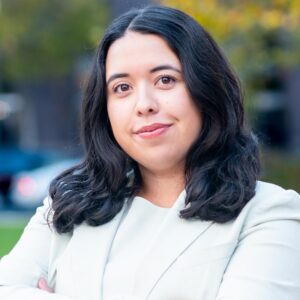
My project helps students of all ages who have trouble talking or communicating at school by getting them access to communication devices. These communication devices are instrumental to building a student’s independence, social skills, and academic success.
In one example of how communication devices are able to assist students, I have a 14-year-old client who hasn’t had a communication device for three years. In the last two months with a communication device returned to him, his parent told me that his communication has been “explosive.” He is opening up to his mom about his feelings, his goals for the future, and is strengthening his bond with his family. His mother is incredibly thankful for my help in giving her son a method to express himself.
What does an average day working with your clients look like?
My workday includes intakes for new cases, speaking with current clients (in English and Spanish) on resolving their issues in school, and collaborating with other organizations throughout Illinois who have a shared goal of expanding access to communication devices.
What have you accomplished or learned so far?
I have provided brief service to 110 families and full legal representation to 28 families. I presented trainings (in English and Spanish) and attended resource fairs totaling outreach to 589 people throughout Illinois. I also developed a key relationship with the state’s assistive technology program to expand outreach efforts to students in need of communication devices.
What are you most excited about continuing your project?
I am excited to take the knowledge I have gained from individual issues families face to address systemic issues, like failing to complete evaluations within the 60-day deadline (instead, evaluations are taking almost a year to complete) and inadequate training for communication devices. I plan to help meet the needs of communities dealing with these issues through FOIA requests and state complaints. I am also excited each time I hear a parent tell me that their child finally has a voice and is learning new things about them.
Breanna Bollig
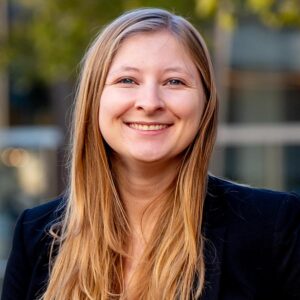
At California Tribal Families Coalition, I assist tribes and tribal social workers in providing education advocacy for tribal youth with disabilities in California’s child welfare system.
What does an average day working with your clients look like?
On a day-to-day basis during my Fellowship, I provide direct representation to tribes in California child welfare proceedings. Through this representation, I help tribal social workers identify and address education and disability right issues involving tribal youth. I also develop educational trainings and resources to support tribes and tribal social workers in providing education advocacy.
What have you accomplished or learned so far?
Through my work at California Tribal Families Coalition, I’ve learned that education and disability right issues for tribal foster youth are often overlooked by child welfare agencies. The efforts of tribal governments to identify and address these issues has been extremely impactful in improving education outcomes for tribal foster youth.
What are you most excited about continuing your project?
At California Tribal Families Coalition, I am able to observe firsthand how tribal governments are able to support their youth in both education and child welfare systems. Moving forward, I am excited to support tribes in expanding their role in education advocacy.
Rachel Niegelberg
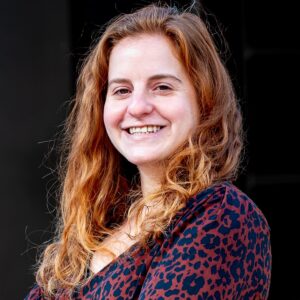
Through a medical-legal partnership, I provide direct representation to low-income families of children with disabilities who are experiencing health-harming legal needs. This can be done by supporting clients in obtaining appropriate special education services so that all children have access to the education to which they are legally entitled.
What does an average day working with your clients look like?
I have the honor of working directly with my client families, advocating at Individualized Education Plan (IEP) team meetings at schools, facilitating positive and effective communications between families and school teams, informing client families about their rights as parents in the school system, and preparing filings for due process hearings when families and school teams are unable to reach an agreement without the intervention of the law. Through this work, I help ensure that students have the IEPs they need, that these plans are being followed, that IEPs are based on current and accurate evaluations, that appropriate services are provided to students, and that students have all the tools they require to be able to access their educations.
What have you accomplished or learned so far?
My clients have been fiercely advocating for their children far before my organization’s or my own involvement in their education cases. They are the expert voices in what their children need to successfully access their education and get prepared for their futures. My role is not to give voice to my clients–they already have strong voices–but to use legal avenues to amplify their voices and ensure that they are being heard, resulting in obtaining the appropriate and necessary educational supports so that all children can acquire their education, regardless of disability.
What are you most excited about continuing your project?
In the final year of my Fellowship, I look forward to continuing to build strong connections with client families as well as medical provider teams to strengthen our medical-legal partnership and access as many families as possible. Additionally, I look forward to providing trainings for client families to help ensure that they know their rights when it comes to their children’s education. Finally, I look forward to assisting families in increasing their self-advocacy within the school system.
In observance of the World Day Against Trafficking in Persons, Equal Justice Works spoke to Victoria Marie Sexton and Shawntel Williams about their work advocating for victims of human trafficking. Victoria is a 2019 Fellow who was sponsored by the Florida Bar Foundation and was hosted at Coast to Coast Legal Aid of South Florida, Inc. Shawntel is a 2023 Fellow sponsored by Albertsons and Kirkland & Ellis LLP. She is hosted at Legal Aid Foundation of Los Angeles (LAFLA).

As an Equal Justice Works Fellow, I represented survivors of human trafficking in holistic civil cases in Broward County Florida. Since my Fellowship ended, I have continued this work under a Department of Justice Office for Victims of Crime Grant. We expanded our collaborative work with the Broward County State Attorney’s Office on human trafficking expungements and now work alongside local case managers to ensure all survivors with legal issues are identified and referred for legal services.
What does an average day working with your clients look like?
I engage in survivor-led legal representation, so my days look vastly different depending on the survivor, the legal issue, or how far post-victimization the survivor is in dealing with their legal hurdles. A typical day working with a survivor seeking an expungement includes meeting with the survivor, drafting pleadings, walking them through the process and timeline, and working in collaboration with our Broward Human Trafficking Assistant State Attorney to come to an agreement and submit the final order to the court.
What have you accomplished and learned so far?
Patience and collaboration are two of the biggest things I have accomplished and learned working in this field. Survivors are dealing with so many different issues post-victimization. As advocates, we need to listen carefully to them, ensure their autonomy is respected, and be patient and supportive of them throughout the process. We also must avoid siloing ourselves based on our fields, as collaboration with one another is pivotal to providing survivors with comprehensive services to address all their needs and make a meaningful difference in their lives.
What are you most excited about continuing your work?
I hope to continue to expand our program to reach more survivors. Witnessing how pivotal legal representation is to survivors has solidified and reinforced my passion for this work. Over the last several months, I have seen how important collaboration is to meet all the needs of survivors. I hope to continue to grow and innovate the way we collaborate in Broward County for survivors.
What is something that you would like people to take away from this awareness day?
Human trafficking impacts everyone. Be informed, find a way to help, and join us in making a difference.
Human trafficking impacts everyone. Be informed, find a way to help, and join us in making a difference.
Victoria Marie Sexton /
2019 Equal Justice Works Fellow

In my project, I advocate on behalf of Filipino migrants who are survivors of labor trafficking by providing them with holistic legal representation to redress the economic and emotional harm they endured throughout their trafficking. With the Legal Aid Foundation of Los Angeles, I’ve started a legal clinic for Filipino migrant workers that focuses on immigration, worker and employment rights, housing, public benefits, and family law issues as well.
What does an average day working with your clients look like?
On an average day, my day consists of interviewing victims and identifying various areas of support for them —often in immigration issues. I work closely with social service providers to ensure that victims also receive emergency housing, mental health counseling, and public benefits support. On clinic days, I work with local community-based organizations in areas with high Filipino migrant populations to provide on the spot intakes, counsel and advice, and support. This work case-specific, as we see people come to LAFLA at various stages. Some individuals come to us for help having been trafficked years prior because they are still suffering the lingering harm stemming from their exploitation. Others may come to LAFLA in the midst of their trafficking or shortly after their escape. I work closely with others in the API Community Outreach Project to identify the options and strategies best suited to meeting the goals of each individual.
What have you accomplished/ learned so far?
Through my work, I have learned the most directly from the survivors of trafficking who I’ve provided legal services to, both within the Filipino community and the API community as a whole. Hearing their stories and witnessing their immense resilience and strength has energized me throughout this work. Additionally, I’ve seen firsthand the benefits of being able to provide individuals that have Limited English Proficiency (LEP) with meaningful in-language legal support. One way we’ve promoted language justice is by creating a direct Filipino legal hotline that community members can call to inquire about their legal questions at LAFLA.
What are you most excited about continuing your project?
Coming to Los Angeles from another state, I wanted to prioritize learning from community workers and labor trafficking survivors who are well-versed in this work in Southern California and have lived experience in issues of human trafficking and worker exploitation. I feel so fortunate that I’ve been able to connect and collaborate with these individuals because their input is invaluable in the structure and focus of my work. I’m looking forward to the continued collaboration and partnership to promote further outreach to the Pinoy community.
What is something that you would like people to take away from this awareness day?
For World Day Against Trafficking in Persons, I hope people gain an awareness of the signs of labor trafficking and of the support resources available to victims. More importantly, I want to emphasize the importance of confronting biases and misconceptions surrounding human trafficking so that victims are not blamed for their circumstances.
To learn more about the Fellows who provide legal aid and resources to those affected by human trafficking, click here.
I want to emphasize the importance of confronting biases and misconceptions surrounding human trafficking so that victims are not blamed for their circumstances.
Shawntel Williams /
2023 Equal Justice Works Fellow
In commemoration of Disability Pride Month, Equal Justice Works Fellows Charla Boley and Courtney Bergan shared their work advocating for people with disabilities. Charla is a 2023 Fellow sponsored by DLA Piper and Microsoft Corporation and hosted by Benefits Law Center. Courtney is a 2023 Fellow hosted by Disability Rights Maryland.
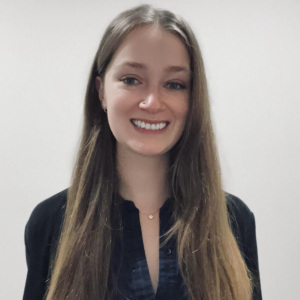
Social Security benefits are both extremely difficult to gain and extremely easy to lose. At the Benefits Law Center, I work with multicultural families with disabilities as they navigate the complex systems of the Social Security Administration (SSA).
What does an average day working with your clients look like?
My daily work with clients involves breaking down the confusing rules of the SSA in an understandable way to assist clients in deciding what next steps they can take, whether they want to gain benefits, restart terminated benefits, or deal with an overpayment of benefits. My level of representation varies, and I might be giving one-time advice, or I might be preparing to represent a client at an administrative hearing.
What have you accomplished/ learned so far?
Every day my clients impress me with their tenacity and perseverance. Many of them have limited English proficiency and are immigrants who are still learning about the ways the United States government functions. At the same time, they are caring for children with complex health needs and taking care of their families. They might also have disabilities themselves. Whenever I’m stuck on hold with SSA or frustrated by their processes, I remember how important it is to be patient and keep trying.
What are you most excited about continuing your project?
Language access is a huge barrier for people involved with SSA. Important letters are sent only in English and many of my clients report difficulty requesting an interpreter from SSA. I will continue documenting my client’s struggles in this area and hope to collaborate with other advocates noticing and fighting the same issues.
What is something that you would like people to take away from this awareness month?
People with disabilities struggle every day to achieve stability by gaining Social Security benefits. Right now, an application for Disability or Supplemental Security Income can take a year or longer before a determination is made. At least half of all applicants in Washington State will be denied. It can take several years to make it all the way through to an administrative law hearing where a claimant’s chances of approval are once again about 50-50 and where their disability is questioned and interrogated with little, if any, compassion or respect. I would like people to remember and hold space for people fighting for not only economic stability but for the recognition of their own lived experiences.
I would like people to remember and hold space for people fighting for not only economic stability but for the recognition of their own lived experiences.
Charla Boley /
2023 Equal Justice Works Fellow
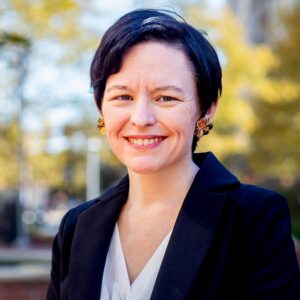
At Disability Rights Maryland, I advocate for the civil rights of people with mental health disabilities by working to enhance access to culturally responsive, choice-based community resources that are needed to prevent unjust institutionalization.
What does an average day working with your clients look like?
Effectively advocating for clients with mental health disabilities on a day-to-day basis first and foremost involves working with clients to understand their communication needs and any accommodations that may be necessary to facilitate an effective working relationship. Once I understand my clients’ needs and wants, we work together to devise an advocacy strategy, which can involve informal advocacy such as attending treatment team meetings with clients, writing demand letters, legislative advocacy, or litigation.
What have you accomplished/ learned so far?
My Fellowship project has allowed me to better understand the resource barriers that people with mental health disabilities are experiencing in Maryland through both individual representation and community collaborations. Because structural stigma is a significant contributor to unnecessary institutionalization, I have been working to change attitudes around mental health disabilities by publishing a law review article on the rights to choose and refuse mental health care and presenting at several conferences on the importance of centering the voices and choices of people with mental health disabilities. I also co-founded the Maryland Coalition for Mental Health Choice with On Our Own of Maryland to organize advocacy against coercive mental health policies and for access to culturally responsive, choice-based community mental health support.
What are you most excited about continuing your project?
I am excited to continue working to combat the structural stigma and resource barriers that people with mental health disabilities experience on a daily basis by continuing to represent clients who are denied the resources they need to remain in or return to the community. I also drafted and proposed legislation to create a self-directed mental health care program in Maryland, which I hope to continue advocating for with the Maryland Coalition for Mental Health Choice. Self-directed mental health care is a model of care that values self-determination and is effective at preventing unnecessary institutionalization by holistically addressing unmet care needs.
What is something that you would like people to take away from this awareness month?
Because we have a long history of using the law to compel mental health treatment, rather than provide for people’s needs, many forget that mental health disabilities are indeed disabilities that entitle individuals to rights and accommodations under the law. Ultimately, I hope that we can begin to reframe how we use the law to support people with mental health disabilities by holding systems accountable to provide for individuals stated needs rather than imposing what we think they need. People with mental health disabilities are the best experts on their own experiences!
Ultimately, I hope that we can begin to reframe how we use the law to support people with mental health disabilities by holding systems accountable to provide for individuals stated needs rather than imposing what we think they need. People with mental health disabilities are the best experts on their own experiences!
Courtney Bergan /
2023 Equal Justice Works Fellow
To learn more about Fellows working to protect the rights of people with disabilities, click here.
Equal Justice Works is proud to introduce the 2024 class of Crime Victims Advocacy Program Fellows. These 18 law students will spend their summer working alongside Crime Victims Advocacy Program Fellows as they help to provide legal aid and build capacity at their host organizations with a focus on survivors of various crimes.
“Without legal representation, the myriad of complex civil legal problems faced by victims of crime can be overwhelming to navigate alone,” said Angie McCarthy, senior program manager for the Crime Victims Advocacy Program at Equal Justice Works. “Our Student Fellows play a critical role in our mission to increase access to legal aid for survivors of crime, especially in underserved communities.”
Through the Crime Victims Advocacy Program, Student Fellows will gain experience providing legal aid and resources to survivors of crime. They will help to provide civil legal services, engage in community education and advocacy efforts, and build capacity at their host organizations.
Meet our Crime Victims Advocacy Program Student Fellows and learn more about how they will be supporting a wide range of legal issues that survivors of crime often face, including domestic violence, financial crime, and immigration issues:

Armand Avila, Texas A&M Law School
At Texas Rio Grande Legal Aid, Armand will work in the family law unit, mostly with victims of domestic violence. He is a rising 3L at Texas A&M Law School. Having grown up in El Paso, TX, Armand was eager to contribute to a victim’s advocacy program in his home community. He hopes to use his legal education to help those in society who need it most, especially in his home community. Armand was inspired to do this work because he wanted to gain more hands-on experience assisting victims of domestic violence.
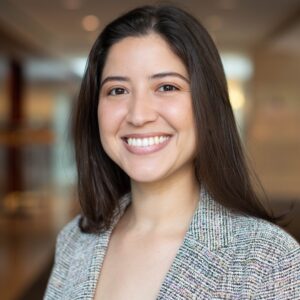
Jennifer Campos, Georgetown University Law Center
Jennifer will work at the New Mexico Immigrant Law Center (NMILC) to aid immigrant survivors of crime by helping them apply for immigration benefits. Coming from a family of Mexican immigrants, Jennifer’s passion for immigrant justice developed from an early age. This summer she is excited to return to NMILC as a Crime Victim Advocacy Program Fellow and hopes to use her legal education to continue serving the immigrant community in any way she can.

Mya Gelber, Brooklyn Law School
At the Sanctuary for Families, Mya will help provide holistic services to crime victims. Her passion for serving her community is driven by her belief in the profound impact that dedicated individuals can have on society. Mya spent four years working with victims of 9/11, an experience that deeply influenced her understanding of the holistic support clients need. She learned the importance of being a true advocate, not just in the legal realm but in addressing the comprehensive needs of her clients. This experience solidified her dedication to making a tangible difference in the lives of those she serves. Her work has consistently reflected her passion for justice and her dedication to serving underrepresented communities.
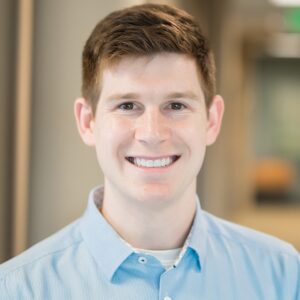
Connor Gorrell, Marquette University
Connor will work alongside Legal Action of Wisconsin to assist with identifying local partners that specialize in helping youth crime victims. Connor became passionate about working for Equal Justice Works through his own restorative justice practice, which helps victims and offenders heal and move forward with their lives.

Renee Horsley, University of Nebraska College of Law
This summer, Renee will work with Legal Aid of Nebraska’s Uplift project, which focuses on an overlap in family law and crime victims and assists victims of domestic violence. Renee’s aim to help others who feel voiceless, advocating and supporting those who need it the most, helps remind her why she started this journey and why she loves the law.
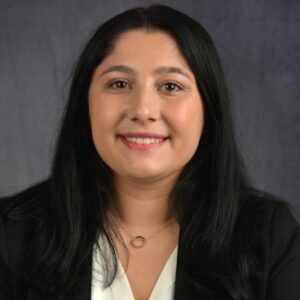
Claudia Hurtado, Washington University in St. Louis School of Law
At Greater Boston Legal Services, Claudia will work in the labor employment unit and focus on labor employment law and discrimination in the workplace. Growing up listening to stories from her grandparents about the struggle of living under dictatorships and learning about why her parents decided to immigrate to the United States, Claudia was inspired to assist others who came to America with similar dreams as her parents. She chose to work in employment law this summer to assist immigrants, and others, facing unjust treatment at their place of work obtain the rights they are owed.

Kyuwon Lee, University of California, Irvine
Kyuwon will work alongside Legal Aid Foundation of Los Angeles to serve underserved Asian and Pacific Islander crime victims in the area. Kyuwon’s past volunteer experience in a local immigration center sparked her interest in helping underrepresented communities within the public service system. She seeks to help the Asian and Pacific Islander community gain access to various legal resources as someone who understands non-English-speaking communities’ struggles in navigating the legal system.

Donovan McBride, Chicago-Kent College of Law
At Michigan Indian Legal Services, Donovan will research the 12 federally recognized tribes in Michigan’s tribal codes as they relate to domestic violence and other sexual violence offenses. Donovan will then write a mock code that accounts for both the cultural competency issues across tribes, but also affords greater protection to victims throughout the entire legal process.
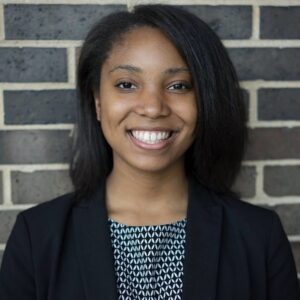
Cree Medley, University of Illinois College of Law
Cree will work with the Chicago Alliance Against Sexual Exploitation (CASE) to provide aid for victims of sexual violence and assault in both civil and criminal cases. As a survivor of domestic and sexual violence, Cree is passionate about helping survivors get justice and legal support.
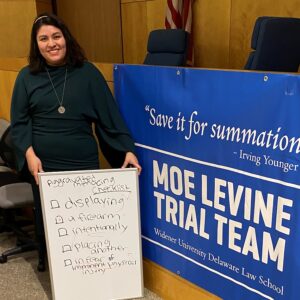
Carolina Parra, Widener University Commonwealth School of Law
At Justice at Work, Carolina will provide critical legal aid to victims of workplace crimes, combating issues such as wage theft, unsafe work conditions, exploitation, discrimination, and retaliation. She aims to address the prevalent challenges faced by vulnerable workers, and seeks to rectify systemic injustices within employment practices. It is Carolina’s priority that the community she serves understand their legal process in their own language in a manner respectful to their culture.

Nicole Peer, Tulane Law
At Southeast Louisiana Legal Services, Nicole will provide civil legal representation to victims of crime, primarily violent crime. She will also help set up referral relationships with New Orleans Parish District Attorney’s victim advocates office. Nicole’s goal is to help bridge the gap in legal representation for victims and survivors of crime. Her academic and professional career emphasized the immediate need in her local community and globally. She believes everyone deserves legal representation and support regardless of their background.
Elizabeth Pina, University of California, Davis School of Law
Elizabeth will work with the Public law center to focus on serving unaccompanied minors in Special Immigration Juvenile cases (SIJS). With the support of her host organization, Shelia will help to serve underrepresented, indigent immigrant clients subjected to abuse, neglect, and abandonment by their primary caretakers. In doing so, she will help create a new narrative and potential for the minor children to heal from past trauma and create new life goals from a place of safety and wellbeing.
Yaslin Reyes, Rutgers Law School
Yaslin will work with Philadelphia Legal Assistance to help with restraining orders and crime victims’ rights enforcement in criminal cases. As a Dominican American born to first-generation immigrants, Yaslin’s drive to work with the Crime Victims Advocacy Program is deeply rooted in her personal experiences. Growing up, she served as a translator and advocate for family and friends navigating legal and social services, witnessing the challenges faced by her community in accessing justice. Her involvement with organizations supporting marginalized communities and her experiences interning have further exposed her to the complex legal issues faced by crime victims, inspiring her to dedicate her career to advocating for equal justice.
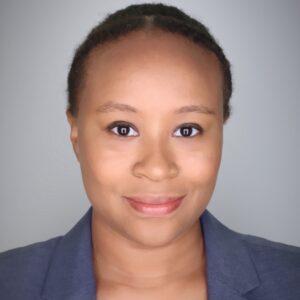
Ariel Salmon, Stanford Law School
At the ROAR Center of the University of Maryland Baltimore, Ariel will work with survivors of violent crime with protective orders and retrieval of property. She will also conduct community outreach to underserved communities. Ariel has significant experience in public service. She spent several years in environmental law and spent much of her first year of law school doing direct services support for clients. Ariel hopes to use her experience and education to develop a more equitable and just society, beginning with her clients and the community she serves.

Bryan Raye Scott, Arizona State University Sandra Day O’ Connor College of Law
This summer, Bryan will focus on expanding Legal Aid of Arkansas’ capacity to provide civil legal assistance to survivors of human trafficking. This will be done by helping his host organization to build resources, educational materials, and strong partnerships throughout the area. He will also help increase knowledge at Legal Aid of Arkansas for how to spot the warning signs of human trafficking when interviewing clients. This experience is especially important to him, as he is impacting the community he originally called home in Memphis.
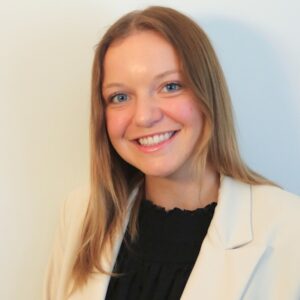
Kortney Smith, University of Kentucky J. David Rosenberg College of Law
Kortney will work with Legal Aid Society of Louisville to advocate for victims of gun violence in Louisville. Kortney’s decision to attend law school stems from her passion for advocacy and service. Being an Equal Justice Works Student Fellow in her local community allows Kortney to continue to pursue her passion for advocacy work while also working with and learning from experienced attorneys in the field who share her interests. As a lifelong Kentucky resident, Kortney is honored that her Equal Justice Works Fellowship allows her to advocate for crime victims and enhance access to legal aid for survivors of crime in her local community.

Lan-Phuong Tram, Georgetown University Law Center
This summer, Lan-Phuong will work alongside Tzedek DC to advocate for survivors of financial crime and violent crime, including domestic violence in the area. Also, collaborate with community organizations and provide financial crime information, gain input on new scams, assist allied staff to identify and refer financial crime cases. As a native of the Washington metropolitan area who grew up in poverty, Lan-Phuong is especially eager to contribute to Tzedek DC’s efforts to expand legal aid for indigent communities. She is confident that her time within the Crime Victims Advocacy Program will allow her to support survivors of crime and their journey to legal justice.

Erekle Vakhramovi, Seattle University School of Law
At the Northwest Justice Project’s (NJM) Omak Office, Erekle will work with the NJM Native American unit, exploring people’s rights while they’re incarcerated. Also, putting together some materials for major laws regarding crime victims in native American reservations. As a nonbinary immigrant and a benefactor of pro bono legal assistance, Erekle wants to pay forward the support they received with their asylum interview to help bridge the gap of accessibility between legal services and BIPOC and LGBTQ+ communities. BIPOC communities’ history of pioneering social justice movements and a desire to be a part of supporting their efforts inspired Erekle to pursue this Student Fellowship.
To learn more about the Crime Victims Advocacy Program, click here. To learn about the opportunities that Equal Justice Works offers to law students, click here.
This program is supported by an award under 15POVC-22-GK-01116-NONF, awarded by the Office for Victims of Crime, Office of Justice Programs, U.S. Department of Justice. The opinions, findings, and conclusions or recommendations expressed in this document are those of the contributors and do not necessarily represent the official position or policies of the U.S. Department of Justice.