Advancing the Rights of People with Disabilities

Viviana Bonilla López is a 2019 Equal Justice Works Fellow hosted by Disability Rights Florida. Her Fellowship is sponsored by The Florida Bar Foundation.
You co-founded Rethink: Psychiatric Illness, a student organization that aims to raise awareness about mental illness and increase help-seeking behaviors among students. What inspired you to combine your passion for mental health advocacy with a law degree?
I was diagnosed with ADHD in the second grade. From that point on jokingly being asked “if I took my meds today” became a reminder that I did not “work” as expected. Since then, other people I love have been diagnosed with mental illnesses.
Throughout my life, I have felt the need to be silent to protect them or myself from misconceptions, fear, and low expectations. Rethink was a response to that feeling; it was intended as a space where everyone could show up and be understood.
The social model of disability teaches us that disability does not stem from the individual; instead, it is caused by a society that has created barriers that keep people with disabilities from fully participating and punishes difference. Whether or not we are disabled, we all deserve the spaces we inhabit to be inclusive and accessible. I was motivated to go to law school because I wanted to contribute to that future we all deserve. Though I have come to understand that laws alone will not solve all the injustices faced by marginalized communities, I do my best to use it in my clients’ favor and offer it as part of a larger collective project to achieve justice.
Throughout your career, you have worked on a range of civil rights issues, including serving immigrants and defending families. What inspired you to focus your Equal Justice Works Fellowship on protecting and restoring the civil rights of people with disabilities in Miami-Dade County?
Our society either infantilizes or fears people with disabilities. This attitude is used to justify exclusion, unequal treatment, control, and the removal of rights. My job is to convince influential people that my clients can and should direct their lives, regardless of their disabilities. This is not something I, or anyone, should have to do. It should be obvious.
The structures and systems that oppress marginalized communities are all connected.
In law school, I sought internships and clinics to learn about those systems, especially those known to harm people with mental health diagnoses. Upon graduation, working in immigrant rights for two years—particularly at that moment—was an honor and opportunity for which I am grateful.
This Equal Justice Works Fellowship has been a homecoming. Disability justice work, particularly mental health advocacy, has always been my first love. I have been involved with this work for the past nine years. I proposed this fellowship project because I wanted to see what would happen if we put all our energy into challenging the notion that people with disabilities are not capable of making their own decisions. What would happen if we did this in the county in Florida where this notion is most pervasive?
Since 2001, the Eleventh Judicial Circuit of Florida serving Miami-Dade County has had the most guardianship cases filed of all the judicial circuits in Florida. How does guardianship strip a person of their civil rights, and why is it important to propose alternatives to guardianship?
In Florida, a guardian is appointed after a judge decides that a person is “incapacitated.” A person under guardianship can lose some or all of their rights, including the right to get married, to vote, to decide where they live and who their friends are, to work, to manage their money, and to say yes or no to medical treatments, among others. How you choose to exercise these rights is what makes you, you. Guardianship is such a severe legal tool that it has been called “civil death.” This is why alternatives like Supported Decision-Making (SDM) are so important: They make guardianships unnecessary. SDM allows people with disabilities to be the authors of their own lives and make their own decisions with the support of people they trust.
What has been your proudest moment as a Fellow to date?
The disability community has a mantra: nothing about us without us. It demands that we do more than tokenize directly impacted people by using their stories. It requires that we honor the expertise that comes from living their stories and follow their lead. This is a value to which I have tried to hold my work. One of the things that makes me proudest is to co-chair SDM4FL—the coalition we have built to introduce and pass an SDM law in Florida—with Michael Lincoln, the first person in Florida to terminate his guardianship using SDM. Michael is a true leader who knows the power of his ideas and the power of his story, who isn’t afraid to challenge others, and who does the work. Through SDM4FL, I proudly work side-by-side with advocates and individuals who have been directly impacted by the guardianship system, including some of my clients and their parents, who became committed to this work after using SDM themselves.
To learn more about Viviana’s Fellowship, visit her Fellow profile.
Claire O’Brien is an associate director of the career center at Washington University School of Law in St. Louis, Missouri.
At Washington University School of Law in St. Louis, Claire O’Brien advises students pursuing a variety of careers, including careers in public service.
In conversation with Catherine Williams, former marketing and communications assistant at Equal Justice Works, Claire discussed what motivated her to join the Equal Justice Works National Advisory Committee (NAC) and how her work as a law school professional informs her role as a member of the committee.
“I was working with a student who was heavily involved in the public interest community at Washington University and had worked in public interest internships for two summers. She saw the advertisement for the NAC application come up and recommended the position to me. As soon as I spoke with the student, I realized that this would be a perfect fit,” said Claire.
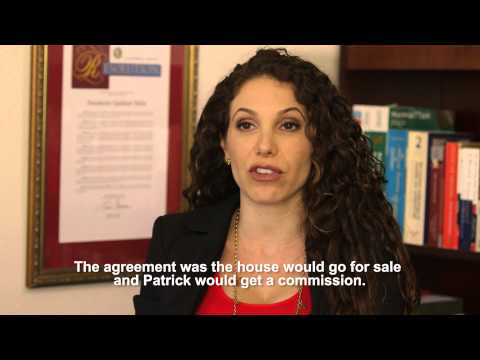
As part of her work as associate director of the career center, Claire helps students identify and cultivate their public service passions throughout law school.
“It’s one thing to learn torts, evidence, or criminal law in the classroom—but you’re shielded from how the law actually looks in the field. I think when you are out in your community and interacting with people who have real legal problems, there is nothing that can replace that experience,” said Claire.
In addition to discussing her role at Washington University School of Law, Claire spoke about why it is important for law students to get involved in pro bono work, how law schools can help create more public service opportunities for law students, and the many resources that Equal Justice Works provides for law students.
To learn more about our National Advisory Committee, visit here.

By Antoinette Balta, 2012 Equal Justice Works Fellow hosted by Public Law Center
My name is Antoinette Balta and I am an advocate for our nation’s veterans and service members.
As a 2012 Equal Justice Works Fellow, I worked on housing and homelessness issues. I would frequent emergency shelters and meet dozens of service members returning from Iraq and Afghanistan. I couldn’t understand why these service members who had served our country abroad were now struggling to access basic needs like housing.
Inspired to take action against veteran homelessness, I worked with my host organization, the Public Law Center, to design and launch the Operation Veterans Re-Entry, a comprehensive effort to provide critical legal assistance on discharge upgrades, veterans’ benefits, expungements, and other general civil services for our nation’s heroes.
My Equal Justice Works Fellowship furthered my desire to serve and taught me avenues of legal aid to efficiently empower those in need. Through my Equal Justice Works Fellowship, I was able to physically feel and see the difference a public interest attorney can make, fueling my desire to continue in high impact, life changing work.
So, I co-founded the Veterans Legal Institute, which provides pro bono legal assistance to homeless, at-risk, disabled, and low-income current and former service members. Our work relies on outreach, compassion, and empowerment to eradicate barriers to housing, healthcare, education, and employment for veterans.
Being an Equal Justice Works Fellow was a pivotal point in my life and career. It provided me with the opportunity to serve and delve deeper into the idiosyncrasies of public interest. Each day I fight to be a better advocate so that I can leave a legacy of hope and happiness for those around me.
I am proud to be one of the 2,000+ Fellows helping to fulfill our nation’s promise of equal justice for all.
To learn more about Antoinette’s project, visit her Fellow profile.
Each fall, the Equal Justice Works Conference and Career Fair, the largest national public interest legal career fair, brings together hundreds of law students, public interest employers, law school faculty, and practitioners in the public interest law field for interviews, panel discussions, and networking opportunities.
This year, the Conference and Career Fair—the largest in Equal Justice Works’ history with more than 2,600 registrants participating in over 3,700 prescheduled interviews—went virtual due to the pandemic. Held from October 22 to 24, 2020, the three-day event provided attendees the opportunity to build their professional skills and grow their résumés, while interviewing for full-time positions and internships.
“The move to a digital space for this year’s Conference and Career Fair allowed for more students and public interest law employers—who would otherwise be unable to participate due to financial and travel constraints—to take advantage of everything the conference has to offer,” stated Aoife Delargy Lowe, vice president of law school engagement and advocacy at Equal Justice Works.
At the Conference and Career Fair, attendees participated in job interviews as well as conference workshops such as résumé review and mock interviews. During the informal “table talk” and “employer informational sessions,” attendees had an opportunity to learn more about the over 170 public interest law employers at the career fair.
A highlight from conference was hearing from the keynote speaker, Eric H. Holder, Jr., 82nd Attorney General of the United States. Mr. Holder joined a Zoom call with Judge Ann Claire Williams, formerly of the U.S. Court of Appeals for the Seventh Circuit, to share his perspectives on issues facing our democracy, including voting, gerrymandering, and racial injustice.

Conference attendees had the opportunity to hear from experts on panel discussions that covered pressing legal topics such as disaster lawyering, environmental law, voting rights, and protecting transgender communities; as well as attend public interest career planning sessions.

At the session, “Lessons Learned from the 2008 Recession and How to Navigate Public Interest Law Careers in 2020,” an incredible panel of legal professionals addressed how to navigate public interest careers in 2020 using the lessons they learned from counseling law students during the 2007/2008 recession.
“Demonstrate your resilience…demonstrate forward momentum and keep plowing forward because employers will pick that up when you’re talking to them,” said session speaker Steve Grumm, director of community engagement at the Legal Aid of Western Michigan.
For a full list of speakers and sessions at this year’s conference, visit here.
A special thanks to sponsors Lexis Nexis and PSJD, event exhibitors, public interest employers, and session speakers for making the 2020 Conference and Career Fair an enormous success.
By Dana Paikowsky, 2019 Equal Justice Works Fellow hosted by the Campaign Legal Center. Dana’s Fellowship is supported by The Arnold & Porter Foundation.

Little known fact: most people in jail are eligible to vote. Two-thirds of the jailed population in the United States—approximately half a million people—are incarcerated in pretrial detention, which never impacts voter eligibility. The remaining third—or approximately 250,000 people—are primarily serving sentences for misdemeanor convictions, which also do not affect voter eligibility in the vast majority of circumstances.
Although people in jail largely retain their right to vote, restrictive laws, the realities of incarceration, and lack of infrastructure and resources can make voting impossible. This is known as jail-based disenfranchisement. Jail-based disenfranchisement disproportionately impacts historically marginalized voters, such as people from the Black, Latino, Native American, low-income, homeless, and disabled communities, because these voters are disproportionately likely to be jailed. Also, because our country has a money bail system, many voters are jailed—and then disenfranchised—simply because they cannot afford to pay. Thus, creating a modern-day poll tax.
Jailed voters have been caught up in systems that are disempowering by design. Being arrested and jailed not only deprives a person of their liberty, it isolates them from their community, takes away their personal agency, and puts them at risk of suffering collateral consequences that threaten their housing, custody of children, jobs, health, public benefits, and more. Voting may seem like an insignificant issue in the face of all that, but it provides voters with an opportunity to reclaim their power, connect with their community, and assert for the world that their voice matters.
Voting may seem like an insignificant issue in the face of all that, but it provides voters with an opportunity to reclaim their power, connect with their community, and assert for the world that their voice matters.
Dana Paikowsky /
Equal Justice Works Fellow
At my host organization, the Campaign Legal Center, I use advocacy, outreach, and litigation to combat jail-based disenfranchisement. From working with county officials to put a polling place in a jail, to distributing know-your-rights pamphlets and absentee ballot applications, my Fellowship allows me to advocate for a historically silenced voting population. I have seen firsthand how much it matters to the voters we serve.
This work has also never felt more urgent. With police murders and a global pandemic crowding national headlines, our country has increasingly had to reckon with the harms of racism, mass incarceration, poverty, and inequality. The people who have most directly been impacted by these harms should be able to participate in deciding what comes next. Our job, then, is to ensure jailed voters can cast their ballots and find new ways to elevate and amplify their voices that are too often silenced in our democracy. For me, that work is just beginning.
To learn more about Dana’s Fellowship project, visit her profile.
Hannah Klain is a 2019 Equal Justice Works Fellow hosted by Brennan Center for Justice at NYU School of Law. Hannah’s Fellowship is supported by The Selbin Family.

Prior to law school, you interned at various political advocacy organizations, including the ACLU Voting Rights Project. What inspired you to pursue voting rights advocacy?
When I think about why the fight for voting rights is so critical—and why I chose this field—I always think of the words of Congressman John Lewis, who said, “The vote is precious. It’s almost sacred. It is the most powerful nonviolent tool or instrument that we have in a democratic society. And we must use it.” Congressman Lewis’ words still ring true. The right to vote is fundamental and generative of all other rights we hold. That’s why I feel it’s crucial to be part of the ongoing battle to protect and preserve this right for everyone.
Through your Fellowship, how do you utilize model litigation and advocacy to combat widespread voting access discrimination?
Pushing states and localities to provide equal voting access to all—in the form of sufficient electoral resources like polling places, poll workers, and voting machines—requires various tools and methods. We work hand in hand with election administrators to provide them with counsel and guidance on allocating these critical resources to ensure no voters in their jurisdiction face discouragingly long wait times at the polls.
We also publish resources, like the Brennan Center’s new Waiting to Vote report, which documents the inequitable wait times faced by voters of color across the country and electoral resource disparities in communities that are growing more diverse and less wealthy. In addition to publishing the report, we engage with local and national media outlets to raise awareness regarding troubling electoral resource gaps. Finally, we pursue litigation in localities that violate state or federal law by denying voters fair access to polling places, poll workers, and voting machines.
According to a report you co-authored with other staff members at the Brennan Center, Black and Latino voters are especially likely to endure long wait times at polling places. What litigation and advocacy tactics will you implement to prevent these wait times come November?
The 2020 Election poses unique and novel challenges due to the COVID-19 pandemic. There is little reason to believe the pandemic is going anywhere before Election Day. As a result, there is lots of work to be done to make sure polling places across the country are safe come November. In addition to widespread access to vote by mail, voters need healthy in-person voting options. One key element of secure in-person voting is ensuring there are adequate numbers of in-person voting locations. In primary elections this year, some jurisdictions suffered widespread polling place closures because of the pandemic. For instance, in Milwaukee, 180 polling places were reduced to only 5 locations open on Election Day. A recent report by the Brennan Center found that voters with fewer polling places per voter reported longer wait times to cast their ballots.
COVID-19 has made standing in long wait times at polling places not only disenfranchising but deadly. Given the findings from the report you co-authored, what are some recommendations for election administrators to expand access to ballots by mail and ensure that COVID-19 safety guidelines are implemented at in-person options?
There are several important steps that election officials should be taking now to get ready for the upcoming November election. First, voting by mail should be available to all Americans who want to use it—it’s a safe, convenient alternative to in-person voting. Election administrators should make voting by mail as accessible as possible by mailing ballots or ballot applications to all registered voters, providing pre-paid postage for return envelopes, and offering various secure ballot return options, such as drop-boxes and drop-off sites. Second, evidence-based information about how to safely conduct in-person voting at polling places in November is critical to our nation’s well-being. That’s why the Brennan Center partnered with the Infectious Disease Society of America to release Guidelines for Healthy In-Person Voting. The document provides information on a range of topics, including voting location siting and configuration, supplies to prevent COVID-19 transmission, and poll worker precautions to protect voters and workers alike. If election administrators follow these recommendations—expanding vote by mail access and making sure polling places are healthy and safe—voters won’t have to choose between their safety and their fundamental right to vote come November.
To learn more about Hannah’s Fellowship project, visit her profile.
The right to vote is fundamental and generative of all other rights we hold. That’s why I feel it’s crucial to be part of the ongoing battle to protect and preserve this right for everyone.
Hannah Klain /
2019 Equal Justice Works Fellow
By Ben Winters, 2019 Equal Justice Works Fellow hosted by the Electronic Privacy Information Center. Ben’s Fellowship is supported by the Philip M. Stern Fellowship.

The American criminal justice system holds an estimated 2.3 million people in state and federal prisons, juvenile correctional facilities, local jails, and immigration detention facilities. As public outrage continues to grow over the incarceration of people in the U.S, some jurisdictions turned to pre-trial risk assessment technology with the stated goal of minimizing that population. Concurrently, predictive policing tools, face surveillance tools, government and corporate surveillance, and gang databases continue to proliferate widely.
There are resources developed and delivered through basic technology that do help clients clear burdensome administrative hurdles, understand rules and regulations, and easily find the right forms in an underfunded and overly complex legal system. However, most tools sold to or adopted by governments cause harm and carry biases, which are often unrecognized and unregulated.
In 2018, more than 100 civil rights organizations signed a statement urging against the use of pretrial risk assessment tools. In February 2020, two high-profile proponents of the tools qualified their support. Since 2019, two major predictive policing programs were shut down after oversight bodies published disastrous findings, and several U.S. cities banned facial recognition. Still, nearly every state uses some sort of algorithmic risk assessment in their Criminal Justice System, and adoption continues.
In the criminal justice system, where your life and liberty are at risk, automated technology must be held to a higher standard. However, few regulations exist throughout the country to protect individuals against technological harm. Regardless of the intentions of the technology, if you feed the automation technology crime data that already contains racial biases, it will create outputs that are inherently biased. This means that your zip code, social network, income, race, or education level could be the reason you’re not eligible for bail, rather than the specific details of the situation.
Automated technology in the criminal justice system has become an industry where gaps in access to justice are encoded and exacerbated. Still, widespread adoption moves forward.
Intersectional consideration and transparency need to be a priority before the technology is adopted. Access to justice issues shouldn’t be treated as an industry problem for tech firms to expand their business.
To learn more about Ben’s Fellowship project, visit his profile.
Automated technology in the criminal justice system has become an industry where gaps in access to justice are encoded and exacerbated.
Ben Winters /
Equal Justice Works Fellow
My Impact is a conversation series from Equal Justice Works, using interviews with alumni to shine a light on what’s possible with an Equal Justice Works Fellowship. We recently spoke with Casey Trupin, a 1999 Fellow hosted by Columbia Legal Services. Casey currently works as the director of the Raikes Foundation’s youth homelessness strategy.
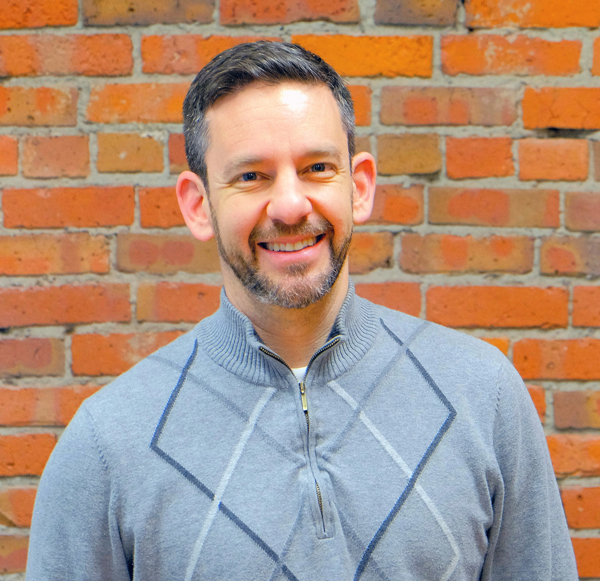
The highest calling in 1999 Fellow Casey Trupin’s family, he said, has always involved “doing something that could better the community.” Following in the footsteps of his grandfathers, both of whom were public interest attorneys, Casey developed a passion for helping homeless youth before he ever got to law school—first in Latin America, then through an AmeriCorps VISTA fellowship. When he began law school at the University of Washington School of Law, Casey was quick to notice the prevalence of young people experiencing homelessness near his hometown university.
“That,” he realized, “was certainly an area that the law could do a lot about.”
As a law student, Casey interned at Columbia Legal Services (CLS), where he helped to tackle youth homelessness and its connections to the foster system through education outreach and referrals. These services were crucial for youth experiencing homelessness, but it soon became clear that without an attorney to actively work on their cases, “there really was a gap.” Seizing upon the opportunity to expand, Casey and CLS worked together to create an Equal Justice Works Fellowship that aimed to address systemic barriers instead of serving one client at a time.

In conversation with former Equal Justice Works Marketing Manager Shani DeWindt, Casey discussed the ongoing collaboration critical to his Fellowship’s success—not only with his host organization, but with his Fellowship sponsor, AT&T Wireless, which went above and beyond to participate in Casey’s work, even going so far as to donate cell phones for homeless youth needing to stay connected.
“I felt incredibly blessed. I looked around and I saw people who did the legal job that was available to them at the time, and I got to do the exact job that I wanted to do coming out of law school for a long time. That was not only unique in the world of law, it was unique in the world of careers.”
Two decades later, Casey has maintained valuable connections from his Fellowship, which he says played an important role in securing his job as the director of the Raikes Foundation’s youth homelessness strategy, a departure from direct service. “The reason that I had [the opportunity] has everything to do with my Equal Justice Works background. It was the fact that I was a lawyer working on these issues and that I was deeply committed to this area that they recruited me to come over.”
Casey also discussed the benefits of partaking in the Equal Justice Works alumni community, shared the joy of funding and mentoring new Fellows throughout his career, and gave advice for new lawyers and Fellows entering the field in 2020 amid a pandemic.
To learn more about becoming a 2021 Equal Justice Works Fellow and kickstart your public interest law career, visit here.
Our nation’s heroes sacrifice everything to keep our country safe, but who’s protecting them when they return home from service?

That’s the question that 2012 Fellow Antoinette Balta asked when she would visit emergency shelters during her Fellowship. She looked around and noticed an influx of service members returning from Iraq and Afghanistan at the shelter.
According to a 2013 report by the National Low Income Housing Coalition, more than 1.5 million veteran households suffered from severe housing cost burden in 2011. Specifically, veterans who are racial minorities, who are women, who have disabilities, and who served after September 11, 2001, have the greatest need for affordable housing.
Inspired to take action against veteran homelessness, Antoinette created the Operation Veterans Re-Entry, in partnership with her host organization, the Public Law Center. Through the project, Antoinette was able to provide critical civil legal services to our nation’s heroes.
“Being an Equal Justice Works AmeriCorps Fellow was a pivotal point in my life and career. It provided me with the opportunity to serve and delve deeper into the idiosyncrasies of public interest,” said Antoinette. “Through my Fellowship, I was able to physically feel and see the difference a public interest attorney can make, fueling my desire to continue in high impact, life-changing work.”
When Antoinette finished her Fellowship, she knew there was more to be done. Her passion to help improve the quality of life for service members turned into a life-long career of serving veterans. As co-founder and executive director of the Veterans Legal Institute, Antoinette provides pro bono legal assistance to homeless, at-risk, disabled, and low-income current and former service members.
“Discovering that you have arrested the cycle of homelessness or suicide that impacts families and generations to come is more rewarding than any paycheck or pageant. Each day I fight to be a better advocate so that I can leave a legacy of hope for those around me,” said Antoinette.
At Equal Justice Works, we are proud of Antionette’s contributions to protecting veterans’ rights. To learn more about Antoinette’s Fellowship, visit her profile here.
Through my Fellowship, I was able to physically feel and see the difference a public interest attorney can make, fueling my desire to continue in high impact, life-changing work.
Antoinette Balta /
2012 Equal Justice Works Fellow
My Impact is a conversation series from Equal Justice Works, using interviews with alumni to shine a light on what’s possible with an Equal Justice Works Fellowship. In the latest installment of My Impact, we spoke with Erica N. Briant, a 2014 Fellow hosted by Legal Aid of Southeastern Pennsylvania.
 In conversation with Aoife Delargy Lowe, director of Law School Engagement & Advocacy at Equal Justice Works, Erica discussed how studying social movements during college and volunteering in the Peace Corps led her to apply for law school.
“I was raised by a single mom in a very working-class community, and I think that the passion for equal access to justice was instilled in me from personal experience at a very young age,” said Erica. “I came of age around the time of the Iraq war and was involved in my school’s LGBTQ+ rights organization. Both of these things, at a very personal and worldwide level, convinced me that I wanted to be involved in trying to affect change during my career.”
At Legal Aid of Southeastern Pennsylvania, Erica removed barriers to employment, largely by looking at the collateral consequences of criminal records for low-income individuals in Bucks, Chester, Delaware, and Montgomery Counties.
“Working at Legal Aid of Southeastern Pennsylvania was really interesting because the area had really concentrated areas of poverty and areas of incredible concentrated wealth. The area did not have a lot of access to services, and Legal Aid of Southeastern Pennsylvania was the only major legal aid provider in the region,” said Erica.

Following her Fellowship, Erica has remained on at Legal Aid of Southeastern Pennsylvania (LASP), where she became the supervising attorney of the Community Engagement Unit. “It has been a great privilege to stay at LASP and continue building relationships with the community,” said Erica.
In addition to discussing her Fellowship, Erica spoke about the transition from being a Fellow to training an Equal Justice Works Fellow, creating the Community Engagement Unit, and shared advice for law students and recent graduates entering the public interest workforce.
To learn more about becoming a 2021 Equal Justice Works Fellow and kickstart your public interest law career, visit here.