My Impact: A Conversation with 2014 Equal Justice Works Fellow Milo Primeaux

My Impact is a new conversation series from Equal Justice Works, using interviews with alumni to shine a light on what’s possible with an Equal Justice Works Fellowship. For our second installment, we caught up with Milo Primeaux, a 2014 Equal Justice Works Fellow at Whitman-Walker Health and the founder and CEO of Just Roots Queer Consulting LLP.
As an Equal Justice Works Fellow at Whitman-Walker Health, Milo focused on overcoming legal barriers to employment and healthcare access for transgender individuals in Maryland, Virginia, and Washington, D.C. Milo discussed his time at Whitman-Walker Health, where the staff felt like family. He remarked on some of the high points, including assisting over 250 people who identify as transgender through pro bono name change clinics.
Milo spoke with Equal Justice Works Marketing Manager Shani DeWindt about his public interest law career, beginning with what motivated him to attend law school and how his Equal Justice Works Fellowship at Whitman-Walker Health allowed him to get his foot in the door of trans-liberation work.
“I identify as a queer trans person and was active in grassroots organizing, public education, and public policy advocacy work in central Ohio with the local trans community and the statewide trans community. It was an exhilarating opportunity to serve the community in that way, but I couldn’t help but feel like I could do more, especially in a state like Ohio, if I had more tools at disposal. It seemed like a law degree could help me serve the community more effectively.”

Milo spoke about his impressive career after the Fellowship, ranging from working as the lead attorney in the LGBT Rights Project at the Empire Justice Center in upstate New York to serving as a private practice civil rights attorney. He also discussed his newest project, Just Roots Consulting, a consulting firm that assists organizations with awareness, practices, policies, and leadership development frameworks needed to effectively and mindfully include, affirm, and celebrate LGBTQ+ and other historically marginalized people.
Additionally, Milo shared some helpful advice for all the recent law school graduates now entering the workforce:
“Don’t be afraid to go out on a limb for something new and different, even if it’s not there and created for you as a cushy job description that meets your needs and wants exactly. Go make the job description… Think outside the box. You don’t have to work for a firm or a nonprofit legal services organization. Fellowships are incredible opportunities to gain a lot of resources, skills and organizational tools, and to sharpen your entrepreneurial skills to develop something from scratch.”
To learn more about becoming a 2021 Equal Justice Works Fellow and kickstart your public interest law career, visit here. Fellowship applicants are welcome to contact Milo with any additional questions about the application and Fellowship experience at [email protected].
Fellowships are incredible opportunities to gain a lot of resources, skills and organizational tools, and to sharpen your entrepreneurial skills to develop something from scratch.
Milo Primeaux /
2014 Equal Justice Works Fellow
By Allie Yang-Green, senior program manager at Equal Justice Works
Each year, millions of older Americans experience some form of abuse, neglect, and/or financial exploitation. Studies show that elder abuse—which includes psychological, physical, and sexual abuse, as well as caregiver neglect, financial fraud and exploitation—affects about 1 out of every 10 people age 60 and older.
Elder abuse often occurs at the hands of the people entrusted with the care and protection of the older person, such as nursing staff or family members. It can appear in many settings, including the older adult’s home, a family member’s home, a long-term care facility, or in other healthcare settings.
In many cases, older Americans do not seek help because they fear blame or other negative outcomes involving their family members, or because they are unaware of their rights and potential legal remedies. They need experienced advocates who can advise and seek justice on their behalf. Yet there is a profound shortage of public interest lawyers nationwide who are trained to provide effective representation to older victims.
That’s why Equal Justice Works created the Elder Justice Program—a two-year legal Fellowship program aimed at improving the national response to elder abuse, neglect, and exploitation. The Elder Justice Program mobilizes 22 lawyers to increase access to justice for victims of elder abuse, by enforcing elder abuse victims’ rights and addressing wide-ranging civil legal issues, such as housing, protection orders, guardianship, and public benefits. Many of the Fellows in the program will serve victims in rural communities, as they face a greater challenge in accessing legal assistance due to their geographic isolation and limited transportation options.
In light of the COVID-19 pandemic, the Fellows will use creative workarounds and innovative approaches to conduct outreach and meet the legal needs of their clients, while safeguarding the health and safety of both their clients and themselves. The Fellow hosted at Three Rivers Legal Services in Florida will develop direct representation models that allow for limited face-to-face contact, relying on both technology and assistance from providers or trusted family members with consent. At another host organization, New York Legal Assistance Group, the Fellow will work with partner agencies to include legal service outreach materials in food deliveries to older adults.
Throughout the Fellowship, Equal Justice Works and its program partner, Justice in Aging, will provide extensive training and technical assistance to help the Fellows deliver a multidisciplinary, coordinated response for helping older victims of abuse. Fellows are expected to begin their service in July 2020 at 16 legal services organizations across the country.
Interested in applying for this Fellowship program? Visit here to learn about the Elder Justice Program and to see the list of host organizations that are currently accepting applications.
The Elder Justice Program is supported by an award from the U.S. Department of Justice, Office of Justice Programs, Office for Victims of Crime (OVC), Award Number 2019-V3-GX-K033. This federal funding is supplemented by funds from private donors.
By Clarence Okoh, 2020 Fellow sponsored by the Equal Justice Works Text-to-Give campaign

To Fellow Young Black Lawyers Seeking Justice,
I remember once when I was riding with my grandfather to go pick up some groceries in our small hometown in east Alabama. We pulled up to a stop sign and it was taking him longer than usual to start moving. He stared at the window and motioned toward an unassuming abandoned gray building. He calmly looked at me and said that was once the headquarters of the local Ku Klux Klan. I wasn’t shocked by what he said as much as I was by how he said it. It was in such a matter of fact manner that I was stunned. There was no anger, fear or sadness; just a dispassionate, almost peaceful observation of racial terror. It would not be the last time I heard that tone of voice. It was the same tone that my grandmother used to describe memories from her “colored” high school. It was the same tone my mother used to tell the story of seeing armed white vigilantes burn a cross in front of her home. That tone was an inflection in the voices of people who had long come to peace with the inevitability of racism, the ubiquity of anti-Black state violence and the precarity of Black life.
When I was asked to share my thoughts on the brutal killings of Black people including Tony McDade, Breonna Taylor, Ahmaud Arbery and George Floyd; I paused because I heard their tone in my voice. These murders have not made me angry, bitter, or resentful—although each of those feelings are justified and valid. Instead, I found in my voice a defiant sense of peace. Because I think I discovered what my elders have long understood—that you will always find peace when you place a greater faith in Black people than the circumstances that surround us. Every development of white supremacy since the end of the transatlantic slave trade has been a failed attempt to keep pace with the ability of Black people to achieve liberation despite our circumstances. Today, we continue to march in the streets despite the endless massacre of Black lives by the police because we know our strength is greater than theirs. The Movement for Black Lives defiantly persists because we understand at our core that we will win. Our key struggle is defining the path to victory.
I believe that as young Black attorneys we have a role in defining that path. In this historic moment, we cannot neglect our responsibility to move our people closer to liberation. But before we begin that work, I believe that the Movement for Black Lives has imparted at least three critical lessons on how we defend Black lives and build Black futures.
First, the Movement for Black Lives has taught us that anti-Black racism is adaptive, forward-looking and innovative. Contrary to popular narratives, we are not combatting the “residual effects” of historic racism, but instead we are confronting systems of racism that have evolved and adapted to new circumstances. The Movement for Black Lives is actively teaching us that reforms will not be enough to end the racist innovations of American policing. The pace of these racist innovations has continuously thwarted reformist efforts because reform is a backward-looking approach to solve forward-looking challenges. For example, in response to police-involved shootings during the Obama years, many mainstream voices urged police reforms including: community policing, implicit bias training, body-cameras, data collection and reforming the standard for the use of force. One major city embraced nearly every one of these recommendations—Minneapolis, Minnesota. Reform failed to save George Floyd’s life. “Reform” is a reactionary approach to social change that fails to offer new, liberatory visions—even as Black lives are being destroyed. As legal advocates we should reject solutions that fail to protect Black lives. This moment demands that we offer new approaches that are more ambitious and adaptive than the systems of racial oppressions that we are trying to defeat. Our failure to do so will be measured by the number of Black lives that become hashtags.
Second, the Movement has taught us that our work should be anchored in actively loving Black people as much as defeating anti-Black racism. We know that Black lives are so much larger than the oppression that surrounds us. However, does our advocacy actually reflect that? Our role as lawyers calls on us to engage with Black communities in moments of crisis. It’s naive to think that this repeated exposure to Black trauma does not shape our understanding of Black people. We cannot lose sight of the fact that our work is to fight for actual people and communities. Integrating the celebration of Black life, Black love, and Black joy are integral to building sustainable movements that build Black futures. By privileging the humanity of Black people in our work, we can transform the law in such a way that it sees Black people the way that we see each other.
Third, the Movement for Black Lives has taught us the liberating power of Black radical imagination. In cities around the country, ideas once regarded as impossible are now public policy. School districts have abandoned contracts with law enforcement. Cities are divesting funding from law enforcement and investing in neglected social services. Minneapolis is even planning to disband its entire police department. We are only in this moment because of the revolutionary labor of Black women and Black LGBT folks. This Movement has been designed and led by them. By privileging their vision, we have created the most audacious agenda to transform the lives of Black people in generations. As legal workers we have to defend their lives and create space for their leadership because their vision is our only path towards freedom for all Black people.
We find ourselves living through an incredibly perilous moment for Black people. From pandemic, to policing and poverty, our community confronts an endless array of threats. Despite the severity of the circumstances we confront, I am convinced by the wisdom of my elders—that Black people are so much greater that the oppressions we face. I choose to place my faith in Black people. I know that we will find our path to freedom. Until that day, may we find healing in our mourning and hope in our struggle.
Resources:
- Abolition Democracy by Angela Davis
- When Work Disappears by William Julius Wilson
- Black Reconstruction by W.E.B. DuBois
- I’ve Got the Light of Freedom by Charles Payne
- Democracy Remixed: Black Youth and the Future of American Politics by Cathy Cohen
- Where Do We Go from Here by Dr. Martin Luther King Jr.
- Race After Technology by Ruha Benjamin
- The Fire Next Time by James Baldwin
- The Kerner Report
- Critical Race Lawyering in Tulia, Texas by Vanita Gupta
- Serving Two Masters: Integration Ideals and Client Interests in Desegregation Litigation by Derrick A Bell Jr.
Visit here to learn how Clarence Okoh’s Fellowship enables him to defend low-income communities of color against exploitative technologies.
My Impact is a new conversation series from Equal Justice Works, using interviews with alumni to shine a light on what’s possible with an Equal Justice Works Fellowship. For our first installment, we caught up with Lan Diep, 2011 Equal Justice Works Fellow at the Mississippi Center for Justice and current San José City Councilmember.
As an Equal Justice Works Fellow at the Mississippi Center for Justice, Lan Diep helped Vietnamese fishermen, small business owners, and others whose livelihoods were affected by the 2010 BP Oil Disaster. The son of Vietnamese refugees, Lan was uniquely situated to articulate the needs of the community in a way that nobody else was doing. Now, as a city councilmember in San José, California, he is working to build a stronger and more inclusive city by focusing on economic development, building affordable housing, improving transportation options, and smart land use.

Lan spoke with us about his journey to law school, and shared how he became an “accidental Fellow,” serving as the only Vietnamese-speaking attorney in the entire state of Mississippi following the BP Oil Disaster. Lan also shared insights about graduating law school during The Great Recession, the parallels he recognizes with the COVID-19 pandemic, and advice for standing out in the current economy.
To learn more about becoming a 2021 Equal Justice Works Fellow and kickstart your public interest law career, visit here.
Community Lawyering is a completely different beast. It doesn’t matter what school you came out of, what your GPA was, or what your LSAT score was. Can you win the trust of the community you’re trying to serve? Can you connect with them either through language or culture? Or just a willingness to listen? Bringing their guard down and entrusting in you their fears and their problems.
Lan Diep /
2011 Equal Justice Works Fellow
Each year, Equal Justice Works partners with the Legal Services Corporation (LSC) for its Rural Summer Legal Corps (RSLC)—a program that provides public-minded law students a one-of-a-kind opportunity to address pressing legal issues facing rural and isolated communities.
Program participants, called Student Fellows serve at LSC-funded civil legal aid organizations, where they spend eight to ten weeks during the summer helping to provide direct legal services, engaging in community outreach and education, and building capacity at the organizations where they are hosted.
This year, 35 Student Fellows from 30 law schools will work remotely at 31 LSC-funded civil legal aid organizations across the country, providing legal assistance to people in rural areas affected by the coronavirus pandemic. To best support the health and safety of our Student Fellows, the host organizations have adjusted their projects to support remote work.
Meet our 2020 RSLC Student Fellows and learn more about what they will be up to this summer:
 Selina Barnhardt, Appalachian School of Law
Hosted at Southwest Virginia Legal Aid Society, Selina will assist legal aid attorneys in helping participants in the Appalachian Center for Hope program who are suffering from substance use disorders. To learn more about Selina’s work, click here.
 Christina Belville, Campbell University School of Law
Hosted at Legal Aid Society (LAS) of Middle Tennessee and the Cumberlands, Christina will support the LAS Rural Reentry Outreach & Legal Clinics Project by assisting low-income, rural individuals facing societal barriers due to prior criminal records in rural counties. To learn more about Christina’s work, click here.
 Miguel Cardenas De Avila, University of Oregon School of Law
Hosted at Legal Aid Services of Oregon, Miguel will help older farmworkers in rural areas of Oregon gain equitable access to justice and employment opportunities. To learn more about Miguel’s work, click here.
 Lora Church, University of New Mexico School of Law
Hosted at New Mexico Legal Aid, Lora will support her host organization in expanding its community presence in strategically selected Native American Nations, by performing outreach, conducting client intake, and providing legal services. To learn more about Lora’s work, click here.
 Sara Dicks, University of Florida Levin College of Law
Hosted at Three Rivers Legal Services, Inc., Sara will work on the organization’s Fresh Start Project, providing legal services to low-income rural bankruptcy clients in the Lake City office. To learn more about Sara’s work, click here.
 Myla Garcia, Penn State Dickinson Law
Hosted by California Rural Legal Assistance, Myla will advance the work of the Education Equity Team by focusing on legal research, drafting legal memorandum, and creating outreach materials. To learn more about Myla’s work, click here.
 Andrew Garrett, J. Reuben Clark Law School, Brigham Young University
Hosted at Utah Legal Services, Andrew will work with victims of domestic violence and have an opportunity to represent victims of domestic violence in protective order actions. To learn more about Andrew’s work, click here.
 Elizabeth Gatten, University of Cincinnati College of Law
Hosted at Legal Aid Society of Greater Cincinnati, Elizabeth will assist the Kinship Care Team in providing legal assistance to families in which grandparents and other relatives are caring for children affected by parental substance abuse or incarceration. To learn more about Elizabeth’s work, click here.
 Noah Goldberg-Jaffe, Alexander Blewett III School of Law, University of Montana
Hosted at Montana Legal Services Association, Noah will provide litigation support to attorneys in the organization’s Housing Practice Group. To learn more about Noah’s work, click here.
 Janette Gonzalez, Southern University Law Center
Hosted by Texas RioGrande Legal Aid, Janette will expand the work of the organization’s Farm Worker team by assisting with a variety of employment law matters affecting migrant and seasonal agricultural workers. To learn more about Janette’s work, click here.
 Daniel Hartman-Strawn, University of Arizona James E. Rogers College of Law
Hosted by Michigan Indian Legal Services, Daniel will expand the organization’s Estate Planning Team’s ability to respond to the estate planning legal needs of Native American communities and tribes throughout Michigan. To learn more about Daniel’s work, click here.
 Mattison Harvey, Drexel University Thomas R. Kline School of Law
Hosted by Legal Services of Eastern Missouri, Mattison will expand the organization’s outreach efforts and capacity for serving victims of domestic violence living in rural eastern Missouri. To learn more about Mattison’s work, click here.
 Hannah Hays, University of Miami School of Law
Hosted by Appalachian Research and Defense Fund of Kentucky, Inc., Hannah will help with the humanitarian crisis involving the former clients of private attorney Eric C. Conn who are facing reviews and the possible loss of their Social Security Disability and/or SSI benefits. To learn more about Hannah’s work, click here.
 Ally Hicks, Belmont University College of Law
Hosted by Kentucky Legal Aid, Ally will help the organization implement its Eviction Diversion Project, an initiative aimed at reducing homelessness in rural, economically-depressed areas. To learn more about Ally’s work, click here.
 Adam Hubbell, Florida State University College of Law
Hosted by Legal Services of North Florida, Adam will support the organization in serving clients in rural counties of the Florida Panhandle that were affected by Hurricane Michael. To learn more about Adam’s work, click here.
 Pablo Jimenez, Albany Law School
Hosted by the Legal Aid Society of Northeastern New York, Pablo will work directly with the organization’s attorneys in landlord-tenant and/or family law proceedings (divorce, custody, support, and family offenses).To learn more Pablo’s work, click here.
 Marshall Jones, Oklahoma City University School of Law
Hosted by Oklahoma Indian Legal Services, Marshall will work on the organization’s Indian Child Welfare Act Parent Representation Project, gaining experience in interviewing clients whose children have entered the State or Tribal welfare system. To learn more about Marshall’s work, click here.
 Anna Lynch, The University of Iowa College of Law
Hosted by Iowa Legal Aid, Anna will provide direct civil legal assistance to rural clients, working on the broad range of important issues including domestic abuse and family law. To learn more about Anna’s work, click here.
 Annie McDermott, Villanova University Charles Widger School of Law
Hosted by California Rural Legal Assistance, Annie will provide legal advocacy to low-income students, parents, and guardians with the goal of decreasing unlawful and disproportionate alternative school assignments and disciplinary actions. To learn more about Annie’s work, click here.
 Anna Michel, Northeastern University School of Law
Hosted by Legal Services of Hudson Valley, Anna will broaden and advance service in manufactured home communities, and build on recent successes in manufactured home litigation. To learn more about Anna’s work, click here.
 William Montgomery, Tulane University School of Law
Hosted at Texas RioGrande Legal Aid, William will work with the organization’s Disaster Assistance Group to respond to the legal impacts from Hurricane Harvey, the Great June Flood of 2018, and any other disaster events that may occur. To learn more about William’s work, click here.
 Mary Musselman, University of Mississippi School of Law
Hosted by North Mississippi Rural Legal Services, Mary will work on the organization’s Elder Law Division Project, helping low-income Mississippi elderly residents in various legal matters. To learn more about Mary’s work, click here.
 Ariana Ortiz, Emory University School of Law
Hosted by Georgia Legal Services Program, Ariana will help to educate migrant farmworkers about their housing rights, represent workers in informal negotiations with the housing provider, and represent workers in formal administrative complaints. To learn more about Ariana’s work, click here.
 James Ramger, Howard University School of Law
Hosted by Pine Tree Legal Assistance, James will work in the organization’s Basic Unit and Family Law Unit, providing services to low-income clients throughout Aroostook County, Maine. To learn more about James’ work, click here.
 Patrick Roach, CUNY School of Law
Hosted by Alaska Legal Services Corporation, Patrick will spend the summer helping to increase access to justice for rural Alaskans by developing content for the organization’s websites, mobile app, and Pro Bono Training Academy. To learn more about Patrick’s work, click here.
 Eduardo Ruiz, University of San Francisco School of Law
Hosted by California Rural Legal Assistance, Eduardo will be tasked with monitoring H-2A Temporary Agricultural Worker applications, identifying housing sites, developing outreach strategies with local offices, and preparing educational materials. To learn more about Eduardo’s work, click here.
 Ella Russell, St. Thomas University School of Law
Hosted by Legal Services of Greater Miami, Ella will support the Mobile Home Park Advocacy Project, which serves mobile home park residents in rural South Dade and Monroe County, Florida. To learn more about Ella’s work, click here.
 Malaysha Seals, Florida A&M University College of Law
Hosted by West Tennessee Legal Services, Malaysha will provide education, outreach, and direct legal assistance to low-income West Tennesseans who lack a safety net when confronted with problems affecting basic needs for safe and secure housing and freedom from abuse from consumer scams. To learn more about Malaysha’s work, click here.
 Lindsey Shonehard, Northeastern University School of Law
Hosted by Legal Aid Services of Oklahoma, Lindsey will help migrant workers who are survivors of domestic violence understand their legal rights and overcome obstacles preventing them from successfully escaping abusive relationships. To learn more about Lindsey’s work, click here.
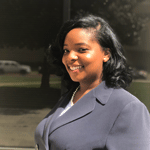 Auriana Siplin, Southern University Law Center
Hosted by Southeast Louisiana Legal Services, Auriana will expand access to legal services and legal education in the rural parishes of Baton Rouge and Hammond in New Orleans. Auriana will work on continuing the organization’s library outreaches and clinics and developing and distributing information on how to access civil legal services. To learn more about Auriana’s work, click here.
 Amy Spears, Liberty University School of Law
Hosted by Legal Aid of West Virginia, Amy will participate in the organization’s West Virginia Bridging Job Barriers Legal Project, assisting staff with clearing criminal records using West Virginia’s expanded 2019 Expungement Law. To learn more about Amy’s work, click here.
 Michelle Trimper, Albany Law School
Hosted by the Legal Aid Society of Northeastern New York, Michelle will assist experienced staff attorneys with landlord-tenant and family law proceedings. To learn more about Michelle’s work, click here.
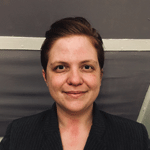 Elizabeth Tubbs, University of Florida Levin College of Law
Hosted by DNA People’s Legal Services, Elizabeth will work alongside and under the supervision of Navajo licensed attorneys to provide outreach, community legal education, and a full spectrum of legal assistance to residents in Navajo communities. To learn more about Elizabeth’s work, click here.
 Kendell Wilson, Penn State Dickinson Law
Hosted by Lone Star Legal Aid, Kendell will assist the organization with implementing the Homestead and Disability Property Tax Exemption Project, an initiative aimed at helping low-income residents secure tax exemptions and fight improper tax foreclosure lawsuits. To learn more about Kendell’s work, click here.
In continuation of our blog post detailing how Equal Justice Works Fellows are advocating for at-risk inmates to be released from detention facilities amid COVID-19, we bring to you this second post that explores how our Fellows are supporting inmates following their release.
Across the country, judges are responding to criminal justice advocates’ pleas to take precautionary measures to prevent the spread of COVID-19 in jails and prisons. As thousands of inmates are safely reunited with their loved ones, advocates are wondering: What happens now that they have been released?
Individuals released from detention facilities receive little preparation and inadequate support, making it extremely difficult for them to successfully transition back into society. They face challenges in finding employment, securing housing, and addressing their health needs.
According to a 2019 study from the National Institute on Drug Abuse, an estimated 65% of the United States prison population has an active substance-use disorder, compared to approximately 8% of the general population.
Despite these alarming statistics, only a few prisons and jails provide Medication-Assisted Treatment (MAT), the medically approved way to treat people with opioid-use disorder in combination with therapy. The consequence of this inadequate treatment? Post-release, the leading cause of death is an opioid-related overdose.
Before COVID-19, 2019 Fellow Joseph Longley focused on securing access to necessary care for incarcerated people with opioid-use disorder. Through filing lawsuits, Joseph argued that prisons who deny MAT to incarcerated people with an opioid-use disorder are violating the Americans with Disabilities Act and the Eighth Amendment.
Now that some of his clients have been released, Joseph is tackling an even larger question: how will his clients continue to receive treatment for their opioid-use disorder?
One solution that has been implemented is allowing individuals to take home up to 28 days of buprenorphine (one of the three FDA-approved MAT medications). Further, Joseph and his host organization, the ACLU National Prison Project, support ensuring that Medicaid is available to incarcerated people. This way, formerly incarcerated people can access their necessary medications immediately upon release, without getting caught up in red tape.
“As we continue to fight the opioid epidemic, we know that it only takes providing eleven incarcerated people with MAT to save one life,” said Joseph.
Still, one of the best ways to ensure people continue MAT after their release from jail or prison is to make sure that they never have their MAT treatment taken away while they are incarcerated. Amid the pandemic, Joseph is writing a report about the opioid epidemic in jails and prisons, and pursuing lawsuits against local jails and prisons to ensure that individuals receive access to their MAT.
Thanks to Joseph’s incredible advocacy, more people are getting the opioid treatment they need to live safe and healthy lives. We’re proud to support passionate public service leaders, like Joseph, who are working hard to protect the rights of others amid this pandemic.
2019 Equal Justice Works Fellow Joseph Longley is supported by an anonymous sponsor. Learn more about his advocacy work here.
As we continue to fight the opioid epidemic, we know that it only takes providing eleven incarcerated people with [Medication-Assisted Treatment] to save one life.
Joseph Longley /
Equal Justice Works Fellow
Ivan K. Fong, senior vice president, general counsel, and secretary of the 3M Company, has been focused on helping 3M navigate its response to the novel coronavirus. He recently took a brief break from work to chat with Equal Justice Works about his accomplished legal career, including his new role as the chair of the Equal Justice Works Board of Directors.
You are trained as a chemical engineer. At what point did you realize that you wanted to pursue a career in law? Was there a particular personal experience that helped influence this decision to shift your career path?

In my junior year of college, I took a class on the Supreme Court, serendipitously taught by a political science professor who inspired me and opened my mind to a world outside of math, science and engineering. I found myself spending more time on that course than I did on my engineering classes. I recall going to see him at the end of the semester to let him know how much I enjoyed his class. It was then that he suggested that I consider going to law or public policy school. Until that moment, I was headed toward a PhD in chemical engineering. Coming from an immigrant family, no one in my extended family is a lawyer, even to this day. So, going to law school was not really on my radar screen. Yet here was someone I admired and respected, planting the seed of an idea that would change my life and career.
I spent the following summer in Washington, D.C. as an intern in a program designed for engineering students interested in public policy. Through the internship, I was able to work with others on issues at the intersection of law, science, engineering and policy. That experience validated for me the need for people who have a technical background to work in law and policy. Even then, though, I was unsure the law was for me, so I ended up applying only to a few law schools, looking for a sign that this was the path I was being called to take. Luckily, I was admitted, ended up enjoying law school, and the rest is history.
After graduating from Stanford Law School, you clerked for the late Judge Abner J. Mikva of the U.S. Court of Appeals for the District of Columbia Circuit, and Justice Sandra Day O’Connor of the U.S. Supreme Court. What lessons learned from working so closely with these legal legends have you applied to your career?
I am deeply indebted to both Judge Mikva and Justice O’Connor for the many life and career lessons they taught me. As a former Congressman, Judge Mikva was gregarious, a raconteur and always remembered details about the people he met. He exemplified the old saying, “People may forget what you said, but they will never forget how you made them feel.” And every month, Justice O’Connor would round up her law clerks to go on an outing. We went to museums, we went to the movies, we had a picnic lunch amidst the cherry blossoms and we even went camping and hiking with her. As crazy busy as we all were, she reminded us through her actions that we all need to make time to “stop and smell the roses,” create memories and have fun. It sounds corny, but it worked.
As a member of the Leadership Council on Legal Diversity, you have been a longtime advocate of building a more open and diverse legal profession. Can you share with us how 3M is working to improve the pipeline of diverse legal talent at the company?

3M’s legal department is focused on D&I throughout the process of recruiting, developing and retaining our talent. In the area of recruitment, we want to make sure we build an attractive employment brand, cast a wide net and bring forward diverse candidate slates. During the selection process, we endeavor to minimize implicit biases by employing structured panel interviews, in which three or four people jointly interview candidates by asking them the same, competency-based questions, to avoid the human tendency to rate candidates by how much you “like” the person. Focusing on experiential questions helps ensure that the interview focuses on identifying the skills and capabilities needed to fill the role.
As we build and work toward a more inclusive law department, I am committed to developing and retaining our talent. We have an active D&I Committee that does everything from measuring our D&I maturity to hosting lunches about D&I topics to publishing an annual D&I report. This year’s report focuses on how members of our legal department feel about belonging, being listened to and welcomed for who they are. I regularly review our D&I metrics and talk about why a diverse and inclusive legal department is important to me and to our company. We also sponsor numerous leadership development programs every year, and we encourage participation in and leadership of 3M’s employee resource network groups. Last year and this year, we are paying special attention in our legal department to issues relating to mental health, wellness and well-being.
In a 2019 interview with Minnesota Lawyer, you spoke about your commitment to pro bono work, calling it “one of the most rewarding things I’ve done as a lawyer.” Under your watch, the pro bono program at 3M has been highly active—in 2018, 3M attorneys and support personnel logged more than 2,500 volunteer hours. Why is pro bono work important to you and what advice do you have for a company that wants to provide more pro bono service opportunities for employees?
One year when our kids were young, Halloween fell on a day that I had to be out of town for a pro bono case, one in which we were representing an inmate named David on death row. I had to decide between going trick-or-treating with our children or working on David’s case. I ended up going to Mississippi to meet with David and to attend a hearing on his behalf.
Some time after that hearing, after we negotiated an agreement with the prosecutor that resulted in a life sentence for our client, I received a note from David, saying something like, “I know, Ivan, how much you wanted to be with your children on Halloween, and I just wanted to let you know how much it meant to me that you were there for me to help with my case. I just wanted to let you know that you made a difference for me.”

I always remember that letter when I think of why I value pro bono work. As lawyers, we have a professional responsibility to improve how justice is administered, and we can do that by doing legal work for those who cannot afford a lawyer. It is extremely difficult for most lay people to navigate the legal system without legal assistance. To me, there is no shortage of work that can and should be done.
My advice for a legal department is to start where you are and keep building. Set up a pro bono committee, develop some simple policies, partner with local civil legal aid associations and visibly support those who are doing pro bono work. At 3M, we encourage people to spend up to 15% of their time on projects that do not require a manager’s approval. And we publish a report every year that recognizes and celebrates the terrific pro bono legal work we do.
3M has cosponsored three Equal Justice Works Fellows based in Minnesota. What motivated the company to support these public service leaders and how have their projects aligned with the company’s public interest goals?
We have been extremely fortunate to have had several exceptional Equal Justice Works Fellows — Colleen Kelly, Kerry McGuire, and Timothy Sanders. Their work has been aligned with the company’s goals to serve veterans, to work with our medical community and to serve our immigrant population. And within our legal department, the Fellows inspire our lawyers and legal professionals to do more pro bono. It’s been an unqualified success, and we look forward to bringing more Fellows onboard in the future.
You’ve had such an impressive career both in the public and private sectors. How do you distinguish yourself in order to be selected for these roles of increasing responsibility? What are skills you have developed from working in both the public and the private sectors?
I’ve had the privilege and great fortune to have been in private practice, in government and now in-house. None of it was planned. Rather, I found myself attracted to opportunities to do interesting work with outstanding people. I like to learn and try new things, while staying true to my values. As the son of immigrants, I was drawn to public service as a way to give back to the country that has been so good to me and my family. Those experiences have enriched my life and career in ways seen and unseen.
Now here at 3M, I could not be more proud of the work we are doing to supply critical protective equipment and other medical supplies to our front-line doctors, nurses and emergency workers who are responding to the coronavirus pandemic. I love being part of a company and legal department that is purpose-driven, agile, resilient, innovative, collaborative and a great place to work!
Lastly, you were appointed as the chair of the Equal Justice Works Board of Directors this year. Why did you initially decide to become involved with Equal Justice Works, and what do you hope to accomplish during your tenure as chair?
I became involved with Equal Justice Works for a very simple reason: I am deeply committed to the mission of creating opportunities for lawyers to transform their passion for equal justice into a lifelong commitment to public service. It can be difficult for recent graduates to find their first public interest job straight out of law school. I believe that Equal Justice Works Fellowships offer that opportunity for those who are dedicated to public interest law to jumpstart their careers and stay in public interest. As board chair, I hope to help strengthen Equal Justice Work’s mission and highlight the importance and continued relevance of that mission — today and into the future. Now, more than ever, we as a legal community must support public interest law and lawyers. The COVID-19 pandemic has and will continue to produce a multitude of legal issues, and we have a responsibility to ensure that there are creative, passionate and skilled lawyers answering the needs of their communities.
Now, more than ever, we as a legal community must support public interest law and lawyers.
Ivan Fong /
Senior Vice President, General Counsel, and Secretary
The 3M Company
Clara Spera is a 2019 Equal Justice Works Fellow hosted by American Civil Liberties Union (ACLU) Reproductive Freedom Project. Her Fellowship is supported by an anonymous sponsor.
Disclaimer: This interview was conducted before the advent of the COVID-19 pandemic. The work of the ACLU Reproductive Freedom Project has shifted dramatically in the wake of the pandemic.

You are the first Equal Justice Works Fellow in eight years focused on protecting and expanding access to reproductive care. What inspired you to apply for an Equal Justice Works Fellowship?
In this particular moment in our country’s history, we are seeing one of the most significant attacks on access to reproductive care. Having just come out of law school and two federal clerkships, I was thinking about the critical work that needs to be done. I’ve always been passionate about women’s reproductive rights. As legislation quickly changes on the federal and state level, I knew this was an area of law where I wanted to consolidate my efforts.
As I was searching for ways to get involved with public interest work, my law school introduced me to the Equal Justice Works Fellowship. After learning about the opportunity, it seemed like a no brainer to design my own Equal Justice Works Fellowship project.
In 2019, 58 abortion restrictions passed across the country. How has this impacted the work of your host organization, the American Civil Liberties Union (ACLU) Reproductive Freedom Project (RFP)?
Above all else, we are swamped! So, it is great that the RFP can have the additional support of an Equal Justice Works Fellow: through my project, I can expand the capacity of RFP. In our day-to-day operations, we’re battling restrictions as they come up and planning for the worst-case scenario in case the federal Constitutional right to abortion gets more curtailed or even eliminated. The work has exposed me to all kinds of litigation techniques and different reproductive rights coalition dynamics.
Part of your project includes advising women, health care professionals, and organization partners in states on substantial legal questions regarding women’s health care. What community partnerships have you created to provide holistic solutions for your clients?
Recently, I was part of a team that filed a lawsuit in the Eastern District of Texas, challenging the constitutionality of city ordinances that purport to ban abortion and prohibit any abortion-related advocacy within city limits. The plaintiffs are two reproductive rights organizations that are essential to educating communities about their rights and that also help cover the costs of abortion care and the ancillary costs associated with it, like travel and childcare. By representing these organizations, we are reaching directly into the communities most affected by these types of laws.
Through your project, you identify and implement strategies for lifting existing barriers to women’s health care. How have you increased community education and outreach to teach women about their reproductive rights?
Across the city, state, and federal levels, governments are curtailing individuals’ right to learn about abortion. In the Texas case specifically, our goal is to make sure that these reproductive rights organizations can increase community education and outreach.
The reproductive rights community is a coalition—there are a lot of moving parts, and no one organization or one Fellow can do everything. Together, we leverage the relationships and organizations that already exist, so that we can do the most good and reach the most people.
Many members of your team have been recognized for their contributions to protecting the rights of women. What is the most important lesson that you’ve learned from the mentorship of these talented public interest lawyers?
It’s an honor to work with these lawyers. They inspire me—every day I go to work, they make me want to become a better lawyer. Some of my supervisors and coworkers are people I had followed on Twitter for years, and now I work with them every day. That is such a startling but exciting privilege.
The biggest takeaway has been that my supervisors and coworkers are human beings, and they work hard, and if I work hard, I can also achieve the level of excellence that they exude. Secondly, I learned that they want to help young lawyers, like me, grow. They know that the fight for reproductive rights won’t be over in the next year or two, so they take the time to help the young lawyers who will be in this fight for a long time.
Lastly, if you could give law students interested in pursuing similar work one piece of advice, what would it be?
I gathered some tips from the attorneys in my office, so I will relay their tips: first, it’s important to display a demonstrated commitment to reproductive rights and social justice early on in one’s legal career. It signals to organizations that this is something you truly care about, and it is the best way to create a tool kit before you start working. Second, focus on transferable skills—specifically research and analytical skills. Practical experience can be especially helpful early on in your career.
My personal advice: if you don’t have a direct opportunity to work on reproductive rights in law school or work, you can try to create those opportunities. Most law schools allow students to design their own externship or clinical experiences, write independent research papers, or create other opportunities to explore a specific legal area. Reach out to a legal organization and tell them that you would like to take on a pro bono case or attend a one-day clinic. It does take a little bit of effort and some independent initiative, but it will help you learn these skills and signal to organizations that you’re committed.
To learn more about Clara Spera’s Fellowship, visit her Fellow profile.
It’s an honor to work with these lawyers. They inspire me—every day I go to work, they make me want to become a better lawyer.
Clara Simone Spera /
Equal Justice Works Fellow
From eating to sleeping, every moment of Yesenia Evans’ experience in Santa Fe County Adult Detention Facility was in close proximity to others. Born with a rare autoimmune disease, Yesenia is especially vulnerable to COVID-19. In a jail, where viruses spread quickly, Yesenia’s probation violation could have quickly became a death sentence.
Correctional facilities, like Marion Correctional Institution, Rikers Island Jail and Cook County Jail, have become epicenters of COVID-19. The main reason? Severe overcrowding.
According to the Sentencing Project, the United States is the world’s leader in incarceration, with an estimated 2.2 million people incarcerated. While incarceration rates soar, institutions have become dirtier and more crowded—leaving incarcerated people unable to practice social distancing or basic hygiene, like frequent hand-washing.
“The Wisconsin Department of Corrections (DOC) holds almost 23,000 adults in facilities with a design capacity of 17,815, thus exceeding their capacity by more than 30%,” said 2018 Fellow Emma Shakeshaft.
In response, our Fellows are urging jails and prisons to release at-risk inmates from detention.

Thanks to the work of 2018 Fellow Lalita Moskowitz and her host organization, the American Civil Liberties Union of New Mexico, Yesenia is safely back home with her partner and three young children. Currently, Lalita’s work involves combatting the public “tough on crime” narrative, so more inmates can return home. Through this work, Lalita and her host organization joined other criminal justice advocacy groups to file an emergency petition to ask the New Mexico Supreme Court to immediately reduce the number of people in New Mexico prisons.
The truth is, the majority of incarcerated people in New Mexico are behind bars for probation/parole violations or other non-serious offenses, often related to mental illness or substance abuse for which they need treatment, not confinement.
Lalita Moskowitz /
Equal Justice Works Fellow

Around the country, the situation has become dire for jails and prisons. For instance, 30 inmates and 11 staff members have tested positive for the virus in Washington, D.C., facilities. 2018 Fellow Joseph Longley and his host organization, the American Civil Liberties Union National Prison Project, have advanced Fifth Amendment claims against ICE facilities, jails, and prisons. Collectively, they have filed 18 lawsuits and helped to get more than 60 people released.
Without serious intervention to depopulate prisons and jails, many people who are incarcerated will needlessly suffer and die.
Joseph Longley /
Equal Justice Works Fellow

In Wisconsin, the situation isn’t much better. Eighteen Wisconsin Department of Corrections staff members and fifteen people in the DOC’s custody have tested positive for COVID-19. The Wisconsin Supreme Court denied an emergency petition filed by 2018 Fellow Emma Shakeshaft, in conjunction with her host organization, American Civil Liberties Union of Wisconsin. Now, Emma and her team are evaluating other legal strategies to ensure that prisoners’ rights are protected.
Until correctional facilities practice social distancing measures, inmates and staff will continue to be at an increased risk of exposure to COVID-19. It’s up to advocates, like Lalita, Joseph, and Emma, to ensure the rights of those incarcerated are not forgotten amid this pandemic.
2018 Equal Justice Works Fellow Lalita Moskowitz and 2019 Equal Justice Works Fellow Joseph Longley are supported by anonymous sponsors. 2018 Equal Justice Works Fellow Emma Shakeshaft is cosponsored by the Wm. Collins Kohler Foundation and Quarles & Brady LLP.
We are proud to support Fellows advocating for better conditions in correctional facilities amid COVID-19. Learn more about this work, by visiting Lalita, Joseph, and Emma’s profiles.
By Lauren Wright, Equal Justice Works brand manager
The coronavirus pandemic has closed schools and universities worldwide, plunging students, teachers, and parents into the uncharted territories of long-term virtual education. From Zoom kindergarten classes to online dissertation defenses, this public health crisis has forced an abrupt culture shift upon students at all levels. As more schools announce their plans to remain closed through the end of the academic year, we checked in with our education-focused Fellows throughout the country to learn more about the issues their clients are currently facing.
Access to Resources
A 2018 Microsoft study estimated that roughly half of Americans—163 million people—do not have high-speed internet at home. For many students, particularly in rural and low-income communities, the closure of schools and public libraries has limited their access to the tools, resources, and support they need in order to learn.

Lashawnda Woods-Roberts, a 2018 Fellow at the Georgia Appleseed Center for Law & Justice sponsored by an anonymous supporter, advocates for the educational rights of justice-involved youth and students at risk of court involvement. Most of Lashawnda’s clients are foster children, and she is currently working to get them connected with the devices and internet that online education requires. Connectivity, however, is just one of the challenges these students face: over the course of the pandemic, many Georgia youth in foster care have also already experienced multiple foster placement changes, begun building new relationships with unfamiliar custodians, been introduced to new and unconventional digital platforms, and adjusted to carceral environments.
“Children in care often lack the social-emotional support that they so desperately need, and without formal student supports or special education services, many are falling further behind a curve that was already steep,” said Lashawnda. To identify and address systemic barriers to access and services during this pandemic, Lashawnda is coordinating weekly COVID-19 meetings for the Georgia Education Climate Coalition (GECC). During GECC meetings, Georgia leaders come together to discuss access gaps, share solutions and resources available to families, build partnerships to increase education and health services and supports, and create policies to mitigate the compounded harm to at-risk school-aged children resulting from the pandemic.
Disability Rights

Even in well-resourced communities, students with disabilities remain unable to access the services necessary to their success. According to 2018 Fellow Tori Porell, who is sponsored by the Morrison & Foerster Foundation and works with the East Bay Children’s Law Offices to serve students in over 50 Bay Area school districts, the move to adapt has been slow in many districts.
“We have heard talk of students being able to receive speech therapy, occupational therapy, or mental health services through telehealth, but I haven’t seen any district roll that out yet,” said Tori. For students with more significant disabilities, who would normally receive services in specially designed classrooms or with the support of one-on-one aides, there is just no way to virtually recreate the necessary environment.

Amanda Glass, a 2018 Fellow sponsored by Greenberg Traurig, LLP, shared that the Arizona Department of Education has issued guidance and resources to school districts regarding the legal obligation to provide special education services during school closures to students with Individualized Education Programs (IEPs). Along with her host organization, the Arizona Center for Disability Law, Amanda has created resources directed at students and parents about their rights during this time, and continues to advocate for her existing clients to receive the services in their IEPs to the extent that is safe and feasible. Amanda has established an education rights working group with representatives from several other Arizona advocacy organizations, including the ACLU of Arizona, the Arc of Arizona, and the Native American Disability Law Center, among others. This group is collaborating to disseminate information to students and parents about their rights, and is also communicating with the Arizona Department of Education about community concerns related to school closures. The group hopes to team up with the Department on developing and issuing additional resources and guidance on the need for compensatory education for students with IEPs when schools reopen.
Disciplinary Measures
In the case of existing school disciplinary measures, the closure of physical campuses has made remediation a lot more complicated.

In California, 2018 Fellow Curtis Davis, who is sponsored by the Morrison & Foerster Foundation, responded to a request from state officials about actions they need to take to protect low-income and otherwise at-risk students from harmful consequences related to school closures during the pandemic. One recommendation that he and a coalition of other advocates have put forward is to place a moratorium on expulsions and instead focus on non-expulsion resolutions. While some school districts have withdrawn expulsion recommendations altogether, others have postponed hearings until schools reopen, or proceeded with telephone or video hearings that Curtis says violate a number of due process rights set forth in the California Education Code.
“Exclusionary discipline practices, such as expulsion, disproportionately impact California’s most at-risk students, such as students of color, students with disabilities, English Language Learners, and foster youth,” said Curtis. The proposed moratorium is intended to create a fair playing field for students of all backgrounds.

At the Juvenile and Children’s Advocacy Project in Houston, Texas, 2018 Fellow Christina Beeler, who is sponsored by Latham & Watkins LLP, is also advocating on behalf of students facing disciplinary action as individual school districts in Texas decide whether or not distance learning days will count against their sentences.
“Suspensions, expulsions, and removals to disciplinary alternative education programs contribute to the school-to-prison pipeline,” said Christina. “I am coordinating with other school advocacy and legal services groups to write a letter to schools encouraging them to commit to counting, reducing, or waiving disciplinary days during COVID-19 school closures so that students have a fresh start when schools reopen.”
We are proud of the work our Fellows are doing to protect the educational rights of students amid the coronavirus pandemic. To learn more about the work of our Equal Justice Works Fellows, visit here.