Shedding Light on Elder Abuse & Exploitation During the Pandemic
By Allie Yang-Green, senior program manager at Equal Justice Works
As we emerge from the pandemic, it’s important to remember that some members of our communities have been hit harder than others by isolation, economic hardship, and other COVID-19-related challenges. Even before the pandemic, elder abuse was a growing problem with 1 out of 10 older Americans, an estimated 5 million people each year experiencing some form of elder abuse, neglect, or exploitation. The pandemic exacerbated this problem as older adults faced social isolation (a known risk factor for elder abuse) and reduced access to healthcare and other services.
On this World Elder Abuse Awareness Day, we urge everyone to learn and recognize the signs of elder abuse and to help older adults when you suspect abuse.
Last summer, we launched the Equal Justice Works Elder Justice Program with funding from the Office for Victims of Crime, U.S. Department of Justice, mobilizing twenty-two Fellows to help address the gap in civil legal services for victims of elder abuse and exploitation. Despite the many pandemic-related hurdles to reach older victims, the Fellows have been working tirelessly to provide holistic services in-person or virtually so that they can obtain justice for their clients and help them restore their dignity, safety, and financial wellbeing.
Here are stories from two of those Fellows:
At Legal Assistance of Western New York (LAWNY), Fellow Steve Palmer found that the pandemic exacerbated the challenges of low-income older adults living in isolated settings and magnified their vulnerability to abuse. Many of the cases that Steve has worked on this past year have involved issues such as identity theft, fraud, eviction, and sometimes a combination of all these issues like in his client Peter’s* case!
For about 10 years, Peter has not been able to work and has received disability benefits and rental assistance. When the state unexpectedly reduced his rental assistance alleging an increased income, Peter was sued for eviction after he failed to make rent payments. He came to LAWNY for assistance, where Steve investigated this claim and learned that someone had stolen Peter’s identity and fraudulently received unemployment benefits. Steve helped Peter to file an identity theft claim, restore his rental assistance benefits, and got the eviction case against him dismissed. Incidents of government benefits fraud and identity thefts have skyrocketed since the pandemic, victimizing many older adults like Peter. Without the legal help Steve provided, Peter could have faced homelessness during the pandemic.
Another Fellow in Elder Justice Program, Amy Perry at Equip for Equality, works to address elder abuse in rural Illinois and shares that her job is to empower older victims. Amy notes that an older adult with illiteracy, vision, hearing, motor skill or ambulatory challenges may not mention these problems because they are embarrassed or because they feel everyone is in too much of a hurry. Beyond resolving legal issues, Amy puts extra efforts to inquire, listen, and accommodate the individual needs of her clients.
The pandemic called for new types of accommodation on advocates to serve older victims. Amy’s client Sarah* is over 90 years of age and lives at an assisted living facility with restricted access due to the pandemic. Sarah was exploited by a former power of attorney who had sold her property without permission and needed to execute new powers of attorney. Determined to assist Sarah, Amy leveraged her organization’s status as protection and advocacy agency and argued for the client’s right to legal services. Once she gained access, Amy brought her own witnesses, who observed from outside Sarah’s door to minimize contact. For the visits, Amy prepared a mobile office in a rolling briefcase that included a laptop, printer, power and extension cords, a ream of paper, extra print cartridge, clipboards for client use, ruler and yardstick for pointers, sanitizing wipes to clean everything, and full PPE for herself and witnesses, as well as extras for clients if needed. Amy’s unrelenting effort to serve clients under severely restricted circumstances helped Sarah escape the abuses of a prior agent and regain agency over her finances.
The legal services provided by Steve and Amy are building blocks to coordinated national response to address elder abuse, to which all Elder Justice Program Fellows contribute by enhancing partnerships and educating community members and allied professionals about legal remedies for elder abuse.
To learn about the ways public interest attorneys can combat elder abuse in any practice area, read this post by Fellows Adam Dexter and Heather McKinney. Visit here for more information about the Elder Justice Program and the Fellows who are providing critical legal services to this vulnerable population.
*The name of the client has been changed to protect privacy.
The Elder Justice Program is supported by an award from the U.S. Department of Justice, Office of Justice Programs, Office for Victims of Crime (OVC), Award Number 2019-V3-GX-K033. This federal funding is supplemented by funds from private donors. The opinions, findings, and conclusions or recommendations expressed in this product are those of the contributors and do not necessarily represent the official position or policies of the U.S. Department of Justice.
Each year, Equal Justice Works partners with the Legal Services Corporation (LSC) for the Rural Summer Legal Corps (RSLC), a program for service-minded law students to address pressing legal issues facing rural communities. Program participants, called Student Fellows, serve at LSC-funded civil legal aid organizations where they spend eight to ten weeks during the summer helping to provide direct legal services, engaging in community outreach and education, and building capacity at the organizations where they are hosted.
This year, 35 Student Fellows were selected from 460 applications to work remotely at LSC-funded civil legal aid organizations, providing critical legal assistance to people in rural areas. In light of ongoing health and safety concerns, many of the Student Fellows will be working remotely this summer.
Meet our 2021 RSLC Student Fellows and learn about how they will be helping to address some of the biggest challenges facing rural communities:

Cole Adams (he/him/his), University of Alabama School of Law
At West Tennessee Legal Services, Cole will provide education, outreach, advice, and counsel to low-income individuals struggling with consumer debt, as part of the organization’s Rural Consumer Debt Relief Project. Cole will also team up with community partners to establish consumer debt clinics in rural West Tennessee.

Molly Bohanan (she/her/hers), University of Cincinnati College of Law
Hosted at Legal Aid Society of Greater Cincinnati, Molly will support the organization’s Kinship Care Team, which helps grandparents and others who have stepped up to care for children whose parents cannot raise them due to substance abuse, untreated mental illness, incarceration, or other issues.

Marcela Darris (she/her/hers), Wayne State Law
Marcela will work with Legal Services of Eastern Michigan’s housing practice group on eviction diversion programs and engage with community partners to secure housing assistance for tenants.

Emma Dillon (she/her/hers), University of Kansas Law School
Hosted at Kansas Legal Services, Emma will support underserved, rural Kansas Counties in developing targeted outreach to older low-income individuals and families in need of legal assistance in family law issues.

Mitchell Forbes (he/him/his), University of Michigan Law School
At Alaska Legal Services Corporation, Mitchell will spend his summer helping to increase access to justice for rural Alaskans, and help the organization improve its outreach and community education by developing content for its websites, mobile app, and Pro Bono Training Academy.

Ricardo Gomez (he/him/his), Catholic University of America Columbus School of Law
Hosted at Legal Services of Greater Miami, Inc., Ricardo will support the organization’s Mobile Home Park Advocacy Project, which serves mobile home park residents in rural South Dade Florida and Monroe Counties. He will participate in both individual and group advocacy to address the affordable housing crisis in rural South Florida.

Casey Hardaway (she/her/hers), Louisiana State University Paul M. Hebert Law Center
Casey will support her host organization, Southeast Louisiana Legal Services, in expanding access to justice in two rural parishes with some of the highest poverty rates in its service area. Casey will also work to create a successful model of working with rural libraries, holding monthly legal clinics and Know Your Rights sessions.

Katy Harvey (she/her/hers), University of Louisville Louis D. Brandeis School of Law
Hosted at Legal Aid of Arkansas, Katy will join “Beyond Opioids—Breaking Legal Barriers for Families in Recovery,” a collaborative project among legal aid programs in Arkansas that supports people impacted by the opioid crisis and other substance use disorders.

Shawn Holcomb (he/him/his), University of Louisville Louis D. Brandeis School of Law
At Kentucky Legal Aid, Shawn will support the organization’s Welcome HOME (Housing Options Means Empowerment) Project in providing rurally isolated and impoverished victims of domestic violence, dating violence, sexual assault, and stalking with long-term civil legal solutions to address or prevent homelessness.

James Johnson (he/his/his), University of Oklahoma College of Law
Hosted at Texas Rio Grande Legal Aid’s Mercedes office, James will assist the organization’s farmworker team on a variety of employment law matters affecting migrant and seasonal agricultural workers in the Rio Grande Valley of South Texas.

Addie Martin (she/her/hers), Oklahoma City University School of Law
Hosted at Center for Arkansas Legal Services, Addie will join the organization’s “Beyond Opioids—Breaking Legal Barriers for Families in Recovery,” a collaborative project among legal aid programs in Arkansas that supports people impacted by the opioid crisis and other substance use disorders.

Vivian Martinez (she/her/hers), Loyola Law School, Los Angeles
At California Rural Legal Assistance, Inc., Vivian will work under the guidance of staff attorneys to address employment and immigration concerns for low-wage, LGBTQ+ workers in California’s Central Valley and on the Central Coast.

Michael McDonald (he/him/his), Penn State Dickinson Law
Hosted at Legal Aid Services of Oklahoma’s, Michael will assist the organization’s Guymon office in expanding services to migrant workers on a variety of matters, including family law, housing, consumer law, and public benefits. Michael will also help create a housing guide to increase agricultural workers’ knowledge about housing rights and options.

Jendi McNicholas (she/her/hers), Indiana University Robert H. McKinney School of Law
Jendi will work on Indiana Legal Services’ Project CLeAR (Civil Legal Aid in Recovery) to help deliver civil legal aid to individuals in recovery, usually recovery from substance use disorder.

Jocelyn Mercado (she/her/hers), Lincoln Memorial University Duncan School of Law
At Legal Aid Society of Middle Tennessee and the Cumberlands, Jocelyn will support legal work to assist low-income, rural individuals who are facing significant financial burdens and legal challenges in maintaining housing, obtaining unemployment benefits, and preventing loss of income due to debt collection.

Beven Nedumthakady (he/him/his), Albany Law School
At Legal Aid Society of Northeastern New York, Beven will work directly with staff attorneys in landlord-tenant and/or family law proceedings (divorce, custody, support, and family offenses) to address problems faced by rural clients in accessing legal assistance and representation.

Magdalene “Maggie” Ogletree (she/her/hers), University of Mississippi School of Law
Maggie will support Legal Services Alabama’s Rural Health Justice Project, a medical-legal partnership in collaboration with Rural Health Medical Program, Inc. that helps rural health center patients who have unmet civil legal needs.

Jessica Olave (she/her/hers), Lewis & Clark Law School
Hosted at Legal Aid Services of Oregon, Jessica will help agricultural workers in rural counties of Oregon gain access to leave laws and other public benefits. She will help gather information about workers’ experiences accessing these protections, conduct intakes, assist in legal cases challenging denial of benefits, and educate workers on how to access these protections.

Sam Parker (he/him/his), University of Denver Sturm College of Law
At DNA-Peoples Legal Services, Inc., Sam will work alongside and under the supervision of Navajo licensed attorneys to provide outreach, community legal education, and a full spectrum of legal assistance to residents in the Navajo communities.

Shelbire Pierre Paul (she/her/hers), Pace University School of Law
Hosted at Legal Services of North Florida, Shelbire Pierre will support the organization’s response to legal issues resulting from Hurricane Michael, Hurricane Sally, and COVID-19. Her work will largely involve housing issues such as title-clearing and heir-property issues, contractor disputes, access to federal and state rehabilitation funds, and development of affordable housing.

Elena Pruett-Fiederlein (she/her/hers), William & Mary Law School
At Blue Ridge Legal Services, Inc., Elena will conduct outreach in cities and counties served by the organization’s Winchester, Harrisonburg, and Lexington offices, to individuals experiencing homelessness in the Shenandoah Valley who need birth certificates.

Zoe Psiakis (she/her/hers), University of Minnesota Law School
Hosted at Pine Tree Legal Assistance, Zoe will work with the organization’s Basic Unit and the Family Law and Victims’ Rights Unit to provide legal services to low-income clients throughout Aroostook County, Maine, in the areas of consumer rights, housing, public benefits, and family law/victims’ rights.

Kathryn Quinlan (she/her/hers), University of St. Thomas School of Law
At Legal Services of Northwest Minnesota, Kathryn will work alongside Student Fellow Brooke Trottier on the MORE (Minnesota Outreach to Rural Environments) Project, a partnership between Legal Services of Northwest Minnesota and Legal Aid Service of Northeastern Minnesota to establish mobile legal aid clinics and expand use of the legal kiosk network across four counties and one reservation in northern Minnesota.

Bonnie Rees (she/her/hers), Loyola University New Orleans College of Law
Hosted at New Mexico Legal Aid, Bonnie will work with the organization’s offices in Santa Fe, Las Vegas, and Taos to expand its community presence in strategically selected community hubs. Bonnie will meet with community leaders, court personnel, and others to participate in negotiations and help facilitate New Mexico Legal Aid having an on-site, regular presence at community settings.

Rachel Richardson (she/her/hers), Northern Kentucky University Salmon P. Chase College of Law
Rachel will work with a legal team at the Ohio State Legal Services Association to mitigate the rural opioid crisis in Ohio by developing and launching a legal needs survey in collaboration with community partners, as well as create outreach and legal information materials to improve the services provided to those afflicted by Opioid Use Disorder.

Abigail Riley (she/her/hers), Gonzaga University School of Law
Hosted at California Rural Legal Assistance, Inc., Abigail will support the organization’s Rural Education Equity Program, which aims to ensure equal educational opportunity for K-12 students in rural schools.

Shane Salwasser (he/him/his), Drake University Law School
At Iowa Legal Aid, Shane will provide direct civil legal assistance to rural clients by interviewing potential clients as part of their application for services, participating in representing clients in administrative or court hearings, and analyzing clients’ legal issues and drafting advice letters and memoranda.

Justin Small (he/him/his), Loyola Law School, Los Angeles
Hosted at Neighborhood Legal Services of Los Angeles County, Justin will work on a project related to increasing housing, public benefits, and employment opportunities for system-involved youth and adults of color residing in the Antelope Valley, a remote part of Los Angeles County.

Donna “Kaitlyn” Smith (she/her/hers), Appalachian School of Law
At Legal Aid of West Virginia, Inc., Kaitlyn will work closely with staff attorneys to provide direct civil legal services to clients, focusing on legal barriers to self-sufficiency. Kaitlyn will also assist staff in conducting targeted rural outreach and legal education for community partners and the public regarding legal employment obstacles impacting rural West Virginians.

Aura Soto (she/her/hers), City University of New York School of Law
Aura will help Legal Services of the Hudson Valley increase its impact related to manufactured home communities, build on recent successes in manufactured home litigation, and expand its practice in this area.

Jessica Stipek (she/her/hers), University of Oregon School of Law
At East River Legal Services, Jessica will assist low-income South Dakotans through improving current pro see form instructions and creating additional easy-to-read guidance materials.

Brooke Trottier (she/her/hers), University of St. Thomas School of Law
Hosted at Legal Services of Northwest Minnesota, Brooke will work alongside Student Fellow Kathryn Quinlan on the MORE (Minnesota Outreach to Rural Environments) Project, a partnership between Legal Services of Northwest Minnesota and Legal Aid Service of Northeastern Minnesota to establish mobile legal aid clinics and expand use of the legal kiosk network across four counties and one reservation in northern Minnesota.

Terralyn Wilburn (she/her/hers), Texas Southern University Thurgood Marshall School of Law
Terralyn will join Texas Rio Grande Legal Aid’s Disaster Assistance Group to assist survivors of Hurricane Harvey, as well as survivors of the multiple flooding events that have occurred in the Rio Grande Valley between 2015 and the present.

Andrew Wirkus (he/him/his), University of Utah S.J. Quinney School of Law
Hosted at Michigan Indian Legal Services, Andrew will assist staff with community outreach and planning for on-site (or virtual, if necessary) estate planning clinics at Native American community locations, primarily in the reservation communities in rural Michigan.

Kate Workman (she/her/hers), University of Mississippi School of Law
At North Mississippi Rural Legal Services, Inc., Kate will participate in the organization’s Mississippi Taxpayer Assistance Project, helping low-income taxpayers who seek free legal assistance or representation regarding tax matters.
Visit here for more information about the Rural Summer Legal Corps.
Equal Justice Works is proud to announce the launch of its inaugural class of Disaster Resilience Program Student Fellows. These six law students will spend eight to ten weeks during the summer working alongside Disaster Resilience Program Fellows in Texas and Florida as they help underserved communities prepare for, respond to, and recover from disasters.
“The COVID-19 pandemic and the staggering rise of natural disasters has resulted in a sharp increase in civil legal issues, and we need more passionate public service leaders who can help individuals and families navigate disaster-related legal challenges,” said Linda Anderson Stanley, senior program manager at Equal Justice Works and director of the American Bar Association Young Lawyers Division Disaster Legal Services Program. “We are proud to support these impressive law students in their work to expand critical legal resources and support for communities impacted by disasters of all kinds.”
Through the Disaster Resilience Program, Student Fellows will gain exposure to disaster preparedness, response, and recovery legal work by assisting with providing civil legal services, engaging in community education and advocacy efforts, and building capacity at the legal services organizations where they serve.
Meet our Disaster Resilience Program Student Fellows and learn more about how they will be supporting a wide range of disaster-related legal issues, including housing, employment, immigration, accessibility, and health care needs.

Kayla Barbour (she/her/hers), University of Washington School of Law
At Texas Rio Grande Legal Aid, Kayla will work with Fellow Hannah Dyal to address ongoing housing and economic needs from disasters in the Coastal Bend and the Rio Grande Valley, where residents have survived Hurricane Harvey, frequent flooding events, Hurricane Hanna, and, most recently, winter storm Uri.

Kyla Howard (she/her/hers), New England Law – Boston
At Community Legal Services of Mid-Florida, Kyla will work with Fellow Brianna M. Williams to assist residents of Central Florida in preparing for the upcoming hurricane season, and aid in efforts to support residents who are dealing with some of the worst economic and social impacts of the COVID-19 pandemic.

Andra Lehotay de León (she/her/hers), Northeastern University School of Law
At Catholic Charities of the Archdiocese of Galveston-Houston, Andra will work with Fellow Maria Vazquez to ensure that immigrants in Harris County, Texas, have access to the immigration legal services they need to help them in the disaster recovery and preparedness process.

Eric Rhoton (he/him/his), Elon University School of Law
At YMCA International Services of Houston, Eric will work with Fellow Robert Flores to address the needs of refugees, asylees, and other immigrants who are disproportionately affected by natural disasters and systemically cut off from public services.

Shania Waugh (she/her/hers), Thurgood Marshall School of Law
At Lone Star Legal Aid, Shania will work with Fellow Meghan Smolensky to support clients in eviction hearings, provide advice to individuals who are not protected by the CARES Act, and represent clients in unemployment hearings and other public benefits cases.

Maya Wiemokly (she/her/hers), Wake Forest University School of Law
At Disability Rights Texas, Maya will work with Fellow Stephanie Duke to provide direct services and resources to individuals with disabilities across the state who face or experience discriminatory practices in disaster and emergency services.
“Working with a student fellow this summer is a great opportunity that will increase Texas RioGrande Legal Aid’s capacity to assist disaster survivors and will give me the opportunity to get managerial experience that would not otherwise be available to me this early in my career,” said 2020 Fellow Hannah Dyal.
Visit here for more information about Disaster Resilience Program.
The Disaster Resilience Program is funded by Equal Justice Works and supplemented by funds from private donors including the Bigglesworth Family Foundation, the Center for Disaster Philanthropy, and Carnegie Corporation of New York.
We are proud to support these impressive law students in their work to expand critical legal resources and support for communities impacted by disasters of all kinds.
Linda Anderson Stanley /
Equal Justice Works Senior Program Manager
In March 2021, Equal Justice Works teamed up with the American Bar Association Young Lawyers Division, American Red Cross, Pro Bono Net and the National Disaster Legal Aid Resource Center to launch the first-ever Disaster Resilience Awareness Month.
Each year millions of Americans experience at least one major disaster—windstorm, flood, hurricane, wildfire—and need the assistance of a lawyer to help navigate all the challenges that arise after a disaster. This past year, the pandemic has taught us all the added importance of preparedness and resiliency and the critical role that lawyers play in ensuring an equitable recovery for our most vulnerable populations after a disaster.
With Disaster Preparedness Month taking place in September amid hurricane and wildfire seasons, Equal Justice Works recognized an opportunity to increase visibility about disaster preparedness and resilience and bring it to the forefront of people’s minds much earlier in the year.
Throughout the month of March 2021, Equal Justice Works along with other leaders in the field highlighted the important role of lawyers in helping communities prepare for and recover from disasters and shared helpful resources for disaster survivors and lawyers.
As part of Disaster Resilience Awareness Month, Fellows in the Equal Justice Works Disaster Resilience Program hosted a series of virtual trainings in partnership with various organizations, government agencies and legal services providers, to educate communities on their legal rights before, during and after a disaster and to empower attorneys to take action in their communities. These trainings covered a range of legal issues:
Immigration
- Fellow Robert Flores at YMCA International spoke with South Texas Office for Refugees about disaster preparedness and recovery issues and barriers facing refugees and new arrivals. Read the recap here.
- Fellow Maria Vazquez at Catholic Charities of the Archdiocese of Galveston-Houston, along with Houston Immigration Legal Services Collaborative and BakerRipley, shared information on how to assist immigrant individuals in the disaster preparedness and recovery process. Read the recap here.
Housing
- Fellow Stephanie Duke of Disability Rights Texas spoke with the National Low Income Housing Coalition about housing assistance options following a disaster. Read the recap here.
- Fellow Meghan Smolensky at Lone Star Legal Aid teamed up with AARP to share information on title clearing and how to legally protect your property and assets before a disaster hits. Read the recap here.
Consumer
- Fellow Stephanie Duke teamed up with Consumer Action to share consumer resources and tips such as addressing ID theft, how to protect yourself as a disaster survivor, and potential protections as a beneficiary of an insurance policy. Read the recap here.
FEMA/SBA
- Fellow alum Brittanny Perrigue Gomez at Texas RioGrande Legal Aid and Fellow Brianna M. Williams at Community Legal Services of Mid-Florida discuss how Small Business Administration (SBA) Loans can help people after a disaster strikes. Read the recap here.
- Fellow Hannah Dyal of Texas Rio Grande Legal Aid spoke with FEMA to discuss FEMA benefits available to those impacted by disasters. Read the recap here.
- Fellow alum Brittanny Perrigue Gomez and Linda Anderson Stanley, senior manager of Equal Justice Works Disaster Resilience Program, partnered with Pro Bono Net, the American Bar Association Young Lawyers Division Disaster Legal Services Program, and disaster legal aid attorneys from across the country to convene a roundtable on best practices and strategies used in responding to weather-related emergencies during the COVID-19 pandemic. Read the recap here.
Accessibility
- Fellow Stephanie Duke spoke with the American Red Cross about its inclusive practices and discussed functional and access needs for individuals and families and how the Red Cross can accommodate those needs. Read the recap here.
“I appreciate all the Equal Justice Works Fellows devoting themselves to serving the needs of individuals and communities seeking support in response to a disaster,” said Timothy E. Sander, executive vice president, chief administrative officer & general manager, Legal Compliance and Human Resources at Sumitomo Corporations of Americas, and Equal Justice Works 2020 Annual Dinner Steering Committee member.
I appreciate all the Equal Justice Works Fellows devoting themselves to serving the needs of individuals and communities seeking support in response to a disaster.
Timothy E. Sander /
Sumitomo Corporations of Americas
As a result of the success of these trainings, AARP will continue to partner with Fellow Meghan Smolensky and Equal Justice Works to release monthly webinars aimed at helping disaster survivors understand their legal rights and the resources available to them. These webinars will take place the first Friday of every month and can be accessed on Lone Star Legal Aid’s Facebook page.
Thanks to the generous support of all our partners, host organizations, and supporters who joined us in making the first-ever Disaster Resilience Awareness Month a success! Equal Justice Works plans to host this awareness month every March and will continue to find opportunities to shine a light on the complex legal needs of disaster survivors and the important role that lawyers have in ensuring that all disaster survivors have access to the resources and support they need to recover and be resilient for the future.
To access a playlist of all trainings from the Equal Justice Works Disaster Resilience Fellows, visit here. If you’d like more information about the Disaster Resilience Program, visit here.
By Hana Hausnerova, director of public programs at Equal Justice Works
Richmond, Virginia has the second highest eviction rate in the country and a history of segregation, redlining, and racial discrimination. Redlining is a discriminatory lending practice from the 1930s that scored mortgage security based on the demographics of neighborhood. The practice resulted in Black, immigrant, and minority neighborhoods being systematically denied mortgages, insurance, loans, and other financial services. To this day, these discriminatory practices directly contribute to the eviction rate in Richmond’s predominantly Black neighborhoods being ten times higher than the rate of eviction in Richmond’s neighboring predominantly white neighborhoods.
The 1968 Fair Housing Act, a national law that prohibits discrimination in the sale, rental and financing of housing based on race, color, national origin, religion, gender (and as amended) disability and family status, was adopted to stop the discriminatory practices. However, the inequities created by earlier practices had done too much damage and resulted in a systemic imbalance of power. Additionally, after the passage of the Fair Housing Act, officials in Richmond and other cities used different methods to continue segregating the city’s Black communities.
The Equal Justice Works Housing Justice Program was created based on an understanding of the root causes of housing instability and its connections to racial inequity. This program was designed to respond to the city’s deeply entrenched legacy of disenfranchisement and displacement of Black residents, and systemic racism that has perpetuated cycles of poverty and eviction. In fact, a recent PBS NewsHour segment on evictions in Richmond, Virginia, found that race is a greater determinant of eviction than income—even though most evictions are for nonpayment of rent.

The Housing Justice Program works to shift this inequitable distribution of power by providing representation for hundreds of low-income tenants, largely people and families of color, who would otherwise face eviction proceedings on their own. The program also supports public housing residents and other low-income tenants by creating space for them to come together, learn about their rights, form vibrant tenant associations, and advocate for improved policies.
This April, in honor of National Fair Housing Month, we have featured the work of members of our Housing Justice Program.
- Morgan Colonna shares her work at the intersection of housing and health in Richmond, Virginia. Read here.
- Laura Wright explains the importance of her work advocating for tenants during the COVID-19 pandemic. Read here.
- LaFonda Page shares how she became involved as a Community Organizer, the impact of her work, and what the experience has been like so far. Read here.
- Louisa Rich describes some of the successful systems level changes brought on by the presence of the Housing Justice Program participants. Read here.
The lasting impact of the Housing Justice Program is the pipeline of passionate, qualified public interest attorneys and community organizers committed to fighting for housing justice alongside the racially disenfranchised populations who need it most.
Visit here to learn more about the work of the Housing Justice Program and how it is keeping thousands of Richmond residents safely in their homes during the pandemic.
The Housing Justice Program is funded by The JPB Foundation and Equal Justice Works.

LaFonda Page is a Community Organizer in the Equal Justice Works Housing Justice Program. She recently took a brief break from her work to chat with Equal Justice Works about what motivated her to join the Housing Justice Program and her experience advocating for tenants in Richmond, Virginia, who are experiencing housing instability.
What inspired you to get involved with this work? Why are you passionate about addressing the eviction crisis in Richmond?
I was inspired to get into this work because I am a public housing resident. I was getting treated so badly that I felt it was important for me to know my rights. Once I learned my rights as a tenant, I wanted to go back out and help people in the community understand their rights and know that we [public housing residents] do have a voice and that we do have rights. And, for residents to be aware that there are people out there who are willing to work with us and help us, so you don’t have to afraid of these landlords anymore. We can stand up for ourselves without retaliation.
Can you tell me a little bit about some of the challenges that public housing residents face and what happens when a tenant goes to a landlord about these issues? What is the typical response?
Some of the challenges include poor and unsafe living conditions—leaks, frozen pipes, bed bugs, no heat, and rodents. Landlords will say “put in a ticket and someone will answer the ticket.” We [public housing residents] will be waiting for months, sometimes even years for them to even come out and fix the problem. The landlord will say that sometimes they don’t have the right people for the job or that they don’t have the proper equipment. They will say they need to contact another contractor. The problem just never gets resolved.
What tools and resources do you use to help public housing residents overcome these challenges?
I give them [public housing residents] the phone number to legal aid organizations so they can do an intake and get help with tenant repair forms. I’ll work with them to prepare and submit the form, or they have a neighbor or friend submit it on their behalf. The tenant repair form requires that maintenance come out and fix the issue within 28 days.
Richmond has one of the highest eviction rates in the country. As a resident of Richmond, in your experience, what would you say contributes to this issue?
I think the eviction rates are so high because of lack of jobs and low wages. A lot of people don’t have an education, so they can’t go out and get the job they need. If they do have a job, it usually doesn’t pay enough for them to provide for their family or housing expenses.
For people in a tight situation, they must decide between paying for rent this month or buying their kids food or buying medicine they need. So, you have to pick and choose what situation is more important for you. And, every time you do get a raise, your rent just goes up and there isn’t a way for you to try to save money and get ahead. Also, housing that is supposedly affordable like the Richmond Redevelopment & Housing Authority (RRHA) is not really affordable. If someone has no income, how can they afford to pay $50 for rent on top of a utility bill? If you can’t pay rent for one month, the bills just keep adding up.
How has the COVID-19 pandemic affected tenants in Richmond? How have you helped to advocate and organize around addressing housing instability?
It has affected tenants because most of them have lost their jobs and their means of income. With schools and daycares closed, they are in a tight situation because they have no one to help them take care of their families. I have been partnering with the community welfare office and we have hired over 70 RRHA residents to help with the office’s virtual school project. Through this project, we go door to door visiting people to make sure that their kids have working computers, school supplies, and to check in on other needs like groceries. We also hand out flyers with QR codes that residents can scan to see where the nearest food bank is located.
What lessons have you learned during your advocacy experience? What insights would you share with future advocates?
I learned my rights. I’m no longer afraid to stand up and fight for myself and teach others their rights.
I would tell future advocates to just be prepared for the fight and for the long haul, because it is a fight and you will get a lot of attitude and you need to be ready for it. You also have to get people to trust you. Because they have been misled and mistreated for so long, it’s hard to get to them to trust you. You have to be able to provide them with the resources that they actually need and just show that you are there to help.
I learned my rights. I’m no longer afraid to stand up and fight for myself and teach others their rights.
What would be your call to action when it comes improving housing instability? If you could ask readers to take one action, what would it be?
I think if landlords could keep up with maintenance it would help a whole lot. We know that after a certain amount of years, you need to come in and do maintenance with new paint jobs, piping, and windows. Also, they need to hire people who love their job and aren’t just looking at this as a paycheck. They need to care about the living conditions even if they don’t live there… they need to hire people who have a passion for the people.
Visit here to learn more about our Housing Justice Program participants and how they are keeping thousands of Richmond residents safely in their homes during the pandemic.
The Housing Justice Program is funded by The JPB Foundation and Equal Justice Works.
By Benjamin Taylor and Megan Wood, 2020 Equal Justice Works Fellows in the Elder Justice Program. Benjamin is hosted by Legal Aid Society of Louisville and Megan is hosted by Prairie State Legal Services.
WARNING: This blog post contains descriptions of sexual violence some may find disturbing
In recognition of Sexual Assault Awareness Month and National Crime Victims’ Rights Week, we wanted to share our experience serving survivors of sexual assault and intimate partner violence as Fellows in the Elder Justice Program.
Sexual violence is experienced by millions of Americans each year and most crimes are never reported to law enforcement. Victims choose not to report sexual violence to police for many reasons including fear of retaliation, shame, embarrassment, and to protect the perpetrator.
There is no such thing as a “typical” sexual assault. Nor does sexual assault have a “typical” victim. Sexual assault impacts all genders, races, and ages. Older adults make up less than 5% of victims who report sexual assault, but studies estimate that 2 to 8% of older adults have experienced sexual violence within the past year. Most older adult victims of sexual assault experience violence where they live, whether it’s in a care facility or personal home, and perpetrators are often someone the victim knows. It is important to combat ageist attitudes about sex and understand that sexual assault is about power and control so that people later in life can access respectful, victim-centered help when they need it.
As Fellows, we have represented several older victims of sexual assault, providing victim-centered, trauma-informed legal services to help restore their safety and well-being. As illustrated in the examples shared below older sexual assault victims often experience multiple types of abuses and severe trauma, and the challenges of serving those clients intensify when the client experiences diminished capacity.
Gloria* came to Megan after she was raped by her former intimate partner, who later became her caretaker following a stroke. Though they likely had consensual sexual contact in the past, the more recent sexual contact was without Gloria’s consent. Following a report to Adult Protective Services, Gloria’s caseworker helped her detail the sexual and physical abuse in a petition for a civil order of protection and seek an emergency order. Megan represented Gloria in a hearing to obtain a two-year protection order. In the course of representation, Megan learned that Gloria had diminished capacity, and that there were other forms of abuse occurring, namely medical neglect and financial exploitation.
Gloria’s children urged her to report the abuse to police and share videos of sexual abuse taken by the abuser. However, Gloria clearly expressed reservation about sharing these videos with law enforcement. For Gloria, justice meant having a safe home, a civil order requiring her abuser to stay away, access to her doctor, and counseling. She was willing to cooperate with a criminal investigation, but was not willing to share the videos that she did not give her consent. As civil legal aid providers, we can counsel our clients on the vast array of options, from advocacy in a criminal prosecution to housing remedies and employee leave under the Victim’s Economic Security and Safety Act. Despite diminished capacity, we must maintain as normal an attorney-client relationship as possible. We can and must also seek to understand the wishes of our client rather than substituting the wishes of their agent or loved one(s). Above all, a trauma-informed approach to sexual assault cases requires respect for the individual’s privacy and their wishes.
Ben met Joan*, 63, after she filed a petition for a Civil Protective Order against her husband, who was a heavy drinker and had beaten Joan on a weekly basis. In addition to the physical violence committed against her, Joan told Ben that her husband often demanded sex with her and she didn’t feel like she had a choice; she did what she had to do to keep him from becoming angry and violent. Ben represented Joan and obtained a No Contact Order against her husband that ended the physical and sexual assaults.
Joan’s abuse illustrates the complex issue of consent that lies at the heart of all sexual assault cases. While there is no “typical” form of sexual assault, all sexual assault involves sexual conduct committed without the consent of the victim. Consent is not determined only by whether a partner says “Yes” or “No,” however. As Joan’s case demonstrates, there may be a power imbalance between two individuals that prevents a “Yes” from creating a truly consensual interaction. The law recognizes these imbalances in a wide array of relationships including those with minors, people with disabilities, and workplace subordinates. Likewise, where a history of violence places a partner in fear of what may happen if he or she says “No” to sex, the ability to receive real consent is hampered by the looming threat of violence that hangs over a victim’s every decision. In such cases, acquiescence can be an act of survival rather than consent. As practitioners, it’s important for us to realize that our clients may be experiencing serious trauma even when their experiences don’t fit neatly into our preconceived notions of what victimization looks like.
This April, we recognize Sexual Assault Awareness Month and all those victimized by sexual assault. We also recognize that there are many faces to victimization and that all victims have a unique story that deserves to be heard. As Fellows in the Elder Justice Program, we will continue to seek out civil remedies for people like Gloria, Joan, and the many older victims of crime in communities across the country.
*The name of the client has been changed to protect privacy.
Visit here to learn more about the Elder Justice Program Fellows who are addressing the gap in civil legal services for victims of elder abuse and exploitation.
The Elder Justice Program is supported by an award from the U.S. Department of Justice, Office of Justice Programs, Office for Victims of Crime (OVC), Award Number 2019-V3-GX-K033. This federal funding is supplemented by funds from private donors. The opinions, findings, and conclusions or recommendations expressed in this product are those of the contributors and do not necessarily represent the official position or policies of the U.S. Department of Justice.
By Adam Dexter and Heather McKinney, 2020 Equal Justice Works Fellows in the Elder Justice Program. Adam is hosted by Legal Assistance of Western New York, Inc. and Heather is hosted by Legal Aid of NorthWest Texas.
Equal Justice Works Fellows working in the Elder Justice Program serve older adult victims of crime in response to epidemic levels of elder abuse in the United States. Although cases of elder abuse and exploitation are very common, they are not always easy to spot at an initial client meeting. Public interest attorneys are uniquely positioned to identify abuse against older adults and help them recover, not only through civil legal remedies, but also through targeted referrals.
Here are six ways to combat elder abuse in any practice area.
1. Appreciate the Extent of Elder Abuse in Our Society
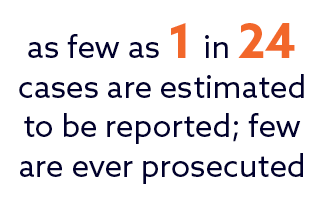
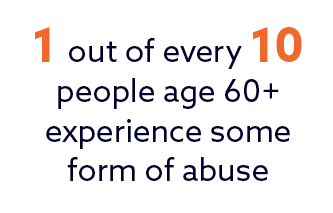 The Elder Justice Act of 2009 defines elder abuse as “the knowing infliction of physical or psychological harm or the knowing deprivation of goods or services that are necessary to meet essential needs or to avoid physical or psychological harm of an individual age 60 or older.” At least 10% of people 60 and older experience abuse, and most of these crimes go unreported; studies suggest as few as 1 in 24 cases of elder abuse are ever reported. The trauma of elder abuse can lead to hospitalization, depression, social issues, and financial loss, all of which contribute to diminished independence and quality of life.
 Financial exploitation of older adults is especially prominent, with financial institutions reporting $6 billion in actual or attempted elder financial exploitation between April 2013 and December 2017. Financial exploitation produces harm beyond the loss of money. Friends or family, unscrupulous businesses, phone and online scammers pretending to be government agencies like the IRS or Medicare, are all potential perpetrators. Older adults also suffer enormous losses from romance scams on online dating platforms and social media sites like Facebook, where bullying of older adults by family members, in addition to scams, cause tremendous shame and isolation, which exacerbates the likelihood of other forms of abuse and exploitation.
2. Understand the Causes and Conditions that Lead to Elder Abuse
Abuse comes in many forms, but one near universal underlying factor is social isolation. Even older adults in a community or living with family can be isolated. A genuine support structure and knowledge of and access to resources are a lifeline for older adults.
The isolation due to the COVID-19 pandemic has made older adults an even bigger target. Their regular, in-person connections to their communities such as church, community groups, and family visits have been limited for their safety. This lack of connection gives abusers like unscrupulous caregivers and romance scammers the opportunity to take advantage.
Perpetrators of elder abuse tend to go “where the money is.” In poorer rural areas where suffering spans much wider than elder abuse, an older adult’s social security check may be a household’s only sure income. Ancillary forms of abuse may be caused by underlying attempts to access that steady cash flow. Follow the clues and consider that your client may not tell you everything you need to know up front.
3. Watch for Signs with Every Older Client
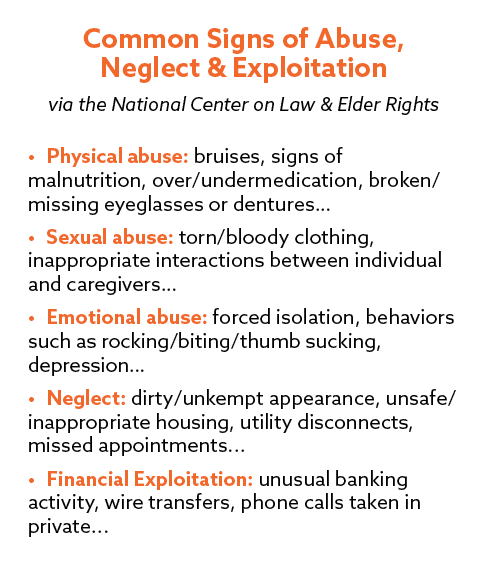
Prevention can be just as important as restitution. Be attentive to common red flags even if the client is coming to you for an issue unrelated to elder abuse. Indicators of abuse can include physical, behavioral, and emotional signs. The National Center on Law & Elder Rights has this checklist to help legal practitioners identify elder abuse.
For example, a client may call asking for assistance with an eviction because they owe past-due rent. By asking probing questions, an attorney may uncover that the rent has gone unpaid due to familial financial exploitation. Now the attorney is better equipped to help the person with revoking a misused power of attorney or changing a Representative Payee for Social Security payments in addition to aiding with stopping the eviction.
While it does not require expert knowledge to spot elder abuse, communicate with your screening and intake staff about what to look out for and common red flags. With just a handful of signs, anyone who encounters an older adult should be able to flag elder abuse and exploitation and make appropriate referrals.
4. Pay Attention to Your Client’s Capacity and Be Clear Who Your Client Is
Questions of a client’s cognitive capacity may come up during representation and research shows that people with dementia are at greater risk of elder abuse. Assessing capacity is necessary to determine whether the older adult properly executed a contract, is able to complete advanced planning documents like a power of attorney, or even has the mental capacity to hire the attorney. Balancing respect for autonomy while guarding against undue influence is tricky but crucial. The American Bar Association offers a number of guides and references on their website.
Well-meaning family members may apply for services on behalf of older adults. Keep in mind that the older adult is your client, not the family member. Talking to your client alone at the start of representation and periodically meeting one-on-one with an eye toward potential undue influence is crucial for fact-finding and to build trust. Strained or tense relationships between a caregiver and older adult may be a sign of abuse. Domestic violence advocates have developed a power and control wheel that serves as an important tool in this space.
5. Always Advocate for and Empower Your Client
Clarify the client’s goal in your initial conversation and work with them toward that end. Understand the importance of independence for your clients, while balancing their need for care. Clients almost always view nursing homes, guardianships/conservatorships, and reporting to Adult Protective Services as a last resort.
Always ask follow-up questions and check-in after long silences. Silence may not mean the client has lost interest in their case; consider that silence might be a strategy to cope with the stresses of abuse or health issues. Be aware that some signs of dementia may be signs of underlying health problems. For example, urinary tract infections can cause hallucinations and confusion, while many signs of depression overlap with early dementia symptoms. Assess whether the client is truly disinterested or struggling with a cognitive issue, or if they simply lack access to physical health or mental health resources.
6. Develop Resources for Referrals
Work with your organization to create a list of outside resources and community programs that will help clients access mental health counseling and support them in their recovery. If they exist in your area, make contact with local multidisciplinary teams using the Department of Justice’s Elder Justice Network Locator Map. Connections with agencies like Adult Protective Services or the District Attorney’s office facilitate and expedite direct referrals. Know whether you are a mandatory reporter and, if so, under what circumstances reporting is required and how to complete the process. The National Adult Protective Services Association offers an easy-to-use map to find out how to report suspected abuse in your area. Create a list of non-litigation reporting resources such as the Federal Trade Commission (FTC) or your state’s attorney general’s office but know when and why litigation may be the best way to achieve justice for your client. In some instances, older adults have been exploited by known individuals making civil litigation the best course of action for obtaining recovery. When an older adult has been the victim of a widespread scam, it may be impossible to pursue action against the perpetrator. In that case, the FTC or state attorney general’s office may be better suited to help.
Visit here to learn more about the Elder Justice Program Fellows who are addressing the gap in civil legal services for victims of elder abuse and exploitation.
The Elder Justice Program is supported by an award from the U.S. Department of Justice, Office of Justice Programs, Office for Victims of Crime (OVC), Award Number 2019-V3-GX-K033. This federal funding is supplemented by funds from private donors. The opinions, findings, and conclusions or recommendations expressed in this product are those of the contributors and do not necessarily represent the official position or policies of the U.S. Department of Justice.
By Hana Hausnerova, director at Equal Justice Works
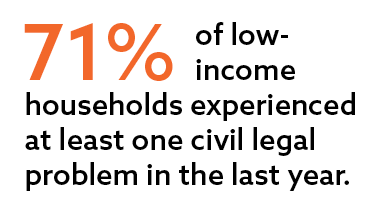
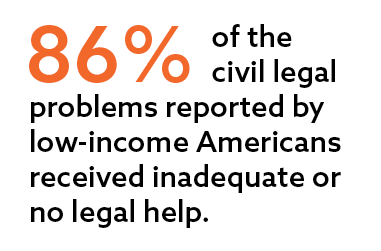 Across the country, millions of low-income Americans struggle with civil legal problems like accessing safe and stable housing conditions, healthcare, disability benefits, and veterans’ benefits; or seeking protection from domestic violence or economic exploitation. Even more unfortunate: 86% of civil legal problems reported by low-income Americans receive inadequate or no legal help whatsoever due to a lack of resources to serve them.
 To help bridge this justice gap, Equal Justice Works designed issue-specific Fellowship programs that bring together a team of lawyers and non-lawyers like community advocates and law students at the local, state, or national level to respond to a legal issue at scale and in a coordinated manner. Through this Fellowship program model, Fellows have the opportunity to work collaboratively and share resources with one another, enabling them to be more effective advocates. Since the inception of this program model, thousands of Fellows, Community Organizers, and Student Fellows have collaborated to make meaningful and measurable collective impact by addressing a range of critical legal aid issues, including eviction and foreclosure prevention, expungement, disaster preparedness and relief, immigration, elder abuse, human trafficking, indigent defense, and veterans’ assistance.

“Being part of a Fellowship Program is essential to tackling high pressure, high value civil legal problems, like the eviction crisis in Virginia,” said Daryl F. Hayott, a 2019 Equal Justice Works Fellow in the Housing Justice Program. “As part of the Fellowship program, we can split up responsibilities while working in a coordinated fashion and making best use of each Fellows’ skill set while also being able to cover more area and help more clients.”
Being part of a Fellowship Program is essential to tackling high pressure, high value civil legal problems, like the eviction crisis in Virginia.
Daryl F. Hayott /
2019 Equal Justice Works Fellow
Housing Justice Program
As the nation’s largest provider of post-graduate public interest Fellowship opportunities, Equal Justice Works has a long, successful track record running Fellowship programs—since 1993, we have implemented more than 25 federally and privately-funded Fellowship Programs, with a total value of over $50 million. In the last five years alone, Equal Justice Works has administered 12 federally and privately-funded Fellowship Programs.
Through the Fellowship program model, Fellows focus on a specific issue area, helping to break down barriers to justice for individuals and families by:
- Providing direct legal services
- Creating referral networks
- Conducting outreach and education events for low-income individuals and training other attorneys and allied professionals
- Cultivating civic and political will
- Increasing service capacity of host legal services organizations through developing community partnerships and best practice tools and resources
- Strengthening collaboration among host legal services organizations
Equal Justice Works supports Fellows by providing customized training and technical assistance to build legal skills, encourage collaboration, and leverage a community of practice to achieve collective impact. Beyond providing direct legal services to target communities, our Fellowship program model makes it possible to build capacity for the legal aid community by seeding the field with trained attorneys who will develop and bring best practices and tools for more effective service delivery to their organizations and community partnerships, even after their Fellowship ends.
For example, through our Department of Justice-funded program, the Crime Victims Justice Corps, between 2018 to 2020, 62 Fellows and 44 law students assisted more than 4,000 crime victims, including 2,336 human trafficking survivors. Following the two-year Fellowship, 65% of the Fellows were hired by their host organizations and continue to leverage their network and connections developed during the program.

“The Equal Justice Works Fellowship Program gave me an opportunity to focus my immigration law practice on working with survivors of trafficking,” said Stephanie Martinez, a 2018 Equal Justice Works Fellow in the Crime Victims Justice Corps. “I was able to gain crucial training and experience to best represent my clients, and after my Fellowship, I was able to secure a grant to continue to work with immigrant survivors of trafficking. I am now a supervising attorney at my organization and continue to focus on anti-trafficking.”
The Equal Justice Works Fellowship Program gave me an opportunity to focus my immigration law practice on working with survivors of trafficking.
Stephanie Martinez /
2018 Equal Justice Works Fellow
Crime Victims Justice Corps
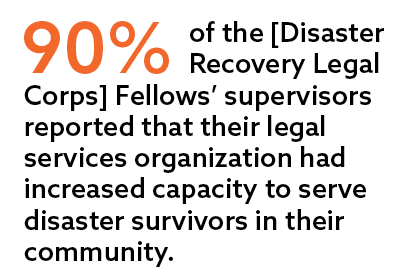 Equal Justice Works also runs privately-funded programs on disaster recovery and preparedness. In the wake of hurricanes Harvey, Irma, and Maria in 2017, we established the Disaster Recovery Legal Corps, mobilizing 23 attorneys to provide free civil legal services to low-income and marginalized communities affected by these disasters in Texas and Florida. From 2018 to 2020, Fellows in the program provided legal information and services to more than 30,000 individuals and secured nearly $3 million in economic benefits for clients, through fines and fee waivers, FEMA assistance, and housing related matters such as title disputes and rent. Additionally, 90% of the Fellows’ supervisors reported that their legal services organization had increased capacity to serve disaster survivors in their community as a result of the program.

“The Equal Justice Works Disaster Recovery Legal Corps has provided Fellows who represent those impacted by disasters the ability to expand disaster legal knowledge and give new breadth to being a disaster focused attorney as a career path,” said Brittanny Perrigue Gomez, 2018 Fellow in the Disaster Recovery Legal Corps and Texas Rio Grande Legal Aid disaster benefits team manager.
“Being part of an Equal Justice Works Corps has allowed me to find others who are as passionate about the disaster legal issues that impact families across Texas and provide me support and friendships that will last far beyond my Fellowship. As a corps we are far more effective than working alone.” Brittanny Perrigue Gomez, 2017 Fellow in the Disaster Recovery Legal Corps.
Being part of an Equal Justice Works Corps has allowed me to find others who are as passionate about the disaster legal issues that impact families across Texas.
Brittanny Perrigue Gomez /
2018 Equal Justice Works Fellow
Disaster Recovery Legal Corps
In 2020, when the COVID-19 pandemic hit, Fellows in our programs already had an established virtual network and continued collaborating virtually, through listservs and pre-scheduled monthly Fellow meetings. This collaboration allowed Fellows to quickly identify best practices and refine service and outreach delivery to meet the new needs of their communities in a hybrid virtual and in-person way. Fellows also had a preexisting support network of their peers and Equal Justice Works staff and alumni. Our Fellowship Programs create lifelong networks for our Fellows and develops passionate, well-trained, and connected public service leaders ready to make change happen.
Equal Justice Works set me up for success as a public interest attorney.
Dianna Torres /
2020 Equal Justice Works Fellow
New Mexico Immigration Corps
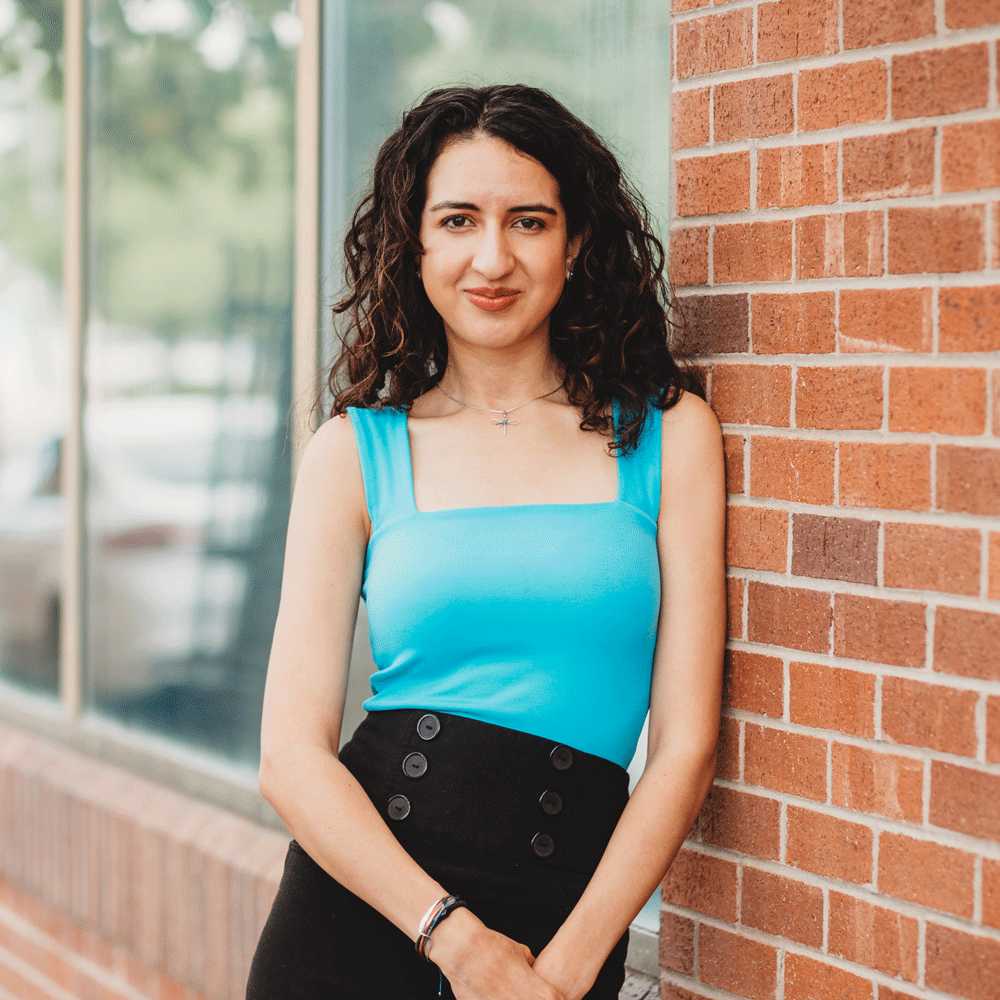
“Equal Justice Works set me up for success as a public interest attorney,” said 2020 Fellow Diana Torres in the New Mexico Immigration Corps. “[Equal Justice Works gave me] the opportunity to pursue my interest in immigration law and provided me many opportunities for professional development by organizing yearly conferences where I could learn from my peers and from seasoned public interest attorneys who gave me a glimpse into what my career could look like long term.”
We continue to explore ways to expand our Fellowships programs, and are seeking partners to help us do so. If you’d like to learn more about partnering with Equal Justice Works, please reach out to us at [email protected].

By Louisa Rich, 2019 Equal Justice Works Fellow hosted by Legal Aid Justice Center
I began my work at Legal Aid Justice Center (LAJC) tackling the school-to-prison pipeline; however, facing a number of emergency eviction cases, I soon started taking on eviction cases, too. At the time, our Richmond office only had one full-time housing attorney and no community organizers to focus on housing issues. When The New York Times featured Richmond on a front-page story about evictions and how the city was ranked the second worst eviction city among major U.S. cities, I could not help but notice the connection between housing instability and education outcomes. Many clients were coming to me with school enrollment problems because within a single year, the family may have moved as many as five times due to displacement and housing instability.
There are huge racial disparities in who faces the most severe housing instability. Richmond’s history of segregation, discrimination, and racism continues to reverberate today, and high eviction rates are disproportionately found in minority communities that were historically redlined, with more than 60% of all majority African American tracts facing eviction rates greater than 10%.
Housing was a racial justice problem I could not ignore when I first began my work at LAJC. Luckily, there are two other legal aid organizations in Richmond focused on individual client representation: while LAJC focuses on systems change, Central Virginia Legal Aid Society (CVLAS) takes on the bulk of individual representation, and Virginia Poverty Law Center (VPLC) acts as a call center for free, quick, eviction advice for tenants and a legal education resource for other lawyers. Even so, there were simply not enough attorneys at these two organizations to meet the need, and cases spilled over to our office. Despite our limited capacity, we did not want to turn people away from necessary services.
Then, LAJC received Equal Justice Works funding as part of the Housing Justice Program. Working across the three organizations—LAJC, CVLAS, and VPLC—the six housing attorneys, called Fellows, and two Community Organizers in the Housing Justice Program are able to focus specifically on addressing housing instability in the Greater Richmond Region. I jumped on the opportunity to join.
Since the implementation of the Housing Justice Program, the three organizations have been collaborating much more closely and strategically, and the impact so far is almost too great to list. About a year and a half in, we have already achieved a yearlong eviction freeze for our local public housing authority—historically one of the highest evictors in Richmond, affecting a disproportionately Black population with high numbers of seniors and women with children.
Our program relied on fair housing arguments to combat the demolition of public housing. We also used fair housing as a backdrop to prevent a major gentrification project that would have resulted in tearing down the homes of low-income residents in favor of a sports stadium. And, we passed a new protection for “source of income discrimination” in Virginia, which prevents private landlords from arbitrarily refusing voucher holders, who are also disproportionately Black and/or women with children.
Over the last year and a half, we’ve been working closely with Richmond residents to ensure that their rights to reasonable accommodations under fair housing for people with disabilities are being enforced. This includes, but is not limited to, reducing utility bills for people with medical needs, forgiving late fees for people who receive disability checks in the middle of the month, increasing the number of bedrooms for subsidized tenants with live-in aides, and ensuring units are accessible for physical disabilities. We also fought back against fees per household member that discriminated against large families, as well as other policies that disfavored children.
I hope this work can continue, and I am excited to see what the future holds for housing justice in Richmond and beyond.
Visit here to read more stories about the work of our Fellows and how they are keeping thousands of Richmond residents safely in their homes during the pandemic.
The Housing Justice Program is funded by The JPB Foundation and Equal Justice Works.