Taking a Stand Against Discriminatory School Policies in Wisconsin

Elisabeth Lambert, a 2020 Equal Justice Works Fellow cosponsored by Wm. Collins Kohler Foundation and an anonymous supporter, recently spoke with us about the work she is doing to challenge discriminatory school practices with her host organization, the American Civil Liberties Union of Wisconsin.
Before your Equal Justice Works Fellowship, you taught English as a public school teacher. What motivated you to leave the classroom for law school?
The school where I taught looked diverse on paper—in fact, it was deeply segregated, with white students concentrated in accelerated and honors classes and students of color concentrated in the basic level. There were also racial disparities in discipline, curriculum, class sizes at the different levels, representation in special education, and just in the way some teachers and leaders in the building interacted with kids of different races. I attempted in various ways to advocate for kids and to remedy some of the wrongs, at least in my own classroom, but my effectiveness was limited by the structure of the institution. I went to law school because I wanted to learn how to tackle these issues at a systemic level.
As an Equal Justice Works Fellow, you provide legal representation to children dealing with racial harassment and discrimination at school. Can you share more about the types of incidents you have seen occur at schools across Wisconsin?
Most of my clients have been harassed by fellow students because of their race, sexual orientation, or gender identity. They’ve experienced slurs, racist and homophobic jokes, threats, and physical assaults. There are also patterns in how their schools have avoided responsibility for addressing these incidents: schools give wrist-slap consequences to harassers, and treat incidents as isolated instead of recognizing their systemic nature. Several of my clients have been told they need to redress and prevent their own harassment, by being tougher or by avoiding the people who’ve targeted them. Also, districts in Wisconsin have a lot of latitude to write their own discrimination and harassment complaint procedures, and many of them have procedures that are very difficult to find and to follow, which severely limits families’ ability to enforce their kids’ rights to safe, fair schools.
In the past year, you have helped parents and advocacy groups file complaints at five school districts. Can you tell us about some of the outcomes from these rulings? What steps have the school districts taken to address racial harassment and discrimination?
One district settled with us almost immediately after we filed our appeal. It agreed to a plan which included changes to the district’s harassment policy and complaint procedures, work with an equity consultancy, and training for staff. A second district, which had suspended a 6th grader for attempting to form a Gay–Straight Alliance (GSA), also reached a resolution with us which included supporting the formation of the GSA and providing training for staff on creating an LGBTQ+ safe space. A third district contested our appeal, but the Wisconsin Department of Public Instruction ruled in my client’s favor and ordered the district to submit a corrective action plan including policy changes, an equity audit, and staff training.
Part of your work also involves working with educators to help them better understand students’ rights and be allies to students in their schools. In what ways are you supporting educators in becoming more effective advocates?
Many educators aren’t aware that their school district has a formal student discrimination complaint process, that the outcome of the district-level process can be appealed to our state education agency, or that educators are protected from retaliation if they file a complaint or act as a witness. In the trainings, I teach educators to recognize various common forms of prohibited discrimination, and then help them find and get familiar with their district complaint process (which can vary a lot from one district to the next). The goal is that the next time a teacher witnesses or hears about discrimination or harassment of a student, they can either help the student navigate the complaint process or, if appropriate, the teacher can file a complaint themself.
The COVID-19 pandemic has upended the education landscape in lasting ways. What challenges have you noticed as a result of the pandemic, both for you and the students you represent? What challenges do you anticipate as we emerge from the pandemic?
I’m paying close attention to in-person vs. virtual learning as a new segregation fault line. In many districts in Wisconsin, white students make up the majority of those returning in person, while students of color are disproportionately choosing to remain in virtual school (in many cases to avoid racial harassment and punitive discipline at school, as well as COVID-19). I’m paying attention to things like class sizes, quality of instruction, and availability of special education and English Language Learner programs and supports in virtual programs relative to in-person programs.
What has your overall experience as an Equal Justice Works Fellow been like so far? What is the most exciting part of being a Fellow?
It’s been an awesome experience. I am doing the exact work I dreamed of doing when I went to law school. I’m practicing in an area where not many people have practiced, so it involves a lot of creativity, hustle, and chutzpah, navigating novel systems and problems. It is such an amazing privilege to work in that way this early in my career. I love my host organization so much—I’ve built wonderful relationships with many of my colleagues (even though we only interact on Zoom), and I have the most thoughtful, supportive mentor anyone could ever ask for. I am growing into the lawyer I want to become!
To learn more about Elisabeth’s Fellowship program, visit her profile.
By Kirsten Fruit, senior program manager at Equal Justice Works
This fall, Equal Justice Works will host its annual Conference and Career Fair virtually from October 21-23, 2021.
The Equal Justice Works Conference and Career Fair is the largest national public interest legal career fair, bringing together hundreds of law students, recent graduates, public interest employers, and law school professionals from across the United States and its territories to participate in prescheduled interviews, attend substantive conference sessions and workshops, and network with peers and colleagues.
Registration for law students and recent graduates is now open! This is an excellent opportunity to build your public interest network and secure either full-time, part-time, or an internship position. Here are some tips and tricks to help you stand out as a candidate at this year’s event:
- Apply to Multiple Positions. We recommend applying to several positions to increase your chances of being selected for an interview. All interviews will take place virtually throughout the three days of the event—view our registered employers here.
- Read the Job Posting(s) Carefully. Make sure you read and understand each job posting before applying to ensure that your qualifications and experience are a good match for the role. Meeting all the requirements is not necessary; however, make sure you meet the essential ones before submitting your application.
- Customize Your Application Materials. It is important to demonstrate that you have done your research on each employer by targeting your application to the job(s) you are applying for. If possible, align your work experience and skills with what is listed in the job description. This is your opportunity to make a great first impression.
- Check for Spelling and Grammar Mistakes. Read through your application materials multiple times to check for spelling and/or grammatical errors. If time allows, we recommend having a friend, family member, or career counselor proofread your materials before submitting.
- Polish Your Social Media Accounts. Many hiring managers and recruiters review candidates’ social media accounts, so make sure your public accounts are presentable. With LinkedIn in particular, make sure that there are no inconsistencies between your résumé and your LinkedIn profile.
Visit here to learn more and register for the 2021 Conference and Career. If you have any questions about the event, feel free to reach out to [email protected].
My Impact is a conversation series from Equal Justice Works, using interviews with alumni to shine a light on what’s possible with an Equal Justice Works Fellowship. Program Specialist Sarah Jasper spoke with Kevin Hempy, a 2019 Rural Summer Legal Corps Student Fellow and 2020 Equal Justice Works Fellow sponsored by Deere & Co., Lane & Waterman LLP, and Riley Safer Holmes & Cancila LLP. Kevin is currently hosted at Prairie State Legal Services.
Like many lawyers, Kevin Hempy was drawn to a career in public interest because he wanted to follow his passion for making a difference. “I really wanted a career [where]… I could come to work and be excited to be there and feel like I was helping people,” he said.
This enthusiasm to pursue a legal career quickly wore off during Kevin’s first year of law school: “It was really challenging and just felt really dry for me,” he admitted. “I was kind of at this point where I was wondering if this was something I wanted to stick with.”
It wasn’t until Kevin’s second year of law school, when he had the opportunity to gain exposure to real legal issues and clients during a spring internship at the Los Angeles County Public Defender’s Office, that he knew he had made the right decision. This experience led him to apply for an Equal Justice Works Student Fellowship in the Rural Summer Legal Corps (RSLC). Hosted by Prairie State Legal Services, Kevin supported the organization’s efforts to expand its expungement program. “It gave me a chance to learn a little more about expungement law in Illinois and…the positive impact that expungement can have for clients,” recalled Kevin.
Interested in continuing justice reform and reentry work, Kevin applied for an Equal Justice Works Design-Your-Own Fellowship, submitting a project proposal in collaboration with Prairie State Legal Services that focused on expanding the organization’s expungement program to more rural counties in Illinois. In 2020, Kevin was selected as one of 78 public interest lawyers from a whopping 432 applications to work on the project he had designed!
Beginning his Equal Justice Works Fellowship during a pandemic was no easy feat, but Kevin has made tremendous progress in building up his host organization’s expungement program through client referrals and local media coverage. “There is a big need [for this work],” said Kevin. “A lot of people are interested [because they see] just how difficult life can be with these old records. I talk to a lot of people who are really struggling to get employment, housing, or higher education.”

Kevin also shared tips for how to thrive in law school: apply for internships (like Equal Justice Works law student programs), participate in legal clinics, schedule informational interviews, and network with lawyers in a field that you find interesting. “There are so many really cool areas of the law and so many different directions you can take it,” noted Kevin. “Get as many experiences as you can and see what sticks.” Kevin’s other advice for law students? “Don’t be afraid of the cold calls and emails,” he said. “Most of the time, if you’re reaching out to people in public interest, they’re going to want to talk to you…they’re going to want to share what they’re doing.”
To learn more about Kevin’s project advocating for workers in expungement and sealing proceedings, watch the full interview here.
If you are interested in embarking on a summer of service like Kevin, apply to the Rural Summer Legal Corps by 11:59 p.m. ET on February 14, 2023. For more information about program eligibility and requirements, please visit here.
By Sarah Jasper, program specialist at Equal Justice Works
Interested in pursuing a career in public interest law but don’t know where to start?
We get it—the field of public interest law can feel a bit overwhelming. There are so many possibilities, as the field spans a wide array of issue areas including domestic violence, racial equality, veterans’ rights, disaster recovery, housing and evictions, immigration, and much more. Public interest lawyers also work in a variety of practice settings—at legal services organizations, nonprofits, government agencies, and other institutions that help low-income and marginalized populations with their civil legal needs. The field is complex and there are many ways you can have a career in public interest law. Both your law school and Equal Justice Works can help you figure out what type of path you would like to take as a public interest lawyer.
As a law student, you can get started in the field of public interest law through on-campus programs, clinics, pro bono projects, courses, student organizations, internships, externships, and, of course, Equal Justice Works programming. Check out this webinar, which discusses all the ways we can help you launch your public interest law career, below.

This fall, Equal Justice Works will host its annual Conference and Career Fair from October 21 –23, 2021. It is the largest national public service legal career fair in the country, bringing together hundreds of public interest employers, law school professionals, law students, and recent graduates from across the United States and its territories to network, participate in interviews, and attend substantive conference sessions and workshops.
This year’s fair will take place virtually, and registration for law students and law school graduates opens August 11. Attending the Conference and Career Fair is a great way to build your network and secure either summer or full-time opportunities. And, even if you are not ready to apply for interviews just yet, we encourage anyone who wants to get involved in public interest law to attend the fair and see the myriad ways you can work in public service within the legal community!
Visit here for more information about the 2021 Conference and Career Fair.
My Impact is a conversation series from Equal Justice Works, using interviews with alumni to shine a light on what’s possible with an Equal Justice Works Fellowship. In honor of World Day Against Human Trafficking, National Advisory Committee Member and rising 3L at Golden Gate State University School of Law Xavier Torres de Janon spoke with Rebeca Garcia Gil, a 2018 Fellow hosted by the University of Maryland (UMD) SAFE Center for Human Trafficking Survivors. Rebeca currently works as an immigration staff attorney at the UMD Safe Center.

Rebeca Garcia Gil is acutely aware of the important role that immigration law can play in a person’s life. In 2010, she immigrated to the United States as an international student and struggled with “culture shock, with homesickness, with a lot of very emotional things,” that come with moving to a new country. To cope with the adjustment, Rebeca found support in the immigrant community in her college town—they helped her “find a sense of identity” and feel “more connected to home.” As she learned more about the unique legal challenges that other immigrants faced in her community, she was inspired to spend a semester working in an immigration clinic. It is here that she discovered her passion for advocacy and assisting people who have endured hardship because of their immigration status.
In 2018, Rebeca was selected as an Equal Justice Works Fellow in the Crime Victims Justice Corps. As a Fellow at the University of Maryland (UMD), SAFE Center for Human Trafficking Survivors, Rebeca represented survivors of sex and labor trafficking in immigration. “It was a very unique opportunity of marrying immigration law with anti-trafficking work and crime victims’ rights advocacy,” noted Rebeca on how the Fellowship allowed her to explore different issue areas.

As a member of the Crime Victims Justice Corps, Rebeca was able to leverage the expertise of other Fellows and the connections she made throughout the two-year Fellowship. “Being able to learn from people who are doing the exact same work as you’re doing has been amazing,” she remarked. “It’s been a wonderful community and just a great resource to have. In addition to also meeting people from a similar background, I’ve met other Latina lawyers and other people who also come from immigrant families.”
It has been a work in progress to figure out what self-care means to me; what healthy boundaries are. And I often have to remind myself that I need to be in a good place in order to effectively and zealously advocate for my clients.
Rebeca Garcia Gil /
2018 Equal Justice Works Fellow
Rebeca also discussed the toll of being regularly exposed to human-induced trauma and how it is something that she continues to deal with as an advocate in the crime victims’ rights space. “The reality of working full time with a heavily traumatized population really took a toll on me and on my mental health,” said Rebeca. “It has been a work in progress to figure out what self-care means to me; what healthy boundaries are. And I often have to remind myself that I need to be in a good place in order to effectively and zealously advocate for my clients.” She stressed the importance of others working in trauma-heavy settings to protect themselves against compassion fatigue, because “healthy boundaries are extremely important if you want to do this kind of work in the long term.”
In addition to speaking about her Fellowship experience, Rebeca shared ways in which advocates can support survivors of human trafficking. “Unfortunately, there is a lot of really harmful stereotypes and misinformation going around, so I think the first step is helping human trafficking organizations to get good information out there,” Rebeca recommended. She encouraged public interest attorneys and law students to reach out to their local anti-trafficking organizations and offer up their expertise. “Even if they don’t have a case for you right now, I’m sure something will come up in the future.”
Following her Fellowship, Rebeca continues to work at the UMD SAFE Center as an immigration staff attorney, much like the 85% of Equal Justice Works Fellows who remain in public service after their Fellowships end.
For more about Rebeca’s time as a Fellow and the work she has done to help human trafficking survivors receive the proper legal assistance to rebuild their lives, watch the full interview here.
To learn more about kickstarting your public interest law career as a 2022 Equal Justice Works Fellow, visit here to apply for a 2022 Design-Your-Own Fellowship before the September 20, 2021 deadline!
My Impact is a conversation series from Equal Justice Works, using interviews with alumni to shine a light on what’s possible with an Equal Justice Works Fellowship. In honor of the 31st anniversary of the Americans with Disabilities Act, Director of Law School Engagement and Advocacy Brooke Meckler spoke with Darlene Hemerka, a 2017 Fellow sponsored by Greenberg Traurig, LLP. Darlene currently works as a staff attorney at the Legal Clinic for the Disabled.
Darlene Hemerka is a lifelong advocate for people with disabilities. Having been diagnosed with cerebral palsy at birth, Darlene knows firsthand what it’s like to be discriminated against because of your disability.
During her undergraduate studies, Darlene created a disability rights organization for students and served on her school’s Chancellor’s Disability Advisory Council, helping to advise faculty and staff on how to increase accessibility for people with disabilities. Despite being a vocal advocate for disability rights, Darlene experienced discrimination at her university. “If they can do that to me, as somebody who is extremely active and outspoken about my disability and disability rights, how do they treat other people,” she asked herself. “That was really the moment I knew I wanted to go to law school and pursue disability rights.”
Fueled by a passion to make a difference, Darlene spent her first summer of law school at a disability policy organization in California. While it was a fruitful experience that taught her to be a more effective advocate for disability rights, she realized that working to change policies was only worth it, if they could be implemented. “You can have the best policy in the world, but if nobody is enforcing it, then it doesn’t really do so much,” Darlene noted. “So, I decided to transition my focus from policy advocacy to litigation.”
In 2017, Darlene joined the Public Interest Law Center as an Equal Justice Works Fellow sponsored by Greenberg Traurig, LLP. During her Fellowship, she advocated for students with disabilities in the Philadelphia School District and shared resources with students and their families about secondary transition services. These services aim to “help students prepare for life after school … [and gain] education, employment, and independent living skills,” said Darlene. “[My Fellowship was also about] educating students about what their rights were, and why they should really be in the driver’s seat as much as possible.”

Darlene also shared advice for law students and new lawyers when it comes to approaching organizations to design a Fellowship project. “If you have either a project that you are particularly interested in or a subject area, like disability rights for me, find organizations that align with those values. And then don’t be shy [about reaching out],” she advised. “I mean, the worst thing they can do is tell you ‘no, we’re not applying’ or, ‘we’re selecting someone we’ve had as an intern.’ Expect to hear the word ‘no’ quite a bit… but [understand] part of that persistence is going to pay off as a public interest lawyer because you’re going to hear ‘no’ a lot.”
During the application process, Darlene also encouraged candidates to reach out to Fellows for guidance on how to craft a top-tier project proposal, just like she did. “It’s been my experience that everyone is super willing to talk to you if you’re willing to reach out and ask,” she said.
Expect to hear the word ‘no’ quite a bit… but [understand] part of that persistence is going to pay off as a public interest lawyer because you're going to hear ‘no’ a lot.
Darlene Hemerka /
2017 Equal Justice Works Fellow
When asked to share advice to law students and future Fellows, Darlene stressed the following: “There’s no straight path to public interest. If you don’t get a Fellowship, the first time you apply, that doesn’t mean you’re never going to get a Fellowship. If public interest is what drives you and is your passion, just don’t give up on that. Continue to look for ways to develop those skills and make it shine on your resume that you really are committed to public interest, even if it’s not your full-time day job.”
Following her Equal Justice Works Fellowship, Darlene stayed on with the Public Interest Law Center for a year and half before transitioning to a staff attorney role at Philadelphia-based nonprofit Legal Clinic for the Disabled.
To learn more about Darlene’s experience advocating for people with disabilities, both during and after her Equal Justice Works Fellowship, watch the full interview here.
Interested in kickstarting your public interest law career as a 2022 Equal Justice Works Fellow? Visit here to apply for a 2022 Design-Your-Own Fellowship before the September 20, 2021 deadline!
Our alumni have helped uplift lives and improve widespread access to our justice system with the support of an Equal Justice Works Fellowship. These passionate public service leaders have advocated on behalf of human trafficking survivors, knocked down barriers to legal services for immigrant families, secured safe and affordable housing for tenants, assisted individuals with disaster recovery and preparedness, and so much more.
Today, more than 85% of our Fellows stay in public service following their Fellowships, where they continue to challenge systems of injustice and help inspire and educate future passionate public service leaders.
In April, we kicked off our Alumni Engagement Program with a series of virtual events to reconnect and celebrate with our alumni community. One of these events was a panel featuring members of our alumni community in discussion about how their Equal Justice Works Fellowships have helped them to grow and develop as public service leaders.

The alumni panelists—Ahilan Arulanantham, Mary Bissell, Andrew Cederdahl, Ericka Garcia, and Aurora Martin, alongside moderator Meghan Kempf—reflected on how their Fellowships laid the foundation for them to pursue their passion for equal justice and turn it into a lifelong career. “The peer relationships and support networks I developed are still incredibly important 20 years later,” Ahilan noted, on the impact of the connections he made as a Fellow.
If you’re a recent law school graduate or a lawyer new to public interest law, learn more about how you, too, can follow your passion to serve your community or a cause you care about. Visit here to apply for a 2022 Design-Your-Own Fellowship before the deadline on September 20, 2021.
Already part of the Equal Justice Works alumni community? Visit here to learn more about our current alumni engagement opportunities, including becoming a member of the inaugural Equal Justice Works Alumni Advisory Council (AAC).

My Impact is a conversation series from Equal Justice Works, using interviews with alumni to shine a light on what’s possible with an Equal Justice Works Fellowship. For Pride month, Brand Manager Lauren Wright spoke with Alexander Chen, a 2017 Fellow hosted by the National Center for Lesbian Rights. Alex currently serves as the founding director of the Harvard Law School LGBTQ+ Advocacy Clinic.
“I never thought I would be a lawyer—I never planned to go to law school. I ended up here because of my own lived experience,” said 2017 Equal Justice Works Fellow Alexander Chen, when asked about the beginnings of his career in public interest law. Choosing to live “more authentically as [himself],” Alex saw firsthand how difficult it was to obtain accessible, gender-affirming care as a transgender person, even while equipped with the educational resources to navigate the system.
“I experienced just how difficult it was for many people—my friends and in my community—to be able to navigate the very complex, bureaucratic systems that we have in our country,” Alex said. Inspired to pay forward the types of affirming services he himself had fought to receive, Alex entered law school in 2011.
“When I went to law school, I was really nervous about whether I could make a career that centered trans rights and LGBTQ+ rights,” said Alex, thinking back to just ten years ago when trans rights issues were not recognized—or respected—in mainstream media the way they are today. Following law school, Alex pursued an Equal Justice Works Fellowship with the National Center for Lesbian Rights (NCLR), an organization with a commitment to trans rights and the “less flashy” areas of LGBTQ+ law, such as family law and immigration.

Through an Equal Justice Works Fellowship, Alex was able to engage in a three-pronged approach to expanding the rights of transgender and gender-nonconforming youth in schools, families, health care, child welfare systems, and juvenile justice facilities. Working in collaboration with NCLR, Alex used impact litigation, legislative and policy advocacy, and public education to improve outcomes for his own clients and the LGBTQ+ community at large. During his Fellowship, for example, Alex leveraged the support of his sponsors, Baker McKenzie and Salesforce.org, to create and disseminate his first-of-its-kind Trans Youth Handbook.
Now, two years into his role as founding director of the LGBTQ+ Advocacy Clinic at Harvard Law School, Alex has built upon many of these skills—impact litigation, advocacy, and education—to shape the future of LGBTQ+ advocacy outside of a nonprofit, donor-oriented setting. This model, he says, allows for planning in the intermediate to long term instead of working solely in reaction to attacks on LGBTQ+ rights.
“The mission of the clinic is to focus on the kinds of issues that will define the future of LGBTQ+ advocacy, which we believe means focusing on marginalized communities within the LGBTQ+ community, and thinking about the ways in which the work of social justice for our community connects to broader movements for social justice,” said Alex. “We prioritize three areas… issues that disproportionately affect LGBTQ+ people of color; issues that disproportionately affect transgender, gender nonconforming, gender nonbinary, and intersex individuals; and issues that…look to the idea of LGBTQ+ people as whole persons who are connected and have many facets to their life.”
When asked to share advice for new law students—particularly those interested in fighting for LGBTQ+ rights in 2021, which the Human Rights Campaign has deemed, “the worst year in recent history for LGBTQ+ State Legislative Attacks”—Alex encouraged listeners to follow their passions.
Where people tend to make the most difference tends to be where their heart lies, and where their lived experience lies.
Alexander Chen /
2017 Equal Justice Works Fellow
“The real question is where YOU can make the most difference, not where ANYBODY could make the most difference—and where people tend to make the most difference tends to be where their heart lies, and where their lived experience lies,” he said.
For more about Alex’s time as a Fellow, his experience within the Equal Justice Works alumni community, and the work that he has done to advance LGBTQ+ rights throughout his career, view the full interview.
To learn more about following your passion for equal justice and public service, visit here to apply for a 2022 Design-Your-Own Fellowship before the application deadline (September 20, 2021).
In acknowledgment of Juneteenth, a celebration of emancipation in the United States, Equal Justice Works is closed early, giving staff the opportunity to reflect, take action, and care for themselves. The following is a list of resources and events shared with our staff ahead of Juneteenth 2021. Equal Justice Works is not a direct affiliate of any of these events or resources, unless otherwise noted.
To learn more about the Fellows addressing racial justice through their work, visit here.
Juneteenth Resources
Learn more about the history of Juneteenth.
- Juneteenth, A Celebration of Resilience, from the National Museum of African American History & Culture in Washington, D.C.
- “What Is Juneteenth?” by Henry Louis Gates, Jr., from PBS.org.
DC-Area Events
Though we are a national organization, Equal Justice Works is based in Washington, D.C.
- Juneteenth in DC, hosted by ONE DC: celebrating the grand reopening of the Black Workers & Wellness Center in Anacostia, and commemorating the continued struggle for Black liberation and justice with live go-go music, food, mutual aid, and more.
- Juneteenth in the Capitol, hosted by The Palm Collective: a “multi-day event highlighting various grassroots organizations and their events that uplift, educate, and celebrate Black people across the DMV area.”
Online Events
- Juneteenth Stories of Freedom, hosted by The Peale Center, 1 p.m. ET: a virtual storytelling event featuring African American storytellers from the Griots’ Circle of Maryland, Inc.
- Schomburg Center Literary Festival, hosted by The Schomburg Center: a weeklong virtual book festival celebrating Black history and culture, and exploring concepts of freedom.
- Juneteenth Unityfest, hosted by The Robert Randolph Foundation, 5 p.m. ET: a virtual commemoration and celebration featuring musical performances, remarks, films, comedy, storytelling, and appearances by civic leaders and organizations.
Racial Justice Resources & Organizations
- The Law Firm Antiracism Alliance: a coalition of nearly 300 law firms formed to “facilitate opportunities for action in pursuit of racial justice in the law and racial equity in our country,” created in June 2020.
- An Interview with Brenna DeVaney on the Law Firm Antiracism Alliance: a discussion of the Law Firm Antiracism Alliance with Brenna DeVaney, director of pro bono programs at Skadden, Arps, Meagher & Flom, an alliance member.
- Advancing Racial Justice and Equity Through Pro Bono, hosted by the Washington Council of Lawyers: a recording of the October 29, 2020, panel discussion for DC Pro Bono Week, featuring attorneys and other experts in the field discussing pro bono practice as a tool for advancing racial justice.
- Lawyers for Good Government, on Racial Justice: ‘Lawyers for Racial Justice’ is an initiative to “mobilize critical pro bono legal services in the fight for racial justice” by promoting long-term reform and the creation of remote pro bono clinics.
- Law for Black Lives: a “national community of radical lawyers and legal workers committed to transforming the law and building the power of organizing to defend, protect, and advance Black Liberation across the globe.”
Equal Justice Works Community
Hear from Equal Justice Works Fellows, our Board, and other community members.
- “Embody Black Lives Matter in Every Facet of Your Legal Career,” by Walter Jean-Jacques, July 2020: a member of the Equal Justice Works Board of Directors, Walter shares reflections on last summer’s events as a young Black man entering the legal field.
- “To Fellow Young Black Lawyers Seeking Justice,” by Clarence Okoh, June 2020: 2020 Fellow Clarence Okoh addresses fellow young Black lawyers and shares a comprehensive racial justice syllabus.
- “Standing Together to Support the Black Community,” a letter from Equal Justice Works Executive Director David Stern to Fellows and Alumni on June 1, 2020.
- “A Plea to Build Something Better,” by Tracie Johnson, July 2020: 2018 Fellow Tracie Johnson writes about the need to disrupt the cycles of generational poverty and violence that stem from over-policing.
- “Making Your Voice Heard at the Ballot Box,” by Mitchell D. Brown, June 2020: 2019 Fellow Mitchell D. Brown reflects on racial justice and voting rights.
- 2020 Fellow Clarence Okoh on Artificial Intelligence and Racial Justice: learn how Clarence Okoh’s Fellowship enables him to defend low-income communities of color against exploitative technologies.
- Equal Justice Works Fellows Challenge Racial Injustice: Fellows Emma Shakeshaft, Molly Griffard, and Mitchell D. Brown discuss their efforts to challenge racial injustice by addressing debtors’ prisons, police brutality, and voter suppression.
- Racial Justice Beyond Litigation: Working Outside the Legal System to Affect Change: a panel discussion from our 2020 Conference and Career Fair, featuring Jason Bailey of the NAACP Legal Defense and Educational Fund, Inc.; Eliana Green, a 2019 Fellow; and A’Niya Robinson of the ACLU of Louisiana.
Juneteenth & Pride
Juneteenth takes place during Pride Month, the annual celebration commemorating the 1969 Stonewall Riots, a tipping point in the Gay Liberation Movement with deep ties to the fight for racial justice.
- LGBTQIA+ Resources—#AllBlackLivesMatter: a comprehensive list of intersectional resources for education, information, entertainment, and empowerment, from the Community Renewal Society in Chicago.
- Black LGBTQ+ Prides: a directory of official Black Pride Celebrations throughout the country.
- “Resilience, Liberation, and the Interconnectedness of Pride,” by Amber Hikes: ACLU’s Chief Equity and Inclusion Officer explores the interconnectedness of racial justice and LGBTQ+ rights—”If we’re not marching for our collective liberation, we might as well not march at all.”
- “What Pride marchers won’t be celebrating: The politics that have left so many Black Americans HIV+”: analysis from The Washington Post exploring the “racist body politics” that leave Black LGBTQ+ Americans disproportionately at risk of contracting—and experiencing discrimination as a result of—HIV.
- 2015 Fellow Tsion Gurmu: featured at our 2015 Annual Dinner, Fellow Tsion Gurmu describes her work with the African Services Committee to secure asylum for LGBTQ+ asylum seekers fleeing persecution for their sexuality.
On May 12, we announced the 77 new Fellows in our 2021 class, who, later this year, will launch their public interest careers through an Equal Justice Works Fellowship of their own design.
In honor of Pride month, we spoke with 2021 Equal Justice Works Fellows Lucie Gulino and A.D. Lewis about their LGBTQ+ rights-focused projects.
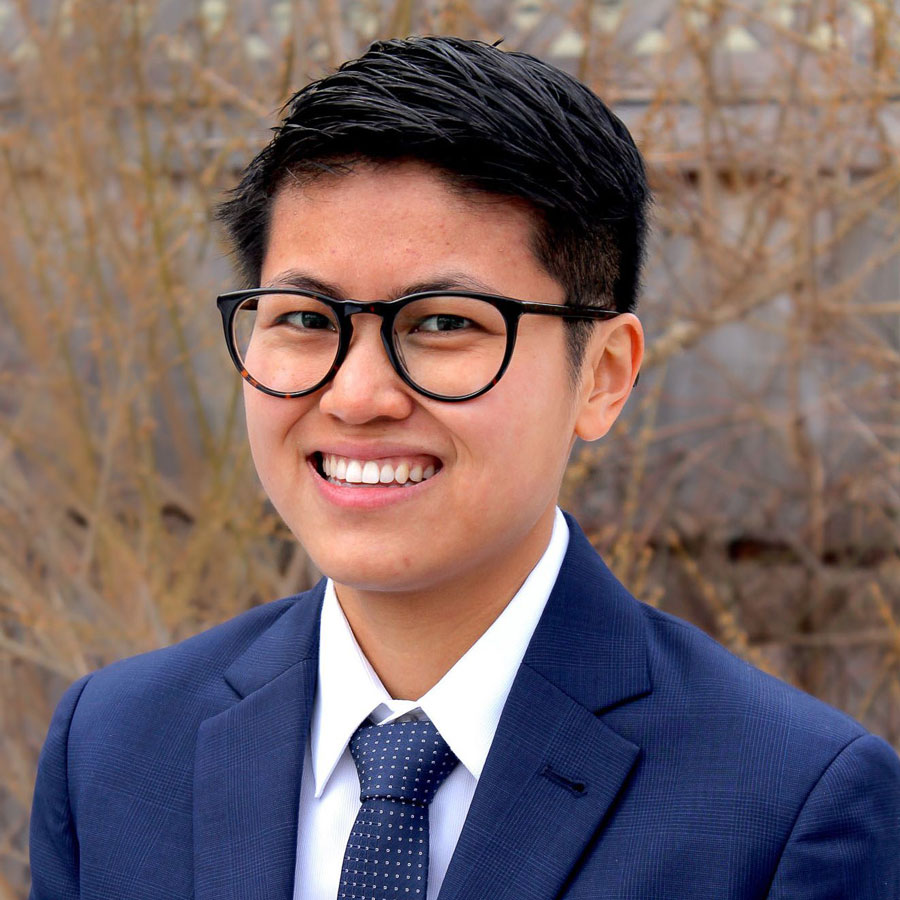
At Greater Boston Legal Services (GBLS), Lucie Gulino (she/her/hers) will launch a first-of-its-kind clemency and family support project focused on holistic advocacy and outreach to lower-income Black, Indigenous, and People of Color (BIPOC) and Queer and Trans People of Color (QTPOC)—populations that are disproportionately incarcerated.
Clemency is “a critical tool that enables the [Massachusetts] Governor to retroactively combat the detrimental impacts of the criminal justice system,” which includes the over-policing of marginalized identities and communities. In 2020, however, more than 100 petitioners sought commutation—one form of clemency—in Boston, yet only a single petitioner was successful. This is partly due to the fact that clemency petitioners do not receive right to counsel during this process, and there is a dearth of attorneys available to provide representation. Lucie’s Fellowship seeks to change that.
“Community-based legal advocacy is an essential way to mitigate the immediate violence the criminal justice system enacts upon BIPOC and QTPOC,” said Lucie. Through her Equal Justice Works Fellowship, Lucie will create a clemency pro bono clinic at GBLS’s CORI & Re-entry Project, which will provide legal assistance and representation to petitioners; host community meetings and Know Your Rights events for those with incarcerated loved ones; and engage in a public education campaign to raise awareness about the potential to reimagine clemency as a tool for racial justice.
Community-based legal advocacy is an essential way to mitigate the immediate violence the criminal justice system enacts upon BIPOC and QTPOC.
Lucie Gulino /
2021 Equal Justice Works Fellow
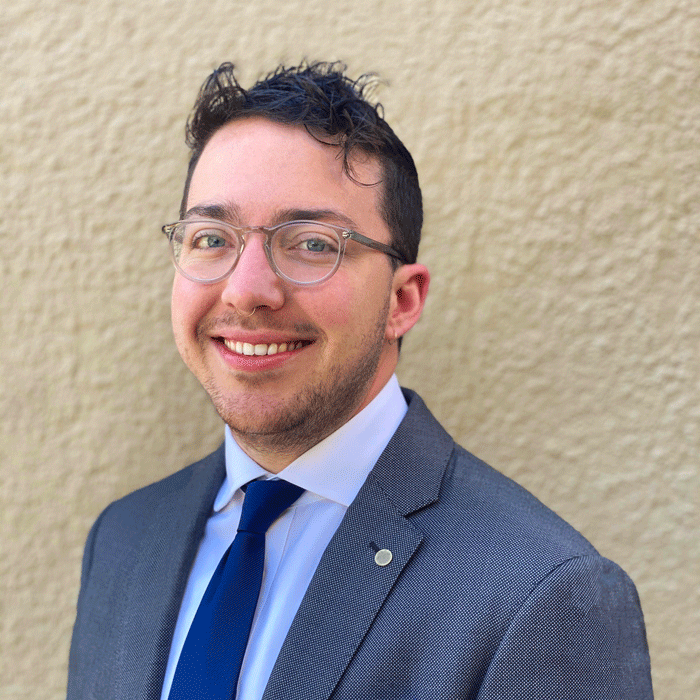
At Disability Rights California, A.D. Lewis (he/him/his and they/them/theirs) will represent trans people with disabilities in jails, psychiatric facilities, and/or immigration detention centers.
Transgender, gender non-conforming, and non-binary individuals experience significant discrimination, mistreatment, and violence when incarcerated; including sexual and physical violence, inadequate mental health and medical care, harassment, and denials of fundamental self-expression. As a result, high rates of PTSD, suicidal ideation, and exacerbation of existing mental health needs is common. By focusing on the most marginalized and underserved trans people, A.D. hopes to “challenge the structural barriers that trans people with disabilities face when seeking justice, fair treatment, and adequate care.”
“As a trans lawyer, I will fight for the most marginalized people in my community,” A.D. said. “They deserve fierce legal advocacy and caring community.”
As a trans lawyer, I will fight for the most marginalized people in my community. They deserve fierce legal advocacy and caring community.
A.D. Lewis /
2021 Equal Justice Works Fellow
To learn more about Equal Justice Works Fellows and alums supporting the LGBTQ+ community, visit here.