Equal Justice Works Announces New Format for 2022 Conference and Career Fair
Each fall, Equal Justice Works hosts its annual Conference and Career Fair, the largest national public interest legal career fair that brings together hundreds of law students, recent graduates, public interest employers, law school faculty and staff, and public interest practitioners from across the United States and its territories for prescheduled interviews, informal “table talk” discussions, networking opportunities, and panel sessions on contemporary public interest topics.
This year, we are excited to announce a new format for the 2022 Conference and Career Fair that will ensure greater accessibility and inclusivity for our attendees. For the first time ever, Equal Justice Works will split up the event, with the conference and career fair portions taking place over two separate dates.
The conference will take place on September 21 – 23, and the career fair will follow one month later on October 20 – 22. Both parts of the event will be held virtually once again.
The decision to host the Conference and Career Fair over separate dates will give law students the opportunity to maximize their experience and participate in all aspects of the event, as panel sessions will no longer overlap with prescheduled interviews and meet and greets with employers. Additionally, the new format will give space within the conference for law school professionals to network with their colleagues and attend exclusive sessions on the benefits of Equal Justice Works membership and how to best advise students on the Equal Justice Works Fellowship process, among other things.
The Conference and Career Fair will still require a single registration, with early bird employer registration opening on June 13 and law student and law school professional registration opening on August 11. Equal Justice Works will offer informational webinars and other trainings over the summer to help attendees prepare for the event.

By Henderson Huihui, a 2020 Equal Justice Works Fellow hosted by the Native Hawaiian Legal Corporation.
Native Hawaiians, similar to other indigenous peoples in the United States, have endured a history of colonization and the dispossession of ancestral lands. In the 1920s, it was clear that the loss of land had a significant negative impact on all indicators of health and wellbeing for native Hawaiians. This loss of land pushed Native Hawaiians into crowded tenements, disrupted their ability to practice subsistence living traditionally necessary for survival, and triggered a diaspora of Hawaiian out of Hawai’i. These conditions contributed to a staggering decline in the Hawaiian population, as well as the number of Hawaiians living in Hawai’i. Western population estimates of Native Hawaiians prior to Western contact in 1778 range from hundreds of thousands up to 1 million. By 1920, the number of Native Hawaiians dropped to 23,700—literally, more than a nine-fold decimation.
In 1921, the federal government enacted the Hawaiian Homes Commission Act (HHCA) in response to the alarming decline in the native Hawaiian population. The HHCA set aside certain areas of land, held in trust by the federal government, to rehabilitate the native Hawaiian people by returning them to the land. The HHCA provides for long-term residential, agricultural, and pastoral homestead leases to eligible native Hawaiians. As a condition of statehood, the administration of the homestead program was transferred to the State of Hawaii. The loss of ancestral lands still impacts native Hawaiians today. Recent census estimates show that the Native Hawaiian population is on a steady rebound, with more than 600,000 Americans identifying as Hawaiian or part Hawaiian, however, only about half of those people live in Hawai’i. The flow of Hawaiians out of Hawaiian ancestral lands continues to be a concern, threatening the strength of Hawaiian cultural practice and identity for many who cannot afford housing here.
The loss of ancestral lands still impacts native Hawaiians today.
The inspiration for my Equal Justice Works Fellowship comes from my experience growing up in the Waimānalo Hawaiian homestead. As a Native Hawaiian, my family faced many of the same challenges that others in the broader Native Hawaiian community face, some of which are rooted in Hawai’i’s troubled past of colonization. A Hawaiian homestead can provide an ‘ohana (family) with stability for generations. Having benefitted from the homestead program, I feel that it is now my kuleana (responsibility) to help families retain their homestead leases.
Having benefitted from the homestead program, I feel that it is now my kuleana (responsibility) to help families retain their homestead leases.
The focus of my Fellowship is to provide comprehensive outreach and advocacy for beneficiaries of the HHCA. Issues facing homestead families range from successorship of a homestead lease, a lack of internet access, environmental impacts and access to water, and lease cancelation. These issues may affect the generational stability provided by a homestead and put families at risk of houselessness or being forced to live outside of Hawaii to avoid the high cost of living. Through the Fellowship, I work to empower Native Hawaiian beneficiaries to retain and proactively manage their family homesteads by providing educational materials, direct legal services, and advocacy.
Through this Fellowship, I’ve been given the opportunity to take a deep dive into a rather niche and nuanced area of law. While it’s been challenging to navigate complex legal theories and approaches, as some homestead issues go beyond traditional landlord-tenant questions and into the fiduciary duties of the State of Hawaii and administrative rule making processes, working for my community has been very rewarding.
Every opportunity to serve a member of my community, in cases big and small, whether through brief services or through full representation, has been the highest honor.
Every opportunity to serve a member of my community, in cases big and small, whether through brief services or through full representation, has been the highest honor. Those served through this Fellowship face a frustrating and confusing system. When they have someone advocating for them, their voice is finally being heard. Being that voice has been the proudest moments of the Fellowship. My hope is to continue working in this area of law to help advance the rights and protections of Hawaiian homestead families as the Fellowship has highlighted systematic and administrative shortfalls of the Hawaiian Home Lands trust program and the common need for homesteader education.
We’re proud of the work Henderson is doing to advocate on behalf of Hawaiian homestead families. To learn more information about his Fellowship, visit here.

Nafisa Ahmed, a 2020 Equal Justice Works Fellow sponsored by Cooley LLP and Uber Technologies Inc., recently spoke with us about working with AMEMSA (Arab Middle Eastern Muslim South Asian) domestic violence survivors in the greater Los Angeles area.
What inspired you to pursue a career focused on advocating for AMEMSA (Arab Middle Eastern Muslim South Asian) survivors of domestic violence?
I am AMEMSA and wanted to be able to use my education to uplift my community. I witnessed the struggles that AMEMSA domestic violence survivors face getting out of relationships and wanted to workshop solutions to help them. It’s also an area of law that plays to my strengths and excites me. It’s never boring!
I witnessed the struggles that AMEMSA domestic violence survivors face getting out of relationships and wanted to workshop solutions to help them.
The COVID-19 pandemic drastically changed the legal landscape, increasing the demand for civil legal aid across the country. How did the pandemic affect your work and the clients you serve?
Essentially, since the start of the pandemic, funding and availability for legal aid family law services has decreased in Los Angeles County while the demand has increased. For a period of time, one of the main resources for self-represented litigants in Los Angeles, the Self-Help Centers at the Courthouses were not operating in the same capacity that they were pre-pandemic.
Many legal aid organizations across Los Angeles that provide family law services are currently understaffed. My host organization has become one of the few where domestic violence survivors can get family law legal aid without having to wait three months. That meant that I took on a larger case load and a larger array of clients to meet the need.
My organization has become one of the few where domestic violence survivors can get family law legal aid without having to wait three months.
Survivors of domestic violence often have a multitude of legal problems associated with their abusive experience. What are some of the legal needs expressed by your clients and what areas of the law are you providing legal assistance?
Survivors often need assistance in housing rights, immigration, family law, and victim advocacy to name a few. My organization assists with immigration and family law services. I primarily work on family law issues which includes restraining orders, divorces, child custody, and support.
During your Equal Justice Works Fellowship, you’ve been working closely with your sponsors on creating Know-Your-Rights materials as well as legal research and clinic opportunities. Can you tell us more about these partnerships and share some of the benefits of having your sponsors involved in your project?
My Fellowship sponsors Cooley LLP and Uber Technologies Inc. have assisted me with translating Know Your Rights materials to AMEMSA languages. These materials have been distributed to various organizations that work with AMEMSA survivors, ensuring that survivors are able to access resources they can understand and know that remedies are available to them. My sponsors have also assisted me in conducting legal research and writing for a Trial Advocacy Guide for Self-Represented Litigants in Restraining Order proceedings. My department gets more referrals and requests for services than we can assist, so it’s useful to have a comprehensive guide for individuals we are unable to work more closely with.
I hope that survivors are at least able to access resources that they can understand and know that remedies are available to them.
What are some of the ways you are sharing these materials with survivors of domestic violence?
During the first six months of my Equal Justice Works Fellowship, I did the groundwork of connecting with other organizations to establish a stronger referral base. We are in the process of regularly exchanging resources and referrals. However, most of my project is now dedicated to direct legal services and representation of survivors.
Lastly, what has been the most exciting part of being an Equal Justice Works Fellow?
The most exciting part of being an Equal Justice Works Fellow has been connecting with other Fellows across the country. Although our projects vary, it has been a positive collegial experience sharing the growths and challenges of being new public interest attorneys. Legal aid work can be very difficult, so it has been a pleasure connecting with other individual who share similar experiences.
It has been a positive collegial experience sharing the growths and challenges of being new public interest attorneys.
To learn more about Nafisa’s Fellowship, visit her profile here.
Equal Justice Works invites eligible organizations based in Maryland to submit proposals to participate as Host Organizations in the 2022 Housing Justice Program.
The Equal Justice Works Housing Justice Program mobilizes lawyers and community organizers working collaboratively as Fellows to serve low-income individuals who are currently or at risk of experiencing housing instability and involuntary displacement, particularly due to eviction.
In 2022, Equal Justice Works is expanding the Housing Justice Program from Virginia to South Carolina and Maryland. Equal Justice Works seeks to allocate approximately 14 Fellows in Maryland: ten attorney Fellows and four community organizer Fellows hosted at legal services organizations and community-based organizations. Host Organizations will participate in the Housing Justice Program by hosting one or more Fellows; organizations may apply to host attorney Fellows, organizer Fellows, or a combination of both. These 14 Fellows will work cooperatively to:
- Provide direct legal assistance including advice, referrals, and full representation for tenants in eviction proceedings;
- Build collaborative partnerships with community organizations and provide referrals for wraparound services;
- Engage in outreach including know-your-rights presentations and workshops, legal clinics, and intake events around housing issues; and
- Identify patterns, organize tenants, engage in impact litigation to challenge structural issues, and educate key stakeholders around the causes and consequences of housing instability; and
- Where a right to counsel exists in eviction cases, identify on-the-ground implementation problems and coordinate with other legal services providers.
Fellows will serve for two years, beginning on or about August 1, 2022, with an end date no later than August 31, 2024.
The Housing Justice Program is funded by The JPB Foundation, JPMorgan Chase & Co., Abell Foundation, and Maryland Legal Services Corporation.
Please see links to the full Request for Proposals and accompanying appendices below. Proposals must be submitted by Wednesday, June 8, 2022, 11:59 p.m. ET via email to [email protected].
If you are interested in submitting a proposal, please complete this brief Intent to Apply Survey and specify how many Fellows (lawyers and/or organizers) you are interested in applying for by Friday, May 13, 2022.
Resources
Before applying, please review the following materials:
- Equal Justice Works Housing Justice Program RFP No. HJP-20A08
- Equal Justice Works Standard Grant Award Conditions for Non-Federal Grants
- Sample Fellow Position Description, Attorney Fellow
- Sample Fellow Position Description, Organizer Fellow
Templates & Forms
The following materials are required for submission:
- Applicant Information Form
- Proposal Narrative
- Budget Template
- Policy Certification
- Certification for Data Privacy
If you have any questions about the application process, please reach out to [email protected].
By Laura Roach, senior program manager at Equal Justice Works.
April is National Fair Housing Month, which marks the anniversary of the landmark passage of the 1968 Fair Housing Act—a national law prohibiting discrimination in the sale, rental and financing of housing based on race, color, national origin, religion, gender, disability, and family status.
The architects of the Fair Housing Act intended to reverse years of systematic disenfranchisement of Black and non-white communities, which former Secretary of Housing and Urban Development George Romney once referred to as a “high-income white noose” around segregated Black communities. Despite the Fair Housing Act being passed over 50 years ago, it is still very common to find poor, segregated neighborhoods that were meant to be dismantled by fair housing practices.
It is still very common to find poor, segregated neighborhoods that were meant to be dismantled by fair housing practices.
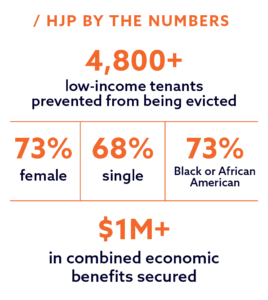 The Equal Justice Works Housing Justice Program was designed to create opportunities for lawyers and community organizers to affirmatively pursue fair housing alongside low-income communities impacted by decades of discrimination. First launched in 2019 in Richmond, Virginia, a city where race is a better predicator of eviction rates than income, the Housing Justice Program brought together its first cohort of eight Fellows (six lawyers and two community organizers) in partnership with three legal services organizations to disrupt the cycle of evictions faced by low-income tenants. These Fellows increased access to justice for low-income tenants by collectively assisting more than 4,800 clients through legal advice, brief service, and full-scope representation. Of the tenants served, 73% were female, 73% were Black, and 68% of clients were single; many of the single clients identified themselves as single mothers.
Fellows in the Housing Justice Program worked together to achieve systemic changes and promote fair housing. Through negotiations using fair housing arguments, Fellows prevented the demolition of public housing and displacement of low-income residents in favor of a sports stadium. They also influenced the passage of a new protection against “source of income discrimination” that prevents private landlords in Virginia from arbitrarily refusing to rent to voucher holders. Importantly, the Fellows helped to inform tenants of their rights, equipping residents with the knowledge to be their best advocates.
Fellows helped to inform tenants of their rights, equipping residents with the knowledge to be their best advocates.
Based on the success of the first cohort, private and public donors have invested millions of dollars to support the expansion of the Housing Justice Program. To date, Equal Justice Works has grown the program from 8 Fellows in Richmond to 11 Fellows serving communities across the state of Virginia. Collectively, these Fellows will prevent evictions, advance tenants’ rights, and enforce fair housing laws to prevent involuntary displacement caused by redevelopment projects, which may unintentionally force public housing residents into even more segregated neighborhoods.
Equal Justice Works is also preparing to expand the Housing Justice Program into South Carolina and Maryland. In South Carolina, where the 8.87% eviction rate is more than six points above the national average, Equal Justice Works will mobilize at least six Fellows to provide legal assistance and community organizing support to protect and advance tenants’ rights. In Maryland, 14 Fellows will be placed in counties across Maryland to support the state’s Right to Counsel initiative. Equal Justice Works is accepting applications from legal services organizations in South Carolina until April 29.
The Housing Justice Program is creating a pipeline of passionate public service leaders who are advancing the ideals of fair housing. Visit here to read more stories about the work of our Fellows and how they are advocating for policies and practices that protect the rights of all tenants.
The Housing Justice Program is made possible thanks to the support of The JPB Foundation and JPMorgan Chase & Co.
By Allie Yang-Green, senior program manager of public programs, and 2020 Fellows Barbara Harris and Amy Perry. Barbara is hosted by Montana Legal Services Association and Amy is hosted by Equip for Equality.
Guardianship* or other forms of supportive decision-making may become necessary to ensure the safety and quality of life when individuals lose the capacity to make decisions about their health care, finances, or other aspects of life. This may occur due to dementia, stroke, brain injury, or other serious health issues. When a guardian or an otherwise authorized agent fails to act in a protected adult’s interest and undermines their ability to direct their own life, legal advocacy is a critical resource safeguarding their rights.
In rural Montana, Jerry* lived in his own house while experiencing physical and mental health declines as he grieved the loss of his wife. One of Jerry’s sons convinced Jerry to put his name on the home’s deed and allow him to move into the house. As Jerry’s health further deteriorated, his son and grandson tried to move Jerry to a long-term care facility, reporting false claims to law enforcement that he exhibited signs of violence and dementia. They also spent Jerry’s money for their own uses. Jerry’s medical providers did not believe the claims of the son and grandson and supported his independence, giving Jerry the opportunity to leave his home and stay with another relative to avoid the abuse.
To exert a greater control, Jerry’s son and grandson petitioned the court for guardianship, alleging Jerry’s deteriorating abilities. Although a temporary guardianship was granted, 2020 Fellow Barbara Harris intervened to represent Jerry’s interest and prevent the son and grandson from becoming Jerry’s permanent guardians and moving him into a long-term facility against his wishes.
Another common tool used to help manage older adults’ affairs is a power of attorney (POA), where a person designates someone as their agent and determines which powers to give to them. POAs can be created easily without a lawyer. However, abuse can occur through POAs when an agent fails to honor their duty to act consistently with the directions and interests of the principal. Moreover, the private nature of POA’s can also lead to abuse being undetected.
Following a stroke, Jim* had appointed his relative as a POA for healthcare decisions, but this POA agent breached fiduciary responsibility by not paying three months’ worth of charges for Jim’s residential rehabilitation facility. With help from the local Area Agency on Aging, Jim was able to get the POA agent revoked and name new agents for his healthcare and Social Security benefits. In response, Jim’s relative petitioned the court for guardianship so that he could gain greater control over Jim and his estate. Jim was referred to 2020 Fellow Amy Perry, who was able to successfully argue before the court to prevent the agent’s request to access the client’s medical information, protecting Jim’s right to privacy. Amy continues to litigate the case and protect Jim’s independence and financial well-being.
Upholding the rights of older adults to make their own decisions based on their own values and preferences to the greatest extent possible is central to client-centered legal advocacy.
Certain situations may call for attorneys to assess the client’s mental capacity and even take reasonable protective actions but upholding the rights of older adults to make their own decisions based on their own values and preferences to the greatest extent possible is central to client-centered legal advocacy. Amy notes that ageism and ableism present in our society can result in systemic prejudice against older clients, and advocates must always take steps to support the maximum empowerment of all clients and their rights to direct their own lives.
Visit here to learn more about the work of Elder Justice Program and the work of Fellows who are addressing the gap in civil legal services for victims of elder abuse and exploitation.
* The term “guardianship” is often used interchangeably with “conservatorship” and any other term for the judicial process of appointing a fiduciary to manage all or part of the financial and/or personal affairs of an individual.
** The name of the client has been changed to protect privacy.
This program is supported by the Office for Victims of Crime, Office of Justice Programs, U.S. Department of Justice, Award Number 2019-V3-GX-K033. The opinions, findings, conclusions or recommendations expressed are those of the author(s) and do not necessarily represent the official position or policies of the U.S. Department of Justice or Equal Justice Works.
Resources on Guardianship and Supportive Decision-making:
By Allie Yang-Green, senior manager at Equal Justice Works
One of the lesser-known effects of the COVID-19 pandemic is the increased prevalence of elder abuse and neglect. “Elder abuse” denotes the abuse, neglect, and financial exploitation that older adults experience by those close to them as well as strangers. Research suggests that the rates of elder abuse in the United States have nearly doubled during the pandemic, affecting one in five older persons. Many older adults have experienced increased isolation, limited access to services, and pandemic-related financial strains due to the COVID-19 pandemic. Elder abuse is a significant public health and human rights problem that needs better understanding and a concerted effort to address it.
 In July 2020, in the early months of the pandemic, Equal Justice Works launched the Elder Justice Program to raise awareness about the prevalence of elder abuse and to address the gap in civil legal services for those experience elder abuse. Through this program, Equal Justice Works mobilized 22 Fellows across the country with an emphasis on serving rural communities. The Elder Justice Program was built on Equal Justice Works’ successful history of mobilizing lawyers to increase access to justice for survivors of abuse including elder abuse in prior years. Since the Elder Justice Program’s launch in July 2020, Fellows have collectively provided legal assistance to nearly 1500 older adults, and addressed various legal issues—financial exploitation, identity theft, fraud, domestic violence, physical assault, bullying, and harassment. While holistic and community-wide responses are necessary to stem these abuses in a systemic way, civil legal intervention as provided by the Fellows, has been a critical tool to help older adults achieve physical safety and financial recovery.
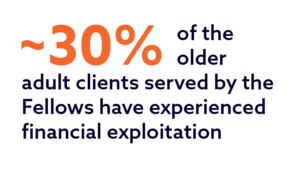 Nearly 30% of the older clients served by the Fellows have experienced financial exploitation, which occurs when a person misuses or takes the assets of another person for their personal benefit, depriving them of vital financial resources for their needs. The National Council on Aging estimates that the cost of elder financial abuse and fraud to older Americans ranges from $2.6 billion to $36.5 billion annually. These abuses are particularly challenging to address when committed by family members who exploit positions of trust, causing financial hardship for victims and eroding familial connections. Through client-centered lawyering, Fellows are helping older adults who have experienced exploitation by their loved ones recover.
For example, Fellow Caitlin Corey at Northwest Texas Legal Assistance assisted an older adult in maintaining financial security by avoiding a debt judgment of over $12,000, resulting from financial exploitation. The client’s grandson took out a credit card in her name without her knowledge and stopped making payments when he lost his job. When the client sought legal help, Caitlin represented the client in a lawsuit brought for the credit card debt, negotiated a dismissal of the lawsuit for hardship and helped to avoid a large debt judgment.
At Legal Aid Society of Louisville, Fellow Benjamin Taylor helped an older client whose wife had been forging his signature and skimming money from his pre-marital assets. The client who was facing a second bout of cancer wanted to get a divorce to protect his remaining assets. Benjamin met with the client at his rural home and conducted all court proceedings for his divorce remotely so he could maintain his financial security without leaving his home and risking his health.
Caitlyn and Benjamin’s cases illustrate the crucial role of legal help from Fellows who are trained to focus on serving rural communities where access to legal services is limited. These cases also underscore why a person-centered legal service is of the utmost importance when family members are perpetrators of harm. Combining direct legal services with extensive education and outreach activities in their communities, Fellows in the Elder Justice Program are helping to improve the national response to elder abuse and create a society where all people—regardless of age—can live with dignity and security.
Visit here to learn more about the Elder Justice Program Fellows who are addressing the gap in civil legal services for victims of elder abuse and exploitation.
This program is supported by the Office for Victims of Crime, Office of Justice Programs, U.S. Department of Justice, Award Number 2019-V3-GX-K033. The opinions, findings, conclusions or recommendations expressed are those of the author(s) and do not necessarily represent the official position or policies of the U.S. Department of Justice or Equal Justice Works.
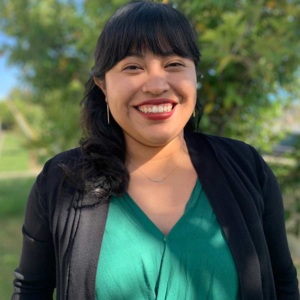
By Idalmis Vaquero, a 2021 Equal Justice Works Fellow sponsored by the Stern-Hughes Family Fund and the Ottinger Family Foundation. Idalmis is hosted by Communities for a Better Environment.
East and Southeast Los Angeles communities consistently get the highest score in a competition no one wants to win—the communities most impacted by myriad environmental and social harms including high levels of pollution, which results in serious health impacts on Latinx, Black, and similarly historically oppressed peoples. Among the many sources of pollution in Los Angeles, the now-shuttered Exide battery processing facility has single-handedly inflicted significant harm by broadcasting high levels of lead to its neighbors.
Throughout its 30-year operation, Exide spewed more than seven million pounds of lead over the households of 100,000 residents and produced the greatest risk of cancer among all pollution-emitting facilities in the South Coast Air Basin. Even seven long years after the facility’s permanent closure in 2015, more than 6,000 properties still require cleanup by the Department of Toxic Substances Control (DTSC), and the extent of the cleanup of the former facility is still unknown.
As a young Chicanx woman growing up in one of the East Los Angeles communities impacted by Exide and many other pollution sources, I believed that the constant noise of semi-truck trailers, unbearable smells of animal carcass from the nearby rendering plants, and sights of smokestacks from my window were normal. The moment I realized these sights, sounds, and smells were not at all normal was the moment I understood how environmental racism imposes injustice on our communities of color.
The moment I realized these sights, sounds, and smells were not at all normal was the moment I understood how environmental racism imposes injustice on our communities of color.
In late 2020, Exide was allowed to walk away from its obligations to fund the facility and community cleanup in California—in addition to 17 of their former sites across the country— after finalizing their bankruptcy plan. This has left victims with a hefty bill to pay for cleanup and a dysfunctional DTSC, resulting in delays and cost overruns in the cleanup process. While I knew that the legal system was not designed to protect communities of color or to provide environmental justice, with Exide I began to see the deeply rooted injustices perpetrated by bankruptcy laws firsthand.
My lived experience as a woman of color coming from a community directly impacted by pollution motivated me to pursue an Equal Justice Works Fellowship that would allow me to fight alongside my community in pursuit of environmental justice.
I developed my project with the goal of developing the legal and policy expertise of residents so we fight together to ensure that our state government is transparent and held accountable for cleaning up our homes in the aftermath of Exide, and in protecting against future improper land uses.

Despite the structural and institutional challenges we face in the Exide cleanup, I have found the strength and support from my community who motivate me to continue advocating for solutions in pursuit of attaining justice. One of the first in-person meetings I attended as part of my Fellowship was an outdoor gathering with mothers living in Maywood, one of the cities impacted by Exide’s contamination. I listened as they expressed their fears regarding their children’s continued exposure to lead and their disappointment and distrust of our state governmental agencies that failed to protect their families.
Most importantly, I noticed that a recurring theme in the conversation was their strong sense of resilience. In community, they shared knowledge resources, home remedies to heal their sick children, and voiced their commitment to continue advocating for safer and more efficient clean-up of their homes.
It is my community’s resilience that informs the vision and work of my project. I continue to research legal and policy tools most relevant and effective for members of my community in East and Southeast Los Angeles, in addition to surrounding communities CBE supports, to give residents the support they need to determine the future use of the former Exide site and other abandoned sites.
It is my community’s resilience that informs the vision and work of my project.
I have also written to the U.S. Environmental Protection Agency with recommendations on policies and strategies to equitably tackle our national lead poisoning crisis, given our experience with Exide. In addition, I have engaged in state-wide advocacy efforts in a coalition of other environmental justice and public health organizations to obtain structural reform at DTSC, seeking more transparency and accountability. These advocacy efforts aim to ensure that another experience of exposure like Exide does not occur again.
Through this work, I look forward to creating a future where communities of color thrive and live comfortably without worrying about the health impacts a zip code or socio-economic status have on the life outcomes of a child. At CBE and through my Fellowship project, I hope to continue working with residents to ensure our vision of living in lead-free communities becomes a reality.
Visit here to learn more about the Idalmis’ work advocating for communities of color impacted by the Exide contamination.
By Lynbea Toombs, director of alumni relations at Equal Justice Works
It’s National Volunteer Week and we are sending our sincere thanks to all Equal Justice Works alumni volunteers for their generosity, time, talent, and dedication.
Our alumni are a critical part of our community and play an important role in uplifting our mission and shared vision of achieving our nation’s promise of equal justice for all. These passionate public service leaders routinely return to Equal Justice Works to speak to current and prospective Fellows at panels, talks, workshops, recruitment events, and so much more.
We appreciate the efforts of alumni and are grateful for their support in:
Sharing their expertise by reviewing Fellowship applications
Each year, our alumni application reviewers willingly dedicate their time to assist us in identifying the next class of Equal Justice Works Design-Your-Own Fellows. We had 120 alumni register to review over 383 applications for the 2022 Fellowship application cycle. There is no way that we could thoroughly review and vet an applicant pool of this size without their generous assistance!
Inspiring the next generation of public service leaders from all backgrounds
Alumni like Alexander Chen ’17, Rebeca Garcia Gil ’18, Darlene Hemerka ’17, Kevin Hempy ’20, Brittanny Perrigue Gomez ’18, and Max Tipping ’15, who joined us for our My Impact Alumni Chat Series, a Zoom-based conversation series with alumni that highlights what’s possible with an Equal Justice Works Fellowship.

At our 2021 Conference and Career Fair alums Annie Lee ’14, Jeremy Rosen ’00, and Samantha Kubek ’16 participated in a My Impact Live panel, where they discussed the Fellowship application process, opportunities available to Equal Justice Works Fellows and alumni, and reflected on how their Fellowships have helped shape their careers as public interest lawyers.
Supporting current Fellows
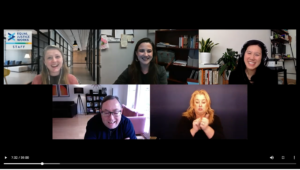
Our alumni have contributed their knowledge, expertise, and candidness in a range of talks, panels, and events. At the 2021 Equal Justice Works Leadership Development Training, 60 other alumni served as trainers, facilitators, and presenters during the event, including Archi Pyati ’02, who shared inspirational reflections on her Fellowship and its impact on her career during a keynote address, and Equal Justice Works Board Member Joshua Medina ’16, who led an a thought-provoking and inspirational conversation on resilient leadership and strategies with advocate and author Laura van Dernoot Lipsky.
Throughout the year, our alumni also signed up as presenters and facilitators for our newly implemented Learning & Networking series for current Fellows, as well as at our learning events for our issue-based Fellowship programs.
Providing ongoing advice and feedback

Equal Justice Works formed the inaugural Alumni Advisory Council (AAC)—a non-fiduciary, volunteer advisory board with an overwhelming level of interest. In September 2021, the 15 alumni members held their first official meeting.
Over the last few months, this diverse and dynamic group has worked diligently to provide advice and counsel in support of the organization’s alumni engagement initiatives—forming committees, hosting events, and making thoughtful recommendations as members of the Equal Justice Works alumni community.
Thanks to the AAC’s dedication and enthusiasm we have seen support from alumni across a broadened range of legal sectors, Fellowship classes and programs, as well as from across the nation. We can’t thank them enough!
The Equal Justice Works Alumni Engagement Program is increasing thanks to the contributions and volunteerism of our alumni base. We hope they will continue to express their interest, get involved, and reach out to other alumni, Fellows and staff.
If you are an Equal Justice Works alumni looking to get involved, join the Alumni LinkedIn Group to network, gain career advice, and explore professional development opportunities.
In March 2022, Equal Justice Works teamed up with the American Bar Association Young Lawyers Division (ABA YLD), American Red Cross, Legal Services Corporation (LSC), Pro Bono Net and DisasterLegalAid.org, to commemorate Disaster Resilience Awareness Month.
With the frequency and intensity of disasters increasing over the last few years, so too has the demand for lawyers who can help ensure an equitable recovery in disaster-affected communities. That’s why, we created Disaster Resilience Awareness Month—observed every March—as a collaborative effort to highlight the important role of lawyers in helping communities prepare for, recover from, and build resilience to disasters, as well as provide helpful resources for disaster survivors and lawyers.
This year during Disaster Resilience Awareness Month, Fellows in our Disaster Resilience Program shared their expertise, information on the legal services available to disaster survivors, and best practices for advocating on behalf of people who need help recovering from the legal effects of disasters. Fellows authored posts on:
How to Create a Disaster Preparedness Plan
2020 Fellows Stephanie Duke at Disability Rights Texas and Maria F. Vazquez at Catholic Charities of the Archdiocese of Galveston-Houston shared tips on how to create a disaster preparedness plan, with special focus on resources available for immigrant and disability communities. Read their post here.
Legal Help After Wildfires
2021 Fellow Jordan Davis at Disability Rights California looked at how Californians with disabilities are often overlooked in the aftermath of disaster. Read the post here.
Extreme Heat
2021 Fellow Jacob Zarefsky wrote about extreme heat events being overlooked as a disaster and what California lawmakers are doing to address the devastating impact of extreme heat. Read about it here.
Housing
2021 Fellow Christopher Kerrigan shared his experience representing tenants in the aftermath of Hurricane Ida and provided some practical tips for assisting tenants with their housing needs following a disaster. Read about it here.
FEMA
2020 Fellow Hannah Dyal of Texas RioGrande Legal Aid shared tips for practitioners handling FEMA appeals in the aftermath of a disaster. Read about it here.
In addition to these posts, Equal Justice Works staff member Touri Goode wrote about the impact of the first cohort of the Disaster Resilience Program, which included six Fellows who served from June 2020 to October 2021 in Texas and Florida. Read more here.
This year, we also partnered with ABA YLD to create a National Disaster Attorney Guidebook, an expansive resource on disaster lawyering. This guidebook is the first of its kind and contains an overview of the available disaster assistance under various state and federal laws, as well as information on how to ensure that legal assistance reaches low-income disaster survivors. Equal Justice Works hosted a webinar to introduce the resource and walk participants through the contents and how to use it.
Thanks to the generous support of all our partners, host organizations, and supporters who joined us in making Disaster Resilience Awareness Month 2022 a success. We look forward to finding new opportunities to raise awareness about the complex legal needs of disaster survivors and the important role that lawyers play in supporting communities with the resources they need to recover from disasters and be resilient for the future.
For more information about the Disaster Resilience Program, visit here. To view the National Disaster Attorney Guidebook, please visit here and here for the accessible version.
The Disaster Resilience Program is funded by the Bigglesworth Family Foundation, California Community Foundation Wildfire Relief Fund, Carnegie Corporation of New York, the Center for Disaster Philanthropy, W.K. Kellogg Foundation, and individual contributions.