What You Need to Know: Applying to the 2024 Rural Summer Legal Corps

The Rural Summer Legal Corps (RSLC)—a partnership between Equal Justice Works and Legal Services Corporation (LSC)—will support 50 dedicated law students in serving rural communities this summer. Participants, called Student Fellows, have a one-of-a-kind opportunity to explore their public interest passions while gaining hands-on experience, all while earning a $7,000 stipend.
Interested in joining this incredible program? Here’s what you need to know about applying to be an RSLC Student Fellow this summer.
Who is eligible?
RSLC is open to current law students who have completed their first year of law school by the start of the program in summer 2024. For some placements, applicants must possess a valid driver’s license and/or access to adequate transportation or have proficiency in a second language.
How do I submit a strong RSLC application?
A standout application will showcase a law student’s passion for public service and access-to-justice issues. Additionally, a strong display of interest for the project focus area to which you apply also holds significant weight in the decision process. If you have a personal connection to rural communities, highlighting that connection is another way to make a positive impression.
What type of training do RSLC Student Fellows receive?
All RSLC Student Fellows attend an exciting three-day training before their service begins. This training is made up of a series of workshops and panels, networking opportunities, and the chance to connect with and ask questions of the LSC and Equal Justice Works staff. Fellows receive travel accommodations and lodging for the training in Washington, D.C., as well as travel arrangements from the training to each student’s host organization.
What type of work can I expect to complete during my Student Fellowship?
Student Fellows will take on a wide range of responsibilities regardless of the specific project focus area of their host site. These assignments can include direct client services, client intake consultations/interviewing with supervising attorneys, legal writing opportunities, and court appearances. Projects may also include non-legal assignments such as community outreach, education, and pro bono coordination. This summer, some projects are in-person, while others may be conducted remotely. You can find a list of host organizations and their position descriptions on the Equal Justice Works website here.
Can the RSLC lead to long-term opportunities following law school graduation?
Yes! Several Student Fellows have been hired by their previous host sites as full-time staff attorneys or Attorney Fellows after graduation. For example, Ana Laurel, a 2018 Equal Justice Works Fellow in our Disaster Recovery Legal Corps and current staff attorney at her host site, Texas RioGrande Legal Aid, previously served in the Rural Summer Legal Corps; and Emily Neely, a 2021 Rural Summer Legal Corps Fellow, was an Equal Justice Works Fellow who designed her own project providing mediation and other forms of alternative dispute resolution in West Virginia to low-income families impacted by the opioid epidemic.
Am I ready to apply?
Applicants will be asked to provide a résumé, a personal statement describing their professional qualifications and interest in the program, and their top three host organization choices. For more information about program eligibility and requirements, visit our website or email us at [email protected].
Submit your application before the deadline on February 13, 2024, at 11:59 p.m. ET!

In honor of Dr. Martin Luther King Jr.’s legacy, we celebrate the work of our Fellows who are bringing us closer to Dr. King’s vision of a “Beloved Community”—a society based on justice and equal opportunity.
Equal Justice Works Fellows have shared their work advocating for civil rights and equal opportunity in their communities across the country. Learn more about these Fellows through the dispatches below:
- Bringing Justice to Communities in Need: 2022 Fellows Norrel Hemphill and Marianela Funes share their work advocating for environmental and housing justice for underserved and BIPOC communities.
- Making Our Communities More Equitable: 2021 Fellow Madison Wiegand Brown and Kevin Perry, alongside 2020 Fellow Courtney Sweat, share their work helping low-income tenants, small business-owners, and victims of elder abuse access justice.
- Building a Better Future Together: 2020 Fellows Anne Piervil and Carlos Andino, along with 2019 Fellow Kateland Woodcock, share their work providing legal aid to their communities through medical-legal partnerships, and finding new approaches and arguments to empower individuals who have been left behind by the institutions that are supposed to serve their communities.
Many Fellows have also shared in-depth updates on their work across the country as they advocate for civil rights, indigenous people’s rights, environmental justice, immigrant rights, and racial justice:
- Advocating for My Fellow Hawaiian Homesteaders: 2020 Fellow Henderson HuiHui shares his project providing comprehensive outreach and advocacy to assist the over 60,000 eligible Native Hawaiians in applying for and keeping homestead housing.
- Advocating for Southern California Communities of Color Impacted by Environmental Justice: 2021 Fellow Idalmis Vaquero shares her work defending the environmental and housing rights of Black and Latinx families impacted by industrial lead contamination in East and Southeast Los Angeles
- Defending the Right to Safe Drinking Water in Wisconsin: 2021 Fellow Jorge Roman-Romero discusses his advocacy for communities in Wisconsin facing disproportionate exposure to toxic pollutants from contaminated water, such as PFAS.
- Challenging Anti-Muslim Immigration Policies and Reuniting Refugee Families: 2022 Text-to-Give Fellow Alexandra Zaretsky writes about her experience in the first year of her project, which aims to expose and challenge anti-Muslim immigration policies.
- A Puerto Rican Equal Justice Works Fellow at SCOTUS: 2022 Fellow Carlos F. Ramos-Hernandez shares his experience joining the team at his host organization, Centro de Periodismo Investigativo, as the Supreme Court granted certiorari in Financial Oversight and Management Board for Puerto Rico v. Centro de Periodismo Investigativo, Inc.
We are proud of all our Fellows for bringing lasting change to our communities. Learn more about their commitment to service here.
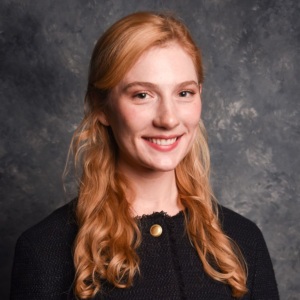
This article was originally posted in January 2023. Kelsey Gunvalson, a 2022 Student Fellow in our Rural Summer Legal Corps and a current member of the Equal Justice Works National Advisory Committee, shares how an Equal Justice Works Student Fellowship helped her to build legal skills outside the classroom. Kelsey was hosted by Legal Services of Northwest Minnesota Corporation.
In 2022, I went back to my roots to serve the community I grew up in. Throughout my childhood, I saw how rural populations face a barrier in receiving proper legal representation. This affects not only individual lives but generates a systemic impact on the whole community. My Student Fellowship allowed me help address the justice gap through the Justice Bus; a mobile law office that enables lawyers to hold free legal clinics in rural and isolated communities. Because of the Justice Bus, I was able to help underserved people by connecting them with appropriate legal resources to yield actionable results. It was especially meaningful to see the relief on someone’s face after their voice was heard and knowing they have options.
My Student Fellowship allowed me help address the justice gap through the Justice Bus; a mobile law office that enables lawyers to hold free legal clinics in rural and isolated communities.
Kelsey Gunvalson /
2022 Student Fellow
Rural Summer Legal Corps
My time as a Student Fellow taught me so much— mainly that a successful civil legal aid attorney listens to the client without inserting their personal bias. It is an imperative for attorneys to give credence to their client’s story and to understand their perspective before educating them about legal options. In understanding a client’s perspective, it is important to be sensitive to the different cultural values among the community. In the area I served, 22% of the total population are indigenous, which demonstrated an importance in providing education and outreach on tribal lands.

The highlight of my Rural Summer Legal Corps experience was taking the Justice Bus to pow wows which celebrate local tribal communities. Participating in legal clinics on local reservations strengthened my appreciation for tribal culture while bridging a connection with tribal legal services. By working with both legal aid and tribal attorneys, I was able to learn about the nuances of tribal law and jurisdictional complexities between different legal systems.
I would recommend the Rural Summer Legal Corps to law students who are looking for a way to make a material impact on people’s lives and to feel good about the work they do.
If you are interested in embarking on a summer of service like Kelsey, apply to the Rural Summer Legal Corps by 11:59 p.m. ET on February 13, 2024. For more information about program eligibility and requirements, please visit here.
By working with both legal aid and tribal attorneys, I was able to learn about the nuances of tribal law and jurisdictional complexities between different legal systems.
Kelsey Gunvalson /
2022 Student Fellow
Rural Summer Legal Corps
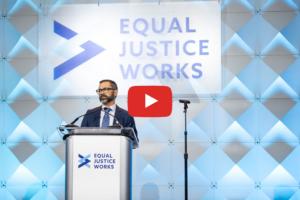
On October 24, 2023, Equal Justice Works honored Diego Cartagena, the President and CEO of Bet Tzedek Legal Services, with the inaugural Distinguished Alumni Award. Read his remarks from the event below.
Good evening, everyone. I am truly honored to stand before you tonight as the recipient of the Equal Justice Works Inaugural Distinguished Alumni Award. I would like to express my deepest gratitude to the entire Equal Justice Works community for bestowing this honor upon me. To be recognized among the esteemed alumni who have dedicated their lives to advancing equal justice is deeply humbling. This recognition holds immense significance for me, not only personally, but because to me, this award—like everything Equal Justice Works does—is a reflection of the power of our—your—collective efforts in pursuing a more just and equitable society. My work in pursuit of equal justice has truly been a collective endeavor, supported by countless individuals and organizations, and I can’t help but feel that me standing here tonight is really more a reflection of their support, without which I would not be here.
Watch a recording of Diego’s remarks here:
Believe it or not, being here tonight has been quite a journey. I flew in a few days ago from Los Angeles with my family, but that’s not what I am referring to. No, my journey began nearly 45 years ago, and thousands more miles away, in El Salvador, when my parents decided they could not raise a child in a country torn by civil war. They decided to emigrate to the US, and once here they worked incredibly hard to eke out a modest living with one goal in mind: to give my brother and I the chance to build a better life than the one they left behind.
Their hard work made it possible for me to attend UCLA, where I participated in the UCLA Law Fellows Program. This program takes undergraduate students from various walks of life, most of them first generation college students, and exposes them to law school classes, provides them with free LSAT prep courses, helps them draft personal statements, and provides countless other forms of support. With the help of that program, I was the first in my family to graduate from a university in the US, and the first to apply to law school.
To me, this award—like everything Equal Justice Works does—is a reflection of the power of our—your—collective efforts in pursuing a more just and equitable society.
Diego Cartagena /
Recipient of the 2023 Distinguished Alumni Award
President and CEO of Bet Tzedek Legal Services
I will admit to you, my first year of law school was less than stellar. But I was saved by my summer internship at the Los Angeles Center for Law and Justice. My summer internship at LACLJ providing family law services to domestic violence survivors reminded me of why I went to law school. And it was during second internship with the agency, while under the mentorship of three brilliant attorneys, that I developed my fellowship proposal to provide family and immigration law services to pregnant and parenting teen parents.
My proposal was selected by Latham & Watkins, and I was offered an interview. I had never interviewed with a firm during law school, and here I was, being interviewed by one of the biggest. I was so nervous about my interview that on the way there I drove the wrong way down a one-way street for about a block before I realized what I was doing.
I must have done ok in my interview though. Even though Latham had already decided to fund a Fellow, they also decided to fund my fellowship. By the way, my co-Fellow is the head of Public Counsel, an incredible legal aid agency just a few blocks from my own, and she is awaiting confirmation to serve as a federal judge. Latham, you have good taste in Fellows.
Thanks to Latham, I established Teen LA, which stood for Teen Legal Advocacy. My very first client was Maria, a fourteen year old mother of twins whose paternal grandmother had perjured herself by claiming that my client had abandoned the children with her in order to get custody over them. What had really happened was Maria had asked grandmother to watch the children during the day while she attended school. We won that case, and Maria’s children were returned to her. I’m proud of the fact that Teen LA went on for many years after my time with the Center, serving hundreds of clients like Maria. I’m also incredibly proud of the fact that at one point, the program was improved and expanded by my wife, another Equal Justice Works alum. She and my two children are here tonight, and I want to thank them for all their love and support.
Since my time LACLJ, I have had the honor of working with many clients and building many other programs. At The Alliance for Children’s Rights, I worked with dozens of colleagues to build an incredible network of pro bono attorneys that helped protect children from abuse and neglect. At Bet Tzedek, I’ve had the honor of working with legal aid leaders to help build a right to counsel program to represent clients in eviction proceedings, while working with law firm pro bono counsel from across the country to build a small business development program, and more recently worked with leadership at the County of Los Angeles to establish an estate planning program to serve communities of color in an effort to help preserve homeownership and promote intergenerational wealth in those communities. Throughout, I’ve had the honor of working with many law students to support their fellowships. In fact, I’m proud to note that here tonight are two Equal Justice Works Fellows hosted by Bet Tzedek.
Throughout, I’ve had the honor of working with many law students to support their fellowships. In fact, I’m proud to note that here tonight are two Equal Justice Works Fellows hosted by Bet Tzedek.
Diego Cartagena /
Recipient of the 2023 Distinguished Alumni Award
President and CEO of Bet Tzedek Legal Services
And throughout, I have had the privilege of representing clients. Clients like Kathy, who years ago came to Bet Tzedek requesting immigration assistance. Kathy grew up very poor in a small town in Guatemala and faced daily abuse at the hands of her father until she escaped to live with her grandmother. When her grandmother passed away, rather than face returning to live with her father, she decided to travel, with no family, to the US to build a new life. I represented Kathy in securing legal permanent residency status here in the US, and every once in a while, she calls me to tell me how she is doing. This summer, she called me to tell me that she is now a real estate agent, earning enough to have a home for her and her two younger sisters who recently also fled Guatemala. In fact, my colleagues at Bet Tzedek recently represented one of her sisters in securing her immigration status.
Kathy called me with her great news not long after Verna Williams, the incredible leader of Equal Justice Works, called me to inform me about this award. Verna, my friend, please don’t take offense. Your call was special, but Kathy’s call was extra special. It was special because you could hear the pride and strength in the voice of this young woman who had faced the most brutal of circumstances and incredible odds. Kathy’s call was extra special because Kathy, and the countless other clients that fellows like me have represented, is what Equal Justice Works and this award are all about. And it is about each of you, folks like James Chosy, and the many people who have sat in those seats before you and who have together, through your support, made Equal Justice Works what it is: an incomparable force in the pursuit of equal justice. And I can’t thank you enough for your support. Because let us remember that the pursuit of equal justice is an ongoing effort—one that depends on constant vigilance, determination, and institutions like Equal Justice Works. While we have made significant strides, we cannot ignore the work that still lies ahead. Let us continue to fight for justice, challenge inequities, and amplify the voices that often go unheard. Let us move forward, together, inspired by this recognition, which is really a recognition of our collective aspirations and efforts, and working tirelessly toward a future where justice prevails for all.
Let us remember that the pursuit of equal justice is an ongoing effort—one that depends on constant vigilance, determination, and institutions like Equal Justice Works. While we have made significant strides, we cannot ignore the work that still lies ahead.
Diego Cartagena /
Recipient of the 2023 Distinguished Alumni Award
President and CEO of Bet Tzedek Legal Services
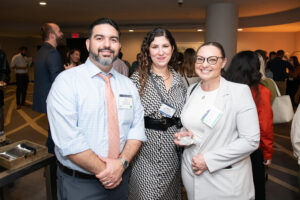
The Alumni Engagement Program at Equal Justice Works has continued to grow since its launch in April 2021. The program achieved many successes during fiscal year 2023, which you can read about below.
2023 presented many opportunities for Equal Justice Works to further expand its alumni appreciation, networking, and engagement. Working with the Alumni Advisory Council (AAC), a group of Equal Justice Works alumni committed to providing counsel in support of alumni initiatives at the organization, enabling our alumni programs to achieve several milestones in the community this year.
Throughout the year, the AAC hosted four Alumni-Fellow Regional events, facilitated four online professional development workshops, and participated in the selection process for the Recent Alumni Board Member and the Distinguished Alumni Award. As part of our efforts to incorporate alumni engagement into the Fellowship onboarding and exit processes, the AAC sent personalized messages welcoming incoming Fellows to the Equal Justice Works community and exiting Fellows into the alumni network. AAC members solicited feedback from alums through the AAC Programming Survey to help inform future priorities for alumni programming.
The AAC also provided advice and counsel on several Equal Justice Works initiatives including the Leadership Development Training, DEI Strategy, and 2023 Strategic Vision.
On September 6, the AAC hosted its annual Kick-Off and Orientation meeting where they successfully onboarded five new Council members and began planning for the FY24 year. The AAC hosted its first virtual workshop of the fiscal year on November 14 entitled, “Pathways to Academia: Non-Profit Attorneys in Education.” The workshop was well received with 43 Fellows and Alumni in attendance!
It has been inspiring to witness the alumni in our community band together to help create these great opportunities for current Fellows and alumni to connect.
Lynbea Toombs /
Director of Alumni Relations at Equal Justice Works
At the 2023 Scales of Justice, Equal Justice Works presented the inaugural Distinguished Alumni Award to 2004 Fellow alum Diego Cartagena, who is now the President and CEO of Bet Tzedek Legal Services. The Equal Justice Works Distinguished Alumni Award recognizes an Equal Justice Works alum who has made outstanding contributions as a leader in public interest law; has distinguished theirself through creating lasting impact in the communities they serve; embodies the organizational values of passion, community, service, opportunity, and equal access to justice; and reflects the transformative power of an Equal Justice Works Fellowship. As we continue to recognize the outstanding achievements of Equal Justice Works alumni, we are excited to invite Fellows and alumni to participate in the nomination process for the Distinguished Alumni Award.

Equal Justice Works also expanded upon alumni participation in the Leadership Development Training this year. At the 2023 event, alumni served as affinity group leaders and were invited to attend an Alumni-Fellow Welcome Reception hosted by the AAC.
“It has been inspiring to witness the alumni in our community band together to help create these great opportunities for current Fellows and alumni to connect,” said Lynbea Toombs, the director of alumni relations at Equal Justice Works. “We look forward to continuing to engage and recognize the accomplishments of our alumni through programming and volunteer opportunities next year!”
To learn more about alumni programs at Equal Justice Works, click here.
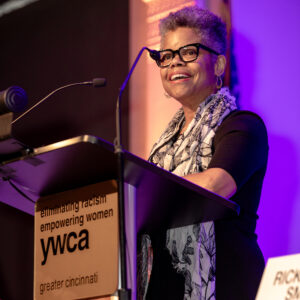
Equal Justice Works CEO Verna Williams spoke at the YWCA of Greater Cincinnati’s annual Racial Justice Breakfast. Read an excerpt from her remarks below.
This year, the U.S. Supreme Court struck down the affirmative action programs at Harvard and University of North Carolina as violative of the Equal Protection Clause of the 14th Amendment. Race is so inflammatory a category, according to the Court, that the state may not use it—even to remedy past discrimination, except for the most limited circumstances.
Attempting to anchor its ruling in history, the majority opinion dutifully marches through the unfortunate mistakes the Court has made in the past—such as Dred Scott and Plessy v. Ferguson, building to Brown v. Board of Education’s redemptive arc. The Court manages to read even that soaring decision as supporting limited consideration of race in higher education, which became even more constrained, thanks to the Court’s rulings in Bakke, Grutter, Fisher, and now Students for Fair Admissions. In the majority’s U.S., race-based remedies have become less necessary over time; indeed, Grutter forecast that they would be phased out in a matter of decades.
Make no mistake: targeting Harvard and UNC was the first salvo in yet another skirmish in the culture war. But for all the outrage about division supposedly caused by teaching the truth about our history, so-called advocates for parental rights and liberty have adopted antidemocratic, unconstitutional methods in their attempt to create a whitewashed national narrative. Guided no doubt by focus groups, they seek to fan the flames of fear to stoke discord in their quest to preserve a status the majority of us has rejected. According to the Pew Charitable Trusts, most workers support DEI efforts at work, for example.
In dissent, Justice Jackson advises us how to respond: “The only way out of this morass—for all of us—is to stare at racial disparity unblinkingly, and then do what evidence and experts tell us is required to level the playing field and march forward together, collectively striving to achieve true equality for all Americans.”
What does it mean to confront racial disparity unblinkingly? I’d start with understanding how we got here, perusing Justice Jackson’s opinion, which articulates clearly and robustly the history surrounding ratification and implementation of the Fourteenth Amendment.
In discussing the second Founding, Justice Jackson explains that Congress was responding to state tyranny against the newly freed Black citizens. Just as in 1789, these Framers developed provisions to combat state oppression, amending the Constitution and authorizing Congress to take the steps necessary to make new guarantees a reality. To that end, Congress passed measures specifically to assist Black people, such as the Freedman’s Act and the Civil Rights Act of 1866 recognizing that two centuries of race-based subjugation could not be overcome by a racially neutral legal regime.
Justice Jackson also charts the many ways state, local, and federal law time and time again failed to live up to the promise of the Reconstruction Amendments. From excluding Black people from the Homestead Act and enacting zoning regulations to limit Black progress during the Great Migration, to discriminatory lending policies of the Federal Government, Justice Jackson observes that “government policies affirmatively operated [one could say, affirmatively acted] to dole out preferences to those who, if nothing else, were not Black.”
Then, she connects the past to the present, noting that the myriad preferences white people have received throughout our history have compounding effects – resulting in wealth, education, and health gaps that flow inexorably from centuries disparate treatment. For example, “in 2019, Black families’ median wealth was approximately $24,000.46 For white families, that number was approximately eight times as much (about $188,000).” In education: “Black Americans in their late twenties are half as likely as their white counterparts to have college degrees.” Additionally, because of wealth disparities, Black college graduates have twice as much debt as their white classmates. Health disparities, she notes are “the predictable result of opportunity disparities… [they] lead to at least 50,000 excess deaths a year for Black Americans vis-à-vis white Americans. That is 80 million excess years of life lost from just 1999 through 2020. Meanwhile—tying health and wealth together—Justice Jackson says the typical Black American — while she lays dying — “pays more for medical care and incurs more medical debt.”
Justices Jackson and Sotomayor make plain that this nation never has been color blind. Indeed, states, localities, and the federal government created an intricate racialized web that reserved opportunities and access to white people. The disparities created early on have resulted in compounded and expanding gaps affecting all aspects of life. In a very real sense, state-sponsored and state-sanctioned discrimination have impeded upon life, liberty, and the pursuit of happiness for too many for too long… that’s what an unblinking look at racial disparity tells us.
Turning to the second part of Justice Jackson’s prescription – Leveling the playing field. That’s a question for all of us.
Here’s what we’re thinking at Equal Justice Works.
The Legal Services Corporation reports that 92 percent of low-income people’s legal needs go unmet in this country. When we factor in people living above the federally mandated limits for legal aid – those folks living at or above 200 percent of the poverty line, the need expands exponentially because they can’t afford their own lawyers and don’t qualify for legal aid.
This situation is simply untenable.
Specifically, in far too many cases dealing with child custody, bankruptcy, domestic violence, discrimination – in other words, cases where outcomes have meaningful consequences – people lack representation. At Equal Justice Works, our primary strategy for addressing this massive problem is funding and placing Fellows in public interest jobs. When I joined the organization, I wondered how race fit into our work.
Consider our Housing Justice Program.
Equal Justice Works launched this program…because evictions have a disproportionate effect on communities of color, women, and children. Without access to safe and stable housing, individuals and families can face a variety of negative outcomes, including long-lasting and devastating economic hardships and health problems.
This program operates in areas where evictions and housing instability have reached epidemic proportions. During a two-year term, Fellows, who include lawyers as well as community organizers, work collaboratively to provide legal advice, referrals, and full representation for tenants in eviction proceedings; engage in outreach and education activities; and work with community partners to address systematic barriers that contribute to housing instability.
This program started out in Richmond, Virginia, a city with an eviction rate that is second highest in the nation behind Charleston, South Carolina. I’m so pleased that thanks to funding, we have expanded this program to include Charleston and Columbia, South Carolina; as well as Charlottesville and Fairfax, Virginia; and Baltimore and Easton, Maryland. All areas identified by the Eviction Lab as having some of the highest eviction rates in the nation. And this program is just one example of how our Fellows are confronting racial inequality and working to level the playing field.
In addition, my colleagues and I seek to integrate our values of diversity, equity, and inclusion throughout our work. In that regard, we plan to develop a racial justice program. We have embarked on antiracism training at the organization and will continue to provide such training for our Fellows, as well. We also are exploring development of a pipeline program that would bring more people of color into the legal profession, which is 80% white, AND a fellowship program for legal assistants, law techs, community organizers – in other words, non-lawyers who can provide much needed legal assistance. Finally, we also seek to develop our research and data analytics capacity to help make the case for why representation matters.
With this strategic vision, Equal Justice Works seeks to rise to the new challenges presented by this critical moment – it’s a vision we crafted with our many partners – public interest organizations, law firms, law schools, corporations, individuals, and law students – who got this organization started in 1986. Then, as now, we collectively are committed to making the words above the U.S. Supreme Court’s door a reality. Equal Justice for All. For me, it’s a commitment to getting into what the late John Lewis called “Good and Necessary Trouble.”
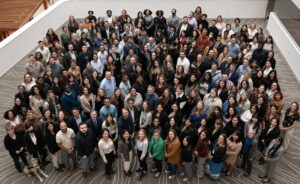
Each fall, Equal Justice Works invites Fellows to the annual Leadership Development Training (LDT). This three-day event brings together all current Fellows across our programs to learn, network, and build their skills. LDT helps our Fellows build a network of support and leaves them with tools to help them succeed in their projects and beyond. This year, the event was held in person for the first time since 2019, taking place from October 23 to 25 in Bethesda, Maryland.
At the event, Fellows heard from legal professionals and Fellow alumni about the skills that will help them succeed in their careers. We hosted over 300 participants this year, including 211 Fellows, 28 Fellow alumni, and 26 additional session facilitators. Event attendees participated in workshops covering topics ranging from systems and design thinking to hearing from alums about their career journeys.
The 2023 program opened with a keynote address from the CEO of Equal Justice Works, Verna Williams, during which she shared advice on how Fellows could succeed moving forward in their careers, as well as what motivated her when she was first starting out as a lawyer. She stressed to Fellows the importance of continual learning throughout one’s career in order to be the best possible advocate.
“As Fellows, you are embarking on work that is deeply needed,” said Verna. “But as new lawyers, advocates, or community organizers, you may not always know what is needed. So, my advice for you now is to be in service, lean into community, keep learning, and have fun.”
As Fellows, you are embarking on work that is deeply needed. But as new lawyers, advocates, or community organizers, you may not always know what is needed. So, my advice for you now is to be in service, lean into community, keep learning, and have fun.
Verna Williams /
CEO of Equal Justice Works
After the keynote address, Verna sat down with 2018 Fellow Alum Heba Estafanous, who is now the Managing Attorney at the Network for Victim Recovery DC, and dean Danielle M. Conway, who is dean and Donald J. Farage professor of law at Penn State Dickinson Law. In a conversation led by Verna, Heba and Dean Conway discussed their work and set the stage for an event focused on antiracist lawyering and design thinking.
The first day concluded with a reception hosted by the Equal Justice Works Alumni Advisory Council, allowing attendees to network with current Fellows and Fellow alumni, and to hear more about what the Alumni Advisory Council is involved in at Equal Justice Works.
Each day of the event included workshops that gave Fellows tools to use during their projects, advice from legal professionals, and issue area breakdowns to help build expertise. Along with the programming offered for the week, there was also a strong focus on the importance of antiracist lawyering and DEI work to achieve greater access to justice.
The second day of workshops ended with the opportunity for Fellows to attend the Scales of Justice, our annual fundraiser, allowing Fellows to connect with many other aspects of the Equal Justice Works community and continue to build their networks.
This year’s event concluded with remarks from Margaret Huang, the president and chief executive officer of Southern Poverty Law Center. Margaret shared advice for Fellows to consider as they returned home and responded to Fellow questions. Anna Uhler-McKeown, vice president of Fellowships at Equal Justice Works, followed Margaret by thanking Fellows for their participation and time.
“LDT holds special meaning for me,” said Anna. “Because it brings together our incredible community to talk about the work, create space for peers to connect, grow, and learn with each other, and have opportunities for our impact moving forward.”
LDT holds special meaning for me because it brings together our incredible community to talk about the work, create space for peers to connect, grow, and learn with each other, and have opportunities for our impact moving forward.
Anna Uhler-McKeown /
Vice President of Fellowships at Equal Justice Works
To learn more about the annual Leadership Development Training with Equal Justice Works, click here.
Each fall, the Equal Justice Works Career Fair, the largest national public interest legal career fair, brings together hundreds of law students, public interest employers, and law school faculty for interviews, employer table talks, and networking opportunities.
This year, Equal Justice Works hosted the event virtually for the fourth time, ensuring continued accessibility and inclusivity for attendees. The 2023 career fair took place from October 12 to 14, 2023 via the legal hiring platform, Flo Recruit.
The three-day event provided attendees the opportunity to network and interview for full-time positions and internships. This year, the Equal Justice Works Career Fair was the largest in Equal Justice Works’ history with more than 4,000 registrants. Event attendees participated in over 3,600 prescheduled interviews and 2,348 table talks. Law students were able to connect with organizations they were interested in working with to lay the foundation for the next step in their career.
“All law students who have legal interests in public interest work should definitely be encouraged to participate in this event,” said an anonymous law student attendee. “So few career fairs are accessible for students who are interested in public interest, which makes this event all the more important.”
All law students who have legal interests in public interest work should definitely be encouraged to participate in this event.
Anonymous Law Student /
2023 Equal Justice Works Career Fair Attendee
Equal Justice Works also welcomed the largest number of employers to date, with over 270 public interest organizations represented. At the event, employers interviewed for over 372 internship and postgraduate positions. The virtual nature of the career fair allowed these employers to reach a large pool of law students at law schools across the country who are passionate about their work.
“We are incredibly pleased with the turnout of this year’s event,” Said Aoife Delargy Lowe, the vice president of law school engagement & advocacy at Equal Justice Works. “The demand for public interest jobs remains strong, and we hope to continue to increase the number of opportunities that we can offer to attendees in the future.”
A special thanks to the National Association for Law Placement (NALP) and Idealist for sponsoring the career fair, event exhibitors, public interest employers, and attendees for making the 2023 Career Fair an enormous success.
We are incredibly pleased with the turnout of this year's event. The demand for public interest jobs remains strong, and we hope to continue to increase the number of opportunities that we can offer to attendees in the future.
Aoife Delargy Lowe /
Vice President of Law School Engagement & Advocacy at Equal Justice Works
The Equal Justice Works Housing Justice Program (HJP) began as a cohort of eight Fellows in Richmond, Virginia in 2019 and has since grown to offer 32 Fellowships for attorneys and community organizers across Maryland, South Carolina, and Virginia. Based on the incredible success of the first cohort of HJP Fellows, Equal Justice Works grew the program from eight Fellows hosted at three organizations in 2019 to 32 Fellows across 18 organizations in 2023. These Fellows combine direct legal services, education, outreach, and impact litigation to advance renters’ rights and hold bad-actor landlords accountable.
Housing Justice Program Fellows have made significant progress on the goals of the program since onboarding in Summer 2022. To date, Fellows have helped 3,344 households avoid evictions through direct legal services, provided one-on-one resident services to 1,999 households, trained 6,403 community members about tenants’ rights, and conducted outreach to 11,842 households. As a result of organizing and education efforts by the Fellows, 48 administrative and legislative policies to stabilize housing were influenced.
“It’s been incredible watching the impact of our Fellows’ hard work,” said Laura Roach, senior program manager for the Housing Justice Program. “Year over year, it is inspiring to see how our Fellows rise to meet the immense demand for legal assistance and help communities to influence systems that promote overall housing stability.”
Year over year, it is inspiring to see how our Fellows rise to meet the immense demand for legal assistance and help communities to influence systems that promote overall housing stability.
Laura Roach /
Senior Program Manager
Housing Justice Program at Equal Justice Works
Beyond impact numbers, Fellows were able to achieve many lasting legal wins in their communities. For example, Fellows helped tenants secure rent stabilization in Prince George’s and Montgomery Counties, which is just one example of the impact that Fellows are having across their states. In South Carolina, Fellows have secured an Order from the Supreme Court, which allows counties across the state to establish Housing Courts to help tenants access representation in eviction cases. Fellows also helped tenants in Virginia advocate for a bill that allows localities to pass rent stabilization ordinances.
The impact of tenants was also personal. Hosted by South Carolina Legal Services, 2022 Fellow Holly Webster represented a client with multiple disabilities who was distressed by his landlord’s decision to file an eviction action against him. The client lived in Project Based Section 8 housing, but the landlord filed an eviction action for end of lease term. Holly argued at the eviction hearing that HUD requires good cause to terminate a lease in Section 8 housing. The judge agreed and dismissed the action, allowing the client to remain in his unit. The tenant had not been aware of this legal defense, and without an attorney he may have been evicted.
Fellows Emily Blackshire and Sloan Wilson were also able to advance tenant rights to safe and healthy housing when they worked together to address insufficient housing conditions in properties owned by the Columbia Housing Authority in South Carolina. Using testimonies from more than 20 tenants, Fellows submitted a FOIA request and attended a Housing Authority board meeting to make a public statement about the conditions they had witnessed. The Fellows were interviewed by local news, which raised community awareness.
These successes by Housing Justice Program Fellows did not come easily. Fellows were met with many challenges along the way, as rent prices have increased and communities are met with record low rental vacancy rates. These factors led to a higher volume of people seeking housing-related legal aid. To illustrate the extent of this issue, Equal Justice Works conducted a needs assessment earlier this year, which indicated that 93% of organizations did not have the capacity to serve all eligible individuals seeking services for housing and eviction-related issues.
Fellows met this challenge by prioritizing the most urgent and persisting cases. In one case, organizers in Baltimore alerted an Attorney Fellow to mass eviction filings by the Housing Authority. Together, Fellows and host organizations were able to respond and prevent hundreds of evictions.
Moving forward, the Housing Justice Program aims to address two rising issues that have been identified in the communities that Fellows serve: the high volume of need for housing-related legal aid and the inconsistent application of the law. To address the first point, Fellows formed a working group to support households who must represent themselves. This group will develop and distribute high-quality legal self-help materials to tenants who represent themselves. They will also advocate with local courts and clerk offices to increase access to legal defense for self-represented tenants.
The second point was identified as Fellows across all jurisdictions have observed judges and clerks misinforming tenants and inconsistently applying the law. In response, Fellows can improve outcomes by influencing court practices and enforcing tenants’ rights in courtrooms where judges and clerks may not be fully familiar with the law. During the next reporting period, Komenge will work with Fellows to develop and engage in strategies to support and train judges and judicial systems to be more understanding and legally responsive to the communities served by civil legal aid. Equal Justice Works will also continue to facilitate trainings with subject matter experts for Fellows to ensure that they are as prepared as possible to safeguard rights of tenants in courts across their states.
Visit here to read more stories about the work of our Housing Justice Program Fellows and how they are advocating for policies and practices that protect the rights of all tenants.
The Housing Justice Program includes Fellows hosted across Maryland, South Carolina, and Virginia. The Housing Justice Program is made possible thanks to the generosity of The JPB Foundation, JPMorgan Chase & Co., Abell Foundation, Community Foundation for a greater Richmond, Maryland Legal Services Corporation, and Sisters of Charity Foundation of South Carolina.

On October 24, 2023, Equal Justice Works gathered hundreds of leaders and supporters from the legal community for the annual Scales of Justice Event. This year’s event gathered our community of Fellows, Alumni, and supporters in Washington, D.C., to support our mission and to honor Jim Chosy, the Senior Executive Vice President and General Counsel of U.S. Bancorp. We also expanded our program to honor a member of our Fellow alumni community alongside our Scales of Justice Honoree. Equal Justice Works CEO Verna Williams presented the inaugural Distinguished Alumni Award to the President & CEO of Bet Tzedek and 2004 Fellow alum, Diego Cartagena, for his notable career and lasting impact on improving access to justice.
Thanks to generous event sponsors and donors, we raised more than $3.1 million to support our efforts to mobilize a community of lawyers committed to public service and equal justice!
The Chair of the Equal Justice Works Board of Directors, Kate Fritz, gave an introduction to the organization’s mission and its vision before introducing the CEO of Equal Justice Works, Verna Williams. During her remarks, Verna touched on what she has learned since joining the organization last year and shared the organization’s vision moving forward, which is deeply grounded in values of diversity, equity, and inclusion.
We now seek to develop a racial justice program that will concentrate on developing skills to dismantle systemic barriers to equitable treatment... tools that, in turn, can be used throughout our Fellowship programs.
Verna Williams /
CEO of Equal Justice Works
During the program, we highlighted the incredible work of our Fellows, including 2021 Fellow Emily Neely’s work, which provides civil legal aid to community members affected by substance use disorder in West Virginia. Watch Emily’s video below to learn more about the impact of her work:

Our 2023 Text-to-Give Fellow, Jaden Lajyll Zwick Ojeaburu, took the stage to discuss her project with the Collective For Liberatory Lawyering to dismantle the school to prison pipeline. In response, attendees texted in donations totaling more than $75,000 to fund one more 2024 Equal Justice Works Fellow who, like Jaden, will pursue their passion to help individuals and communities in need.
Equal Justice Works also celebrated the unprecedented support by Greenberg Traurig. This year, the firm sponsored its 201st Fellows since 1999, which amounts to more than $14.5 million in support. At the event, Caroline Heller, the chair of Greenberg Traurig’s Pro Bono program, introduced Senior Chairman Cesar Alvarez, who shared a personal and moving story about his journey to the U.S. and the firm’s motivation to support Equal Justice Works.
After dinner, Diego Cartagena was presented with the inaugural Distinguished Alumni Award for his incredible career demonstrating his commitment to public service and equal justice. Diego told the story of how he became a Fellow, and how his Fellowship prepared him for his career in public interest law.
This recognition holds immense significance for me, not only personally, but because to me, this award—like everything Equal Justice Works does, is a reflection of the power of our—your—collective efforts in pursuing a more just and equitable society.
Diego Cartagena /
2023 Distinguished Alumni Honoree
The program concluded with the presentation of the Scales of Justice Award, in which Jim Chosy was introduced by his long-time colleague and friend, former member of the Equal Justice Works board of directors, and President of Bates College, Garry Jenkins. Jim Chosy then took the stage to speak about the importance of public interest work in achieving justice.
“It’s long past time that we… address the obvious truth that we’re not delivering on the promise of equal justice.” Jim stated in his remarks. “Despite the dire state of today’s justice gap, I do have hope and optimism for the future. While historically the law has been slow to change, the pace of change is increasing, driven by forces like technology which is causing both disruption and innovation. Also, new generations are entering the profession and bringing energy, creativity, and a forceful demand that the system should actually live up to its ideals.”
The 2023 Scales of Justice event was hosted by emcee Michelle Miller, bestselling author and cohost of CBS Saturday Morning.
Huge thanks to everyone who made this program possible: Champion of Justice sponsors Greenberg Traurig, LLP, and Morgan Lewis, our other event sponsors, the 2023 Steering Committee, our staff, and all who attended and supported the Scales of Justice!
The generosity and dedication of our community is greatly appreciated and will help to bring us closer to fulfilling our nation’s promise of equal justice for all.
Equal Justice Works Fellows are the living embodiment of a better idea... Your idealism, your commitment, and your work give me faith in the future.
Jim Chosy /
2023 Scales of Justice Honoree
To learn more about the Scales of Justice, click here.